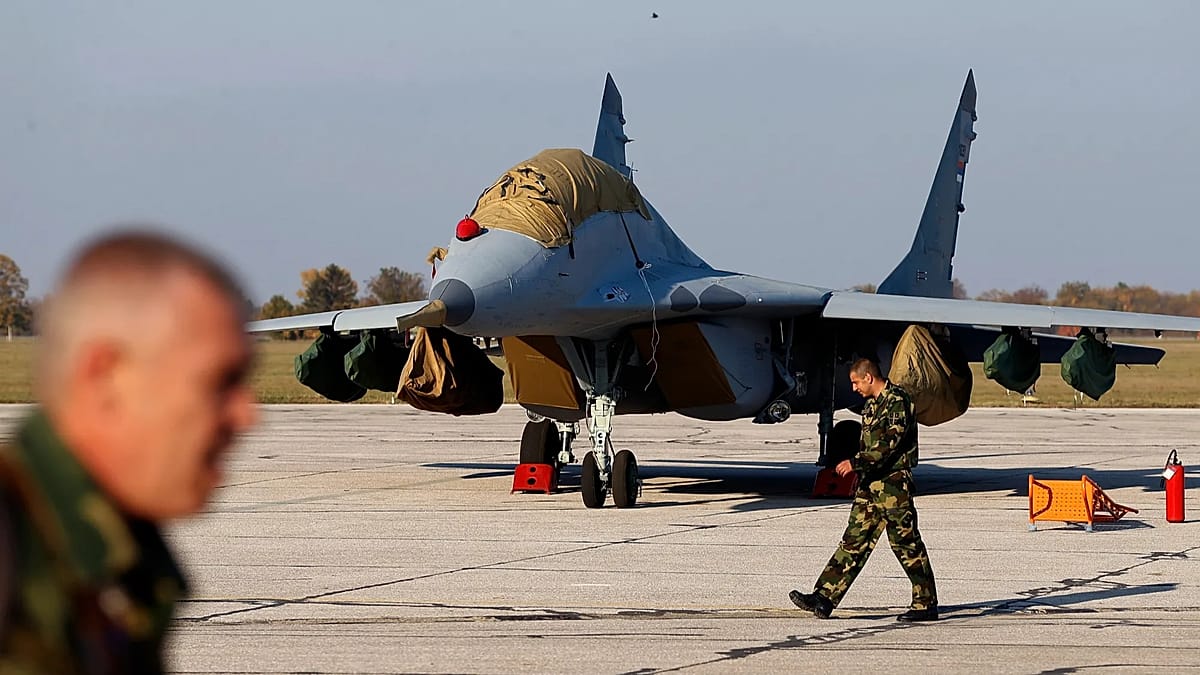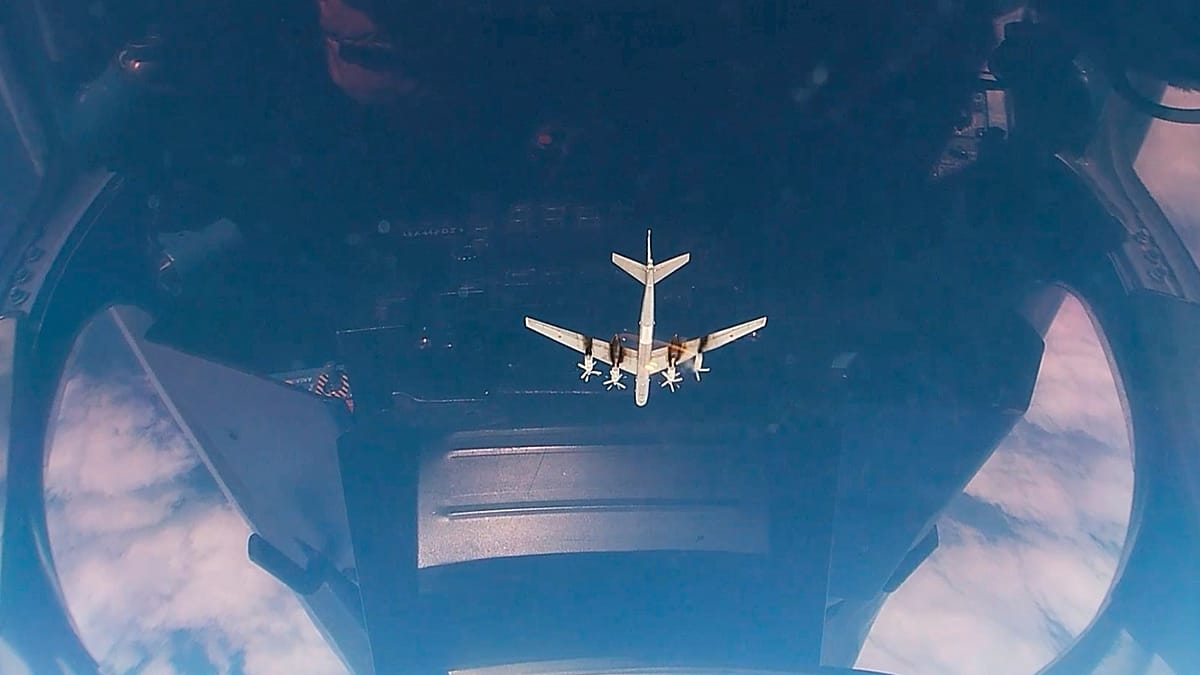
Tokyo reported on Tuesday that its fighter jets were scrambled after suspected Russian military aircraft entered Japanese airspace, prompting a formal protest to Moscow and underscoring the deteriorating relationship between the two countries.
The two aircraft were detected near Okinoshima, off the southwestern coast of Fukuoka, shortly after 4:00 am local time (2000 CET Monday). According to Chief Cabinet Secretary Minoru Kihara, the planes remained inside Japanese airspace for roughly three minutes each before exiting.
“The violation of our national airspace by Russian aircraft is not only a grave infringement of our country's sovereignty, but also a threat to our security and is completely unacceptable,” Kihara told reporters. He added that Japan had lodged a “very stern protest” through diplomatic channels and demanded measures to prevent any recurrence.
The Japanese Air Self-Defence Force dispatched F-15 fighters to issue warnings to the intruding aircraft. The planes had travelled through the Tsushima Strait, passed between Yonaguni island and Taiwan, and then headed toward the Pacific, according to Kihara.
Regional pattern of Russian incursions
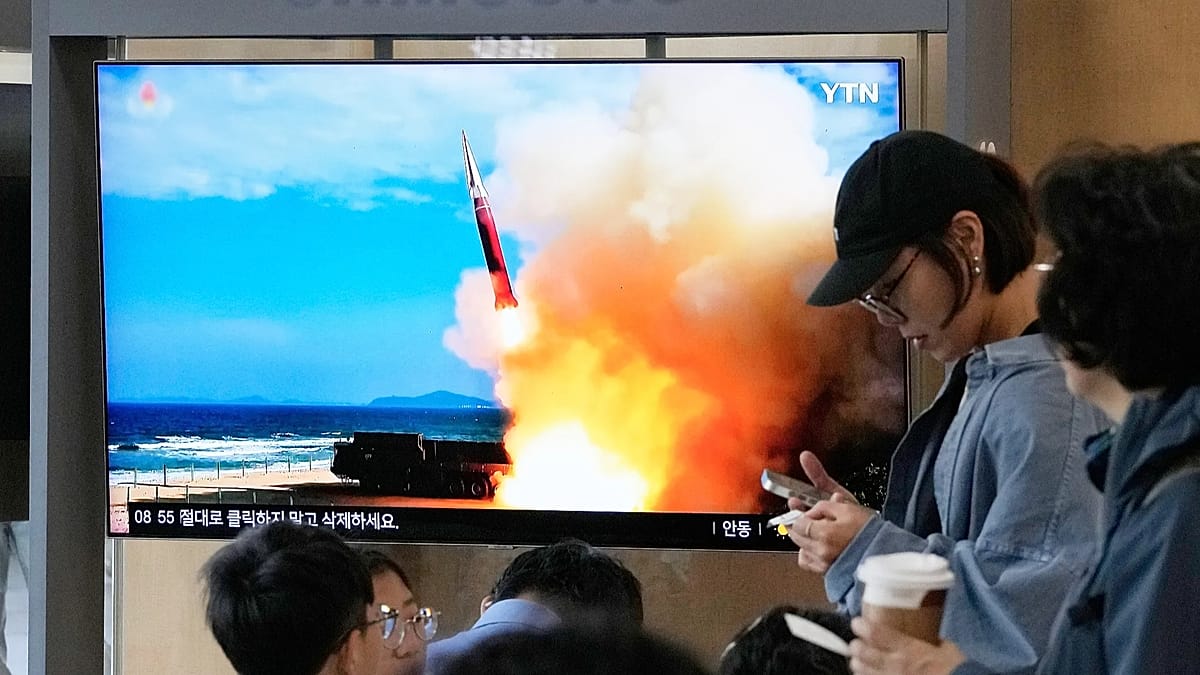
The announcement came just hours after South Korea said it had deployed fighter jets and conducted tactical manoeuvres in response to several Russian military aircraft entering its air defence identification zone (KADIZ) over the East Sea, also known as the Sea of Japan. Seoul clarified that the Russian planes did not violate South Korean sovereign airspace.
An air defence identification zone is not sovereign territory but a buffer area where countries require approaching aircraft to identify themselves for security reasons. While notification is customary, it is not legally mandatory.
This incident is not isolated. In 2024, Japan lodged a “very serious protest” after a Russian patrol plane entered its airspace three times, marking the first confirmed incursion since 2019. The latest breach adds to a pattern of Russian military activity near Japan, which has also been observed in other parts of Europe, as EU ministers push for joint action against Russian aggression beyond Ukraine.
Political context and strained ties
The airspace violation comes at a delicate moment. Japanese Prime Minister Sanae Takaichi and Russian President Vladimir Putin are both expected to attend the Asia-Pacific Economic Cooperation (APEC) summit in Shenzhen, China, this week. Japanese media have reported that Tokyo requested a bilateral meeting on the sidelines, while the Kremlin said it had not ruled out talks.
Relations between Tokyo and Moscow have soured further in recent weeks. Japan demanded the immediate release of assets belonging to Japan Tobacco, which were seized in Russia under a law Moscow frames as retaliation for international sanctions. In October, Russia's Federal Security Service (FSB) arrested Japanese journalist Yuki Imai from the Hokkaido Shimbun on espionage charges, a move Tokyo has denied and condemned.
Russia's foreign ministry has accused Japan of systematically using journalists for espionage, a claim Japan rejects. The dispute over the Kuril Islands—known as the Northern Territories in Japan—remains unresolved, and the latest incident is likely to deepen mutual distrust.
While the immediate focus is on the Asia-Pacific, the incident resonates in Europe, where Sweden urges the EU to tap frozen Russian assets and EU naval missions board suspected Russian shadow fleet tankers in the Mediterranean. The same Russian military posture that challenges Japan's borders is also testing European security, from the Baltic to the Black Sea.
Analysts note that Russia's increased military activity near Japan may be intended to signal displeasure over Tokyo's alignment with Western sanctions and its support for Ukraine. Japan has joined international efforts to isolate Moscow, including condemning Russian missile attacks on Kyiv and other Ukrainian cities.
As the APEC summit approaches, all eyes will be on whether Takaichi and Putin meet. But Tuesday's airspace violation suggests that any dialogue will take place against a backdrop of heightened military tension and mutual recrimination.