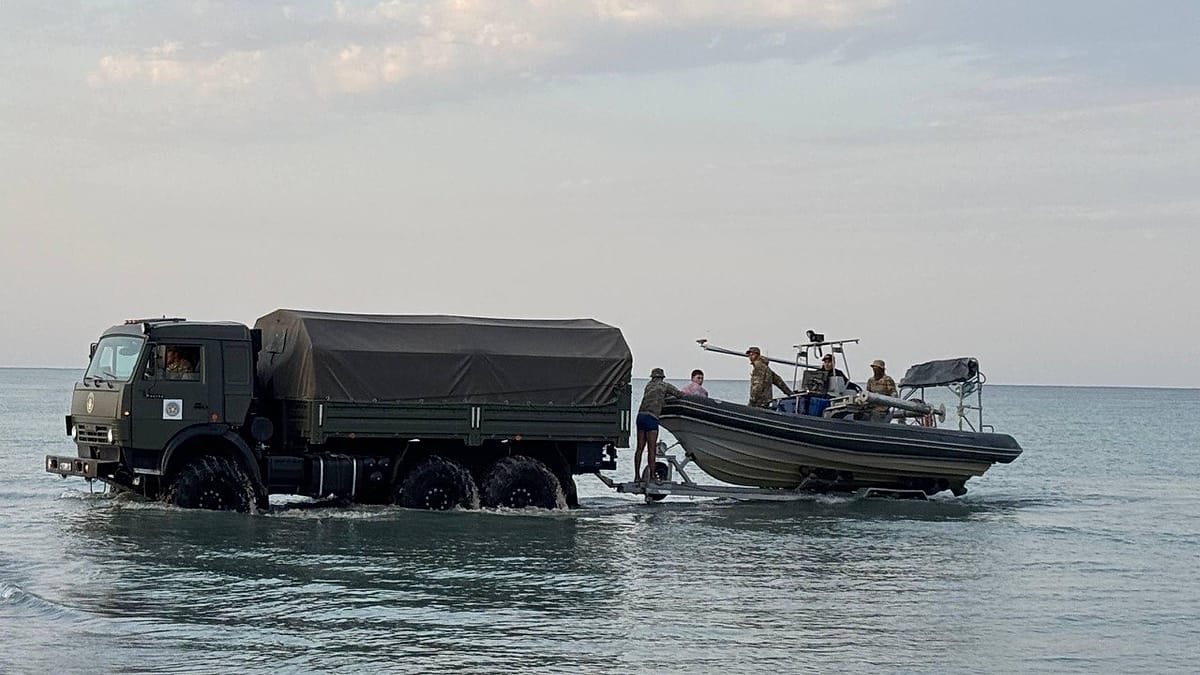
Kazakhstan is in mourning after fourteen of its soldiers died in a training accident in the Caspian Sea, one of the deadliest military incidents in the country's recent history. The tragedy occurred on 24 September in the Mangystau region, near the port city of Aktau, when a group of seventeen servicemen were swept into the open water during a naval exercise.
The soldiers, all born between 2005 and 2007, were disembarking from the Kaisar military vessel in water just one metre deep when strong winds and a sudden deterioration in weather conditions dragged them into the sea. Three of the men were rescued, but the remaining fourteen could not be saved.
Search and rescue operation
The Kazakh Defence Ministry said the search operation involved 252 personnel, including 37 military divers, as well as 14 vessels and boats, supported by aircraft and helicopters. The ministry described the operation in a statement, noting the scale of the effort to locate the missing soldiers.
President Kassym-Jomart Tokayev declared 25 September a day of national mourning and expressed his condolences to the families of the victims. He also ordered authorities to establish the full circumstances of the incident, and a government commission headed by Deputy Prime Minister Kanat Bozumbayev has been working at the scene.
The Prosecutor General's Office said investigators have inspected the site, questioned more than 30 military personnel, and seized documents and video footage as part of the inquiry.
This is not the first fatal accident during military exercises in the Caspian Sea. In 2015, four servicemen died near Aktau when strong winds and waves flooded four armoured personnel carriers during a drill. That earlier incident has been cited by observers as a reminder of the risks posed by the region's volatile weather.
The tragedy has cast a shadow over Kazakhstan's broader ambitions, including its efforts to position itself as a regional trade and production hub. As the country seeks to modernise its armed forces and infrastructure, questions are likely to be raised about safety protocols and training standards.
For the families of the young soldiers, the loss is deeply personal. The servicemen were barely out of their teens, and their deaths have prompted an outpouring of grief across the country. The day of mourning saw flags lowered to half-mast and a sombre atmosphere in Aktau and beyond.
While the investigation continues, the incident serves as a stark reminder of the dangers that military personnel face even in routine training. It also highlights the need for rigorous safety measures, particularly in environments as unpredictable as the Caspian Sea.