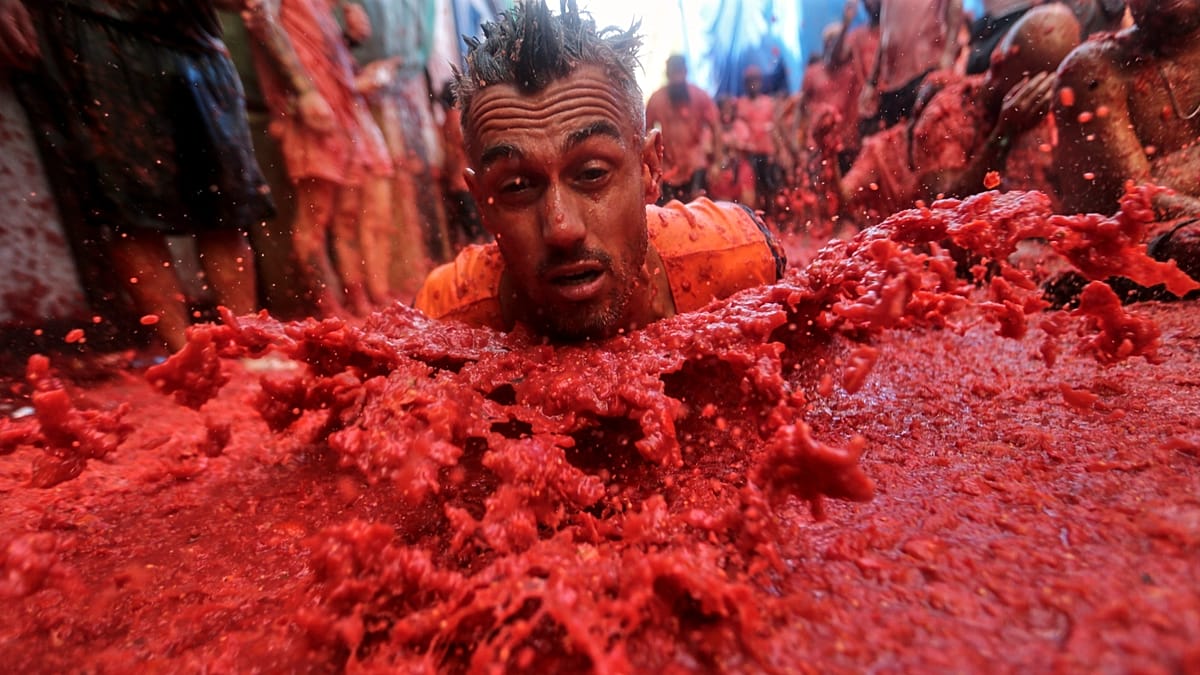
Thousands of revellers turned the streets of Buñol, a small town in eastern Spain, into a sea of red on Wednesday as the 79th La Tomatina got underway. Participants hurled 165 tonnes of overripe tomatoes at each other for just over an hour, continuing a tradition that has become one of Spain's most recognisable cultural exports.
The event, held on the last Wednesday of August, drew an estimated 20,000 people, with roughly 40 percent of attendees coming from outside Spain. In recent years, the festival has gained particular popularity among Indian visitors, thanks to the 2011 Bollywood film Zindagi Na Milegi Dobara, which recreated the tomato fight on screen.
A tradition born from a brawl
La Tomatina's origins date back to 1945, when a scuffle broke out between two groups of teenage boys during a parade in Buñol. The fight escalated, and bystanders began throwing tomatoes from a nearby market stall. The following year, the young men returned with their own tomatoes, and the informal tradition took root.
The festival was banned under the dictatorship of Francisco Franco in the 1950s, but locals defied the prohibition with a mock funeral. Dressed in black, they carried a giant tomato in a coffin through the streets to the sound of funeral music. The protest was effective: in 1959, the festival was reinstated, this time with official rules, including a strict time limit and a requirement for participants to help clean up afterwards.
Today, La Tomatina is a carefully managed event. Trucks deliver the tomatoes, which are grown specifically for the occasion and are too ripe for commercial sale. Participants are encouraged to squash the fruit before throwing to avoid injury, and the fight ends promptly after an hour, when a signal is given and the cleanup begins.
The festival has become a major draw for international tourism, and its popularity shows no sign of waning. Buñol, a town of around 9,000 residents, swells to more than double its size on the day, with visitors arriving from across Europe and beyond.
For many, the appeal lies in the sheer absurdity of the event. "It's chaos, but it's organised chaos," said one participant from Germany, who had travelled to Buñol for the first time. "You come for the tomatoes, but you stay for the atmosphere."
The event also offers a boost to the local economy, with hotels and restaurants in the region reporting full bookings in the days around the festival. As Spain continues to attract visitors beyond the traditional summer months, events like La Tomatina are part of a broader trend of Spain leading the pack as September becomes Europe's new peak season.
While the festival is a celebration of excess, it also reflects a deeper cultural identity. Buñol's residents take pride in their role as hosts, and many locals participate in the event, which has become a symbol of communal joy and resilience. The tradition has survived bans, wars, and more recently, the COVID-19 pandemic, which forced its cancellation in 2020 and 2021.
As the last tomatoes were swept away and the streets hosed down, participants emerged from the red-stained chaos, smiling and covered in pulp. For one day each year, Buñol becomes the centre of a global spectacle that is as messy as it is joyful.