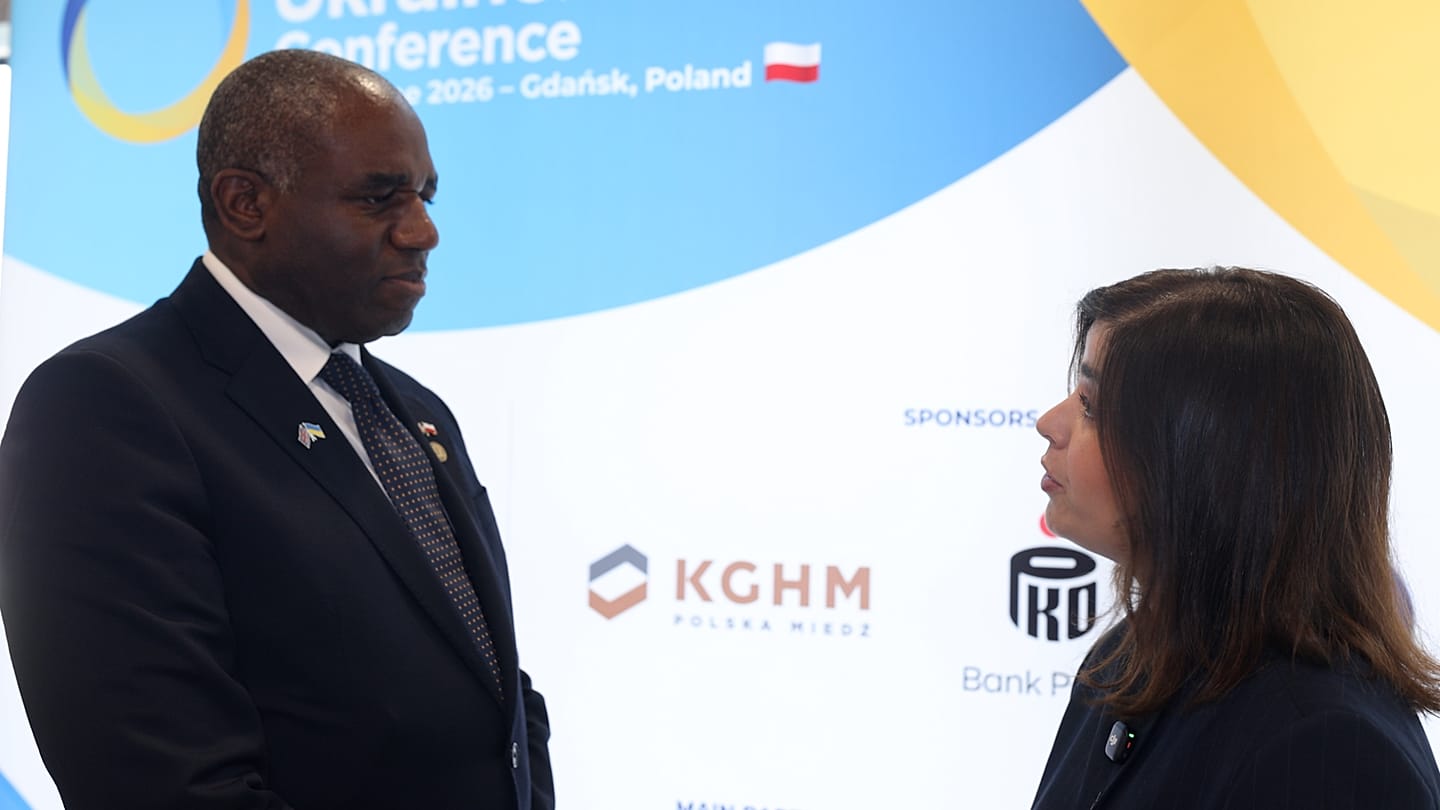
In a recent interview with Europe Today, UK Deputy Prime Minister David Lammy sought to reassure European partners that the country's foreign policy trajectory will not shift with the impending change of prime minister. Lammy, who also serves as Foreign Secretary, emphasized that the core tenets of London's international posture — particularly its steadfast backing of Ukraine and its cautious reopening toward Brussels — are now embedded in a cross-party consensus.
Continuity in a Time of Transition
When Keir Starmer vacates Number 10, the next occupant will inherit a foreign policy framework that Lammy described as "settled." He pointed to the UK's military and financial aid to Kyiv, which has been a hallmark of British strategy since Russia's full-scale invasion in 2022, as an area where no deviation is expected. "Our support for Ukraine is not a partisan issue; it is a national interest," Lammy said.
On relations with the European Union, Lammy acknowledged the delicate balancing act required. The UK has been seeking to improve ties after the acrimony of the Brexit years, but without reopening the fundamental terms of departure. This approach aligns with recent signals from Brussels, including Michel Barnier's statement that the EU's door remains open to the UK, but no cherry-picking will be allowed. Lammy's comments suggest that the next government will continue to pursue a pragmatic, sector-by-sector rapprochement rather than a grand reset.
Ukraine as a Litmus Test
The war in Ukraine remains the most immediate test of European solidarity. Lammy reiterated that the UK will maintain its role as one of Kyiv's largest donors, both in terms of lethal aid and humanitarian support. He noted that the upcoming transition in Downing Street should not be misinterpreted by Moscow as an opportunity to exploit a perceived leadership vacuum. "The Kremlin should understand that British resolve is not tied to any one individual," he said.
This message is particularly relevant as European capitals grapple with internal divisions over foreign policy, as seen in the recent Kallas-Israel spat that exposed EU divisions over Middle East policy. Lammy's emphasis on continuity aims to project stability at a time when the continent faces multiple external pressures.
Broader European Context
Lammy's assurances come amid a wider debate in Europe about the durability of foreign policy consensus. In Italy, Prime Minister Giorgia Meloni's popularity has held steady despite a public spat with former US President Donald Trump, as recent polls show. Meanwhile, twelve EU states are pushing for post-2030 green funding to ease the energy transition, a sign that long-term planning remains a priority even as short-term political changes occur.
The UK's position on Ukraine also intersects with broader European security concerns. The IAEA chief has insisted that Iran nuclear inspections will proceed despite Tehran's objections, a reminder that the continent's security architecture is under strain on multiple fronts. Lammy's statement is therefore part of a larger effort to reassure allies that London remains a reliable partner in a volatile geopolitical landscape.
What This Means for EU-UK Relations
For the European Union, the prospect of a new British prime minister has been a source of both hope and caution. While Starmer's government has been more conciliatory than its predecessor, the fundamental constraints of Brexit remain. Lammy's interview suggests that the next leader will continue to pursue a policy of "constructive engagement" without crossing the red lines that would trigger a domestic backlash.
This approach is likely to be tested in areas such as trade, security cooperation, and climate policy. On the latter, the UK has been a vocal advocate for international action, aligning with the China, EU, and Canada vow to maintain climate cooperation despite US absence. Lammy's commitment to continuity suggests that London will remain an active participant in these multilateral efforts.
In sum, Lammy's message is one of reassurance: the UK's foreign policy is not for sale to the whims of a single leader. For European partners, this is a welcome signal of stability in an otherwise uncertain period.