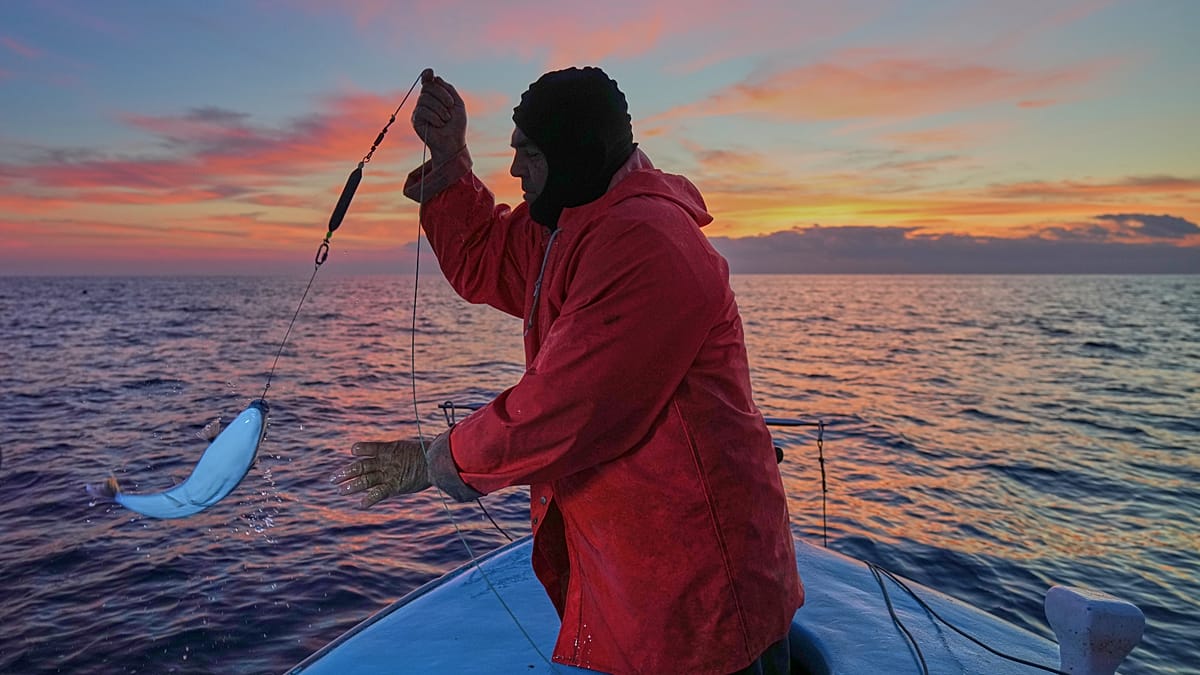
The Mediterranean Sea that sustained ancient civilisations and modern coastal economies is undergoing a transformation that scientists describe as irreversible. Warming waters, driven primarily by fossil fuel combustion, have turned the enclosed basin into a corridor for aggressive alien species that are decimating native populations.
Ernesto Azzuro, a marine biologist at Italy's National Research Council's Institute for Marine Biological Resources and Biotechnology, puts it bluntly: “The Mediterranean of our grandfathers, of our elders, and of the Greeks, of ancient Greece is lost forever. So many of those changes are irreversible.”
A hot spot for climate change
Scientists have designated the Mediterranean as a climate change “hot spot,” with projections from the Mediterranean Experts on Climate and Environmental Change indicating water temperatures could rise by 2 to 6 degrees Celsius by 2100. Heatwaves are expected to become more frequent and extreme. Ronan McAdam, an oceanographer at the Euro-Mediterranean Center on Climate Change, explains that the sea's enclosed nature prevents warmth from dissipating as it would in open oceans.
This warming has created an inviting environment for invasive species entering via the Suez Canal. The spotted puffer fish, described by Azzuro as the “worst invader,” is now advancing toward France and Spain. The United Nations Food and Agriculture Organization's General Fisheries Commission for the Mediterranean notes that while such species have been present for decades, their spread accelerated after the early 2000s, coinciding with rising sea temperatures. The lionfish, first recorded in the eastern Mediterranean in 2012, has expanded rapidly westward.
Cyprus, due to its proximity to the Suez Canal, has been the first to feel the impact. Lionfish have supplanted indigenous stocks like red mullet, to the dismay of fishers who have seen local varieties popular with customers diminish. Rabbitfish, which devour algae from the sea bottom, are destroying habitats for many native species.
About 1,000 invasive species have been identified in the Mediterranean, with 800 firmly established. The changes are stark: Azzuro reports that the shallows of the eastern Mediterranean have lost 93 percent of their mollusk population. Along the Adriatic coast, from Venice to Bari, mussel die-offs have been “spectacular,” with nearly all mussels killed when sea temperatures exceeded 30 degrees Celsius. “Unless we find populations able to survive through these different climates, the future of mussels is not a happy future, at least in the Adriatic Sea,” he says.
Piero Genovesi Papik, a zoologist at Italy's Higher Institute for Environmental Protection and Research, emphasises that the root cause is clear: “We know what should be done. We should reduce the use of fossil [fuels]. But that's definitely an urgent matter for humanity, and we all know the solutions, but of course they require a global and joint vision.”
Human health risks and economic adaptation
Some invasive species pose direct threats to human health. The puffer fish is toxic and potentially lethal if consumed, while the lionfish's poisonous spikes can cause severe injury. Azzuro's institute launched a campaign called 'Beware of those four' to raise awareness about these dangers.
Experts agree that reversing the spread of invasive species is no longer possible. Instead, they are exploring ways for coastal communities to adapt. One approach is commercialising edible invasive species. Lionfish, for example, fetches high prices in some markets. Another is paying fishers to catch inedible species like the puffer fish for incineration. However, fishers have not yet capitalised on the invasive dusky spinefoot, whose population has grown significantly in Italian waters.
Papik points to practical mitigation measures. Enforcing an international treaty that requires ships to treat ballast water could reduce new alien species introductions by 95 to 99 percent. Treating ship hulls with special paint can also prevent unwanted hitchhikers from latching on. These steps, while not reversing existing damage, could slow further degradation.
The broader context of Europe's climate challenges is evident in wildfires exposing unpreparedness for a hotter, drier future and persistent Mediterranean heat. Meanwhile, citizen scientists are helping track marine invaders in the Canary Islands, as documented in this initiative. The Mediterranean's transformation is a stark reminder that the continent's natural heritage is under threat from forces that require coordinated, global action.