A letter circulating among Members of the European Parliament (MEPs) has raised alarms about the potential for market concentration under the EU-Mercosur trade agreement, specifically regarding how tariff-rate quotas for agricultural products are allocated. The document, addressed to EU Agriculture Commissioner Christophe Hansen and Climate Commissioner Wopke Hoekstra, warns that the current system could allow large South American agribusinesses to dominate access to European markets.
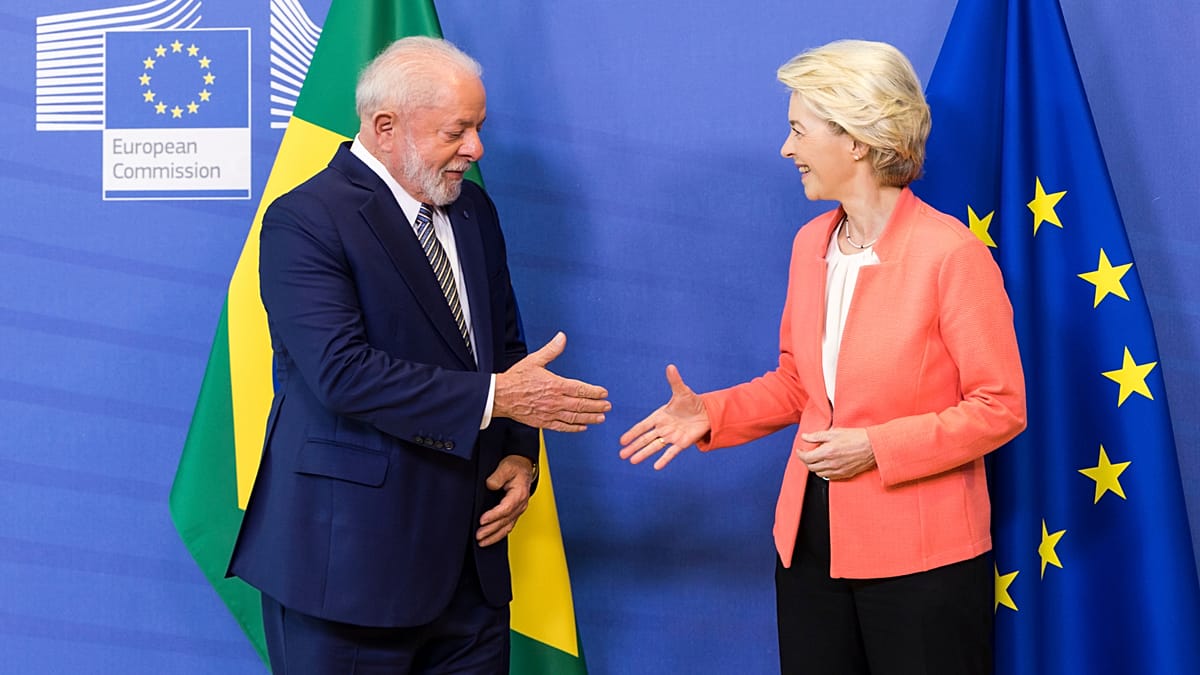
The agreement, signed in mid-January between the EU and Mercosur countries—Brazil, Argentina, Paraguay, and Uruguay—aims to create a free-trade area covering over 700 million people. It includes tariff-rate quotas for sensitive products like beef and poultry: 99,000 tonnes of beef annually at 7.5% tariffs, and 180,000 tonnes of poultry at 0%, both phased in over five to six years. Despite these limits, European farmers have voiced strong opposition, fearing unfair competition from Latin American imports.
Quota Allocation Risks
The letter, initiated by Belgian liberal MEP Benoît Cassart—himself a farmer—highlights that the agreement allows Mercosur countries to manage quota allocation themselves. This, the letter argues, creates a high risk that volumes will be captured by a limited number of large industrial groups, particularly in Brazil, where markets are already highly concentrated. “In markets that are already highly concentrated, particularly in Brazil, there is a high risk that volumes will be captured by a limited number of large industrial groups with the financial and administrative capacity to access quotas and operate through subsidiaries located in Europe,” the letter states.
Cassart’s office told Euronews that concerns focus on Brazil, where quotas are allocated based on past export performance or financial and technical criteria that favor well-established players. Brazilian meat giant JBS, heavily subsidized by Brasília, is among those singled out. The letter warns that reduced-duty quotas allow large exporters to enter the European market more easily and secure outlets, then increase volumes by exporting beyond quotas at full duties to the same buyers. “Quotas serve as a strategic entry point, enabling exporters to expand their presence and consolidate their position on the European market,” it adds.
The letter will circulate among MEPs until 30 April, ahead of the agreement’s provisional entry into force on 1 May. On 21 January, the European Parliament moved to refer the agreement to the Court of Justice of the European Union to assess its legality, reflecting ongoing unease.
The document calls on the European Commission to exclude beef and poultry from the quota management system granted to Mercosur countries, so that control remains “fully and exclusively” in EU hands. This push comes as European farmers continue to protest, arguing that the deal undermines local producers and could exacerbate strains on Europe's agricultural sector.
The broader context of the EU-Mercosur deal also touches on geopolitical dynamics, as the EU seeks to diversify trade partners amid global tensions. However, the letter underscores that without careful oversight, the agreement could entrench the power of a few large firms, rather than fostering fair competition. As the provisional start date approaches, the debate over the deal’s impact on European agriculture and market fairness is likely to intensify.