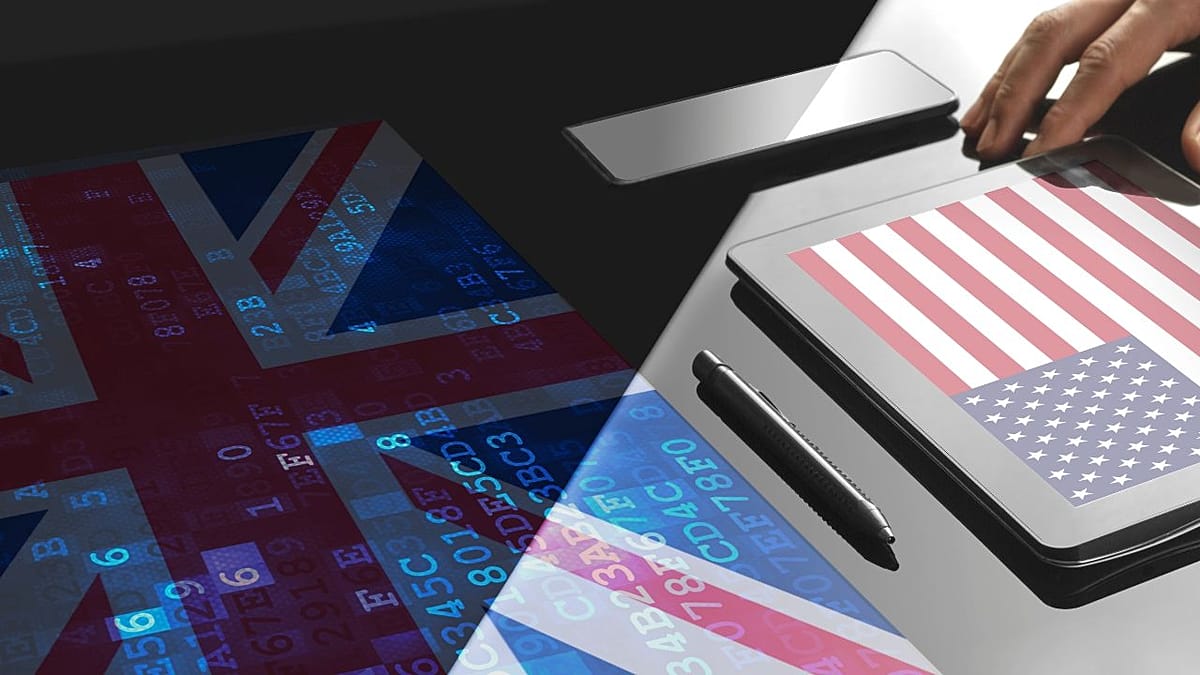
US President Donald Trump has revived a threat to impose tariffs on the United Kingdom unless it abandons its digital services tax (DST), a levy that targets revenues from American tech giants. Speaking from the Oval Office, Trump warned: “We’ve been looking at it and we can meet that very easily by just putting a big tariff on the UK, so they better be careful.” He added that if the tax is not dropped, “we’ll probably put a big tariff on the UK.”
The UK’s DST, which took effect on 1 April 2020, applies a 2% charge on revenues from social media platforms, internet search engines, and online marketplaces that derive value from users based in the United Kingdom. It covers companies whose worldwide digital revenues exceed £500 million (€576 million), with at least £25 million (€28.75 million) coming from UK users. According to HM Revenue & Customs, the tax raised £944 million (€1.1 billion) from tech companies in the 2025-26 fiscal year, a 17% increase from the previous year.
Why the DST Exists
The DST was originally conceived as a temporary measure, pending a broader international agreement on reforming global tax rules—an accord that has yet to materialise. The UK Treasury describes it as an interim solution and has pledged to repeal it once a suitable global framework for reallocating taxing rights is in place. The government insists the tax applies to businesses, not countries, and is agnostic to where a company is headquartered.
Companies affected include Alphabet’s Google, Meta, and Amazon. Apple’s App Store may also fall within scope as an online marketplace, though UK tax authorities have never publicly confirmed which firms pay the levy.
Trump’s Grievance
This is not the first time Trump has targeted the UK’s DST; his predecessor Joe Biden also objected to it. On Thursday, Trump argued that the tax exploits “the top companies in the world.” He told reporters: “They think they’re going to make an easy buck, that’s why they’ve all taken advantage of our country.” He added: “I don’t like it when they target American companies, because basically, you’re talking about our great American companies — whether we like those companies or don’t like them, they’re American companies and the top companies in the world. The UK did it, a couple of other people did it.”
When asked how high a retaliatory tariff would be, Trump said it would be “more than what they’re getting” from the levy. “What we’ll do is we’ll reciprocate by putting something on that’s equal or greater than what they’re doing,” he explained.
European Precedents
The UK is not alone in imposing a digital services tax. Several European countries have introduced similar levies: France, Spain, Italy, Austria, Denmark, Hungary, Poland, and Portugal. Outside the European Union, Switzerland and Turkey have also implemented such taxes. While many of these focus on online advertising, the UK’s DST specifically targets social media platforms, search engines, and online marketplaces.
The European Union itself has the Digital Markets Act, which regulates the largest digital platforms to ensure fair competition and prevent anti-competitive practices. The broader context of transatlantic trade tensions has been exacerbated by Trump’s broader stance against what he sees as unfair treatment of American tech firms. In August, he wrote on his social media platform that he would “stand up to countries that attack our incredible American Tech Companies.”
For Europe, the dispute underscores the challenge of taxing digital giants in a globalised economy. The UK’s DST, while a national measure, is part of a wider European push to ensure that tech companies contribute fairly to the public finances of the countries where they generate revenue. As the former NATO chief has urged Europe to cut ties with US defense amid Trump’s strains on the alliance, the digital tax row adds another layer of friction to transatlantic relations.
The outcome of this standoff could have implications for other European nations with similar taxes, as well as for the EU’s own regulatory efforts. Whether the UK will bow to Trump’s pressure or hold firm remains to be seen, but the issue is likely to feature prominently in any future trade negotiations between London and Washington.