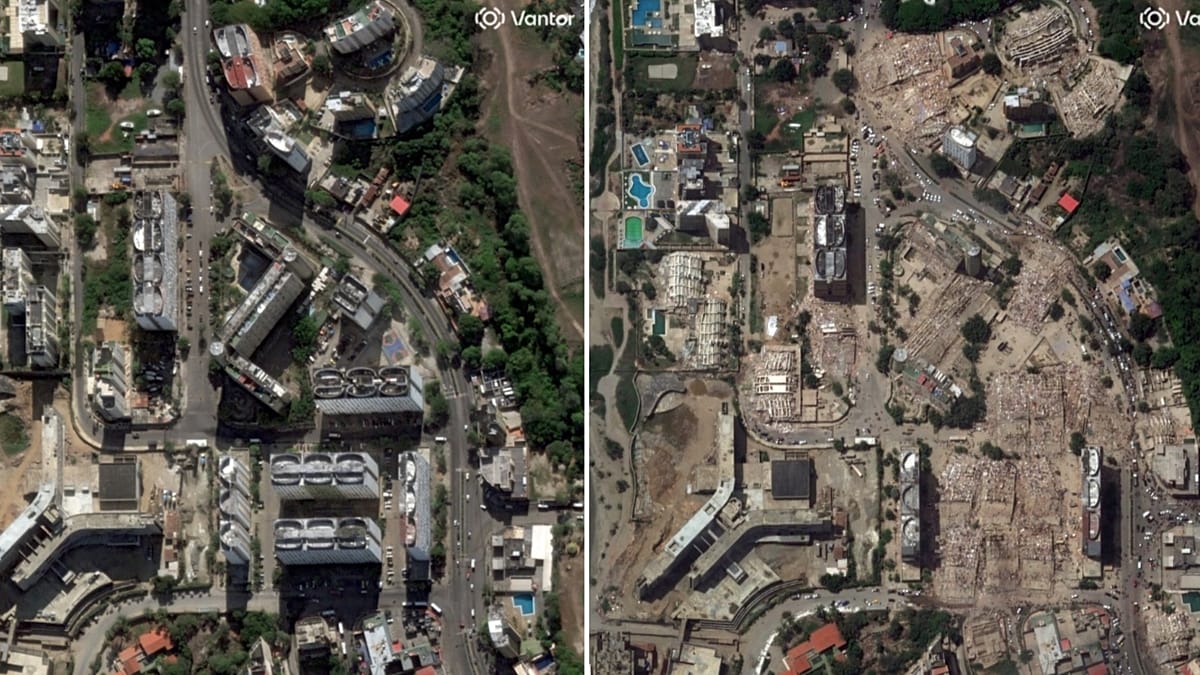
As rescue crews continue to search for survivors in the rubble of the twin earthquakes that struck Venezuela, a parallel effort is unfolding from orbit. Space agencies, technology firms, and international bodies have activated a network of artificial intelligence and geospatial analysis tools to identify, within hours, the areas most likely devastated and to direct emergency resources where they are needed most.
NASA has activated its disaster response programme in collaboration with researchers at Oregon State University. Their task is to analyse radar images captured before and after the quake to detect abrupt changes in the ground and in buildings. Using this system, scientists estimate that nearly 59,000 buildings may have been damaged or destroyed—a preliminary figure that helps steer initial rescue efforts. This data is critical as the death toll has reached 2,295 and the medical crisis worsens.
European Satellites Provide the Raw Data
Those images would not be possible without the European Copernicus programme. The Sentinel-1 satellites, operated by the European Union and the European Space Agency, supply high-resolution radar imagery that can measure ground movements of just a few centimetres and spot buildings whose shape has changed after the earthquake. That information is the raw material on which artificial intelligence algorithms work.
Microsoft has joined that effort through its AI for Good lab. The company has developed computer vision models capable of automatically analysing thousands of satellite images to classify buildings according to the likelihood that they have been damaged. Rather than replacing teams on the ground, these models help set priorities and highlight which neighbourhoods should be inspected first. This is especially important as EU rescue teams scour rubble in the affected areas.
All that information ultimately reaches those who need it thanks to the United Nations Centre for Humanitarian Data (HDX), the platform where Microsoft publishes its damage maps so that governments, NGOs, and rescue teams can consult them almost in real time. This way, different organisations work from the same database and can better coordinate the humanitarian response.
Experts stress that none of these tools replaces inspection on the ground. The maps generated by artificial intelligence provide probabilistic estimates, not a definitive diagnosis. But when thousands of buildings may have been affected and every hour counts in the search for survivors, having an almost instant snapshot of the disaster can make the difference between arriving in time and arriving too late. The EU has warned of an imminent health crisis in the aftermath.