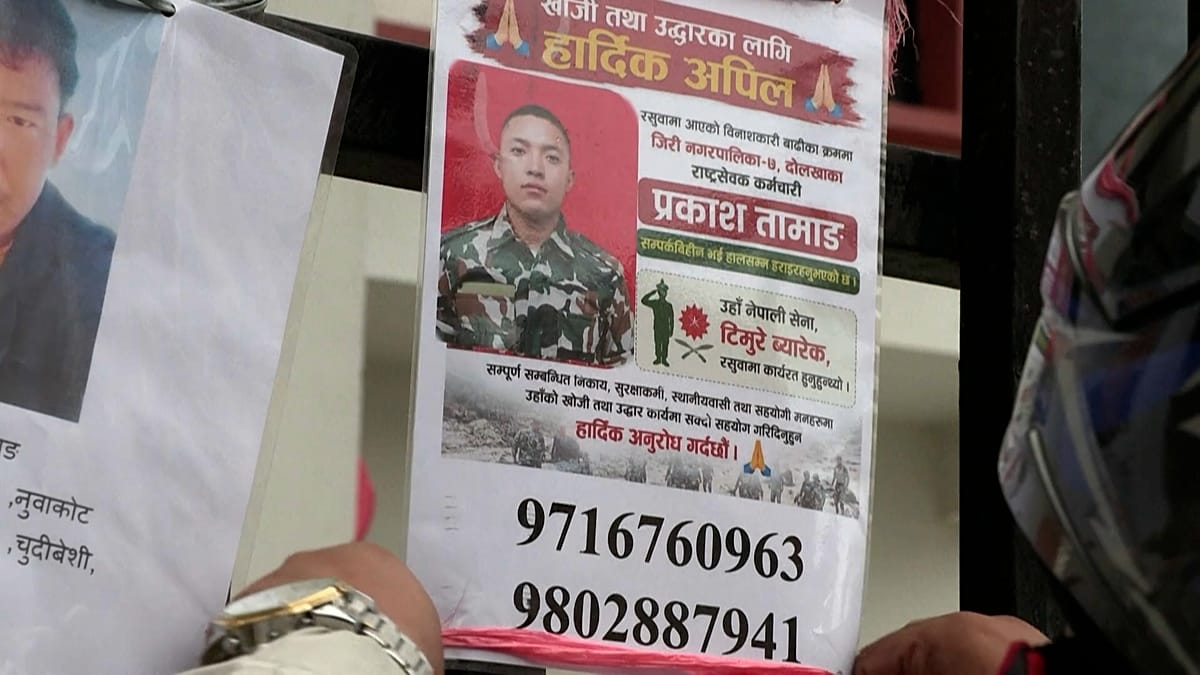
KATHMANDU — In the corridors of Tribhuvan University Teaching Hospital, a makeshift memorial has emerged: dozens of photographs taped to the walls, each one a face of someone missing since the floods that have devastated Nepal. Families, many of whom have traveled from remote villages, scan the images daily, hoping for a glimpse of a relative among the injured or the dead.
The death toll has surpassed 1,000, and officials say thousands remain unaccounted for. The disaster, triggered by relentless monsoon rains, has submerged entire communities, destroyed roads and bridges, and left a trail of mud and debris across the Himalayan nation.
For many families, the hospital wall is the last place to look. “We have no other way to find him,” said one woman, pointing to a photo of her brother, a farmer from Sindhupalchok. “The authorities are overwhelmed. We just want to know if he is alive.”
A nation in mourning, a search for answers
The scale of the catastrophe has overwhelmed Nepal’s emergency services. Rescue teams, including the army, have been working around the clock, but the sheer volume of missing persons has made it impossible to account for everyone. The government has set up helplines and online portals, but for many rural families, the hospital wall remains the most accessible option.
“This is a humanitarian crisis of immense proportions,” said a spokesperson for the International Federation of Red Cross and Red Crescent Societies in Kathmandu. “The need for shelter, clean water, and medical care is urgent, but so is the need for information. Families deserve to know what happened to their loved ones.”
The floods have also raised broader concerns about the impact of climate change on mountain regions. Scientists have long warned that rising temperatures are increasing the risk of glacial lake outburst floods, a threat that extends beyond the Himalayas. As European researchers study similar risks in the Alps, the disaster in Nepal serves as a stark reminder of the vulnerabilities faced by mountain communities worldwide.
In Kathmandu, the mood is one of grief and frustration. Many families accuse the government of being slow to respond, and there is anger over the temporary burials of flood victims, which have sparked outrage over religious rites. The lack of proper identification has compounded the trauma, with many bodies being buried before they can be claimed.
“We are not even allowed to mourn properly,” said a man from Bhaktapur, whose sister is missing. “They bury people without telling us. It is inhumane.”
The international community has begun to respond. The European Union has pledged €2 million in emergency aid, and several member states, including Germany and France, have sent search-and-rescue teams. The United Nations has launched an appeal for $100 million to support the relief effort.
But for the families gathered at the hospital, the aid is secondary. What they want is news. “I have been here for three days,” said a young woman from Kavre, holding a photo of her mother. “I check every face, every name. I will not leave until I find her.”
The hospital staff have tried to help, creating a dedicated area for the photos and updating a list of the injured. But the task is daunting. “We see new photos every hour,” said a nurse. “It breaks your heart. These are not just names; they are people with families, with stories.”
As the search continues, the wall in Kathmandu has become a symbol of the nation’s loss. It is a place where hope and despair meet, where every new photo is a plea, and every missing face is a reminder of the fragility of life in the shadow of the Himalayas.
For now, the families wait. They wait for a phone call, for a knock on the door, for a glimpse of a familiar face among the survivors. And they keep posting photos, because as one father said, “What else can we do? We cannot give up.”