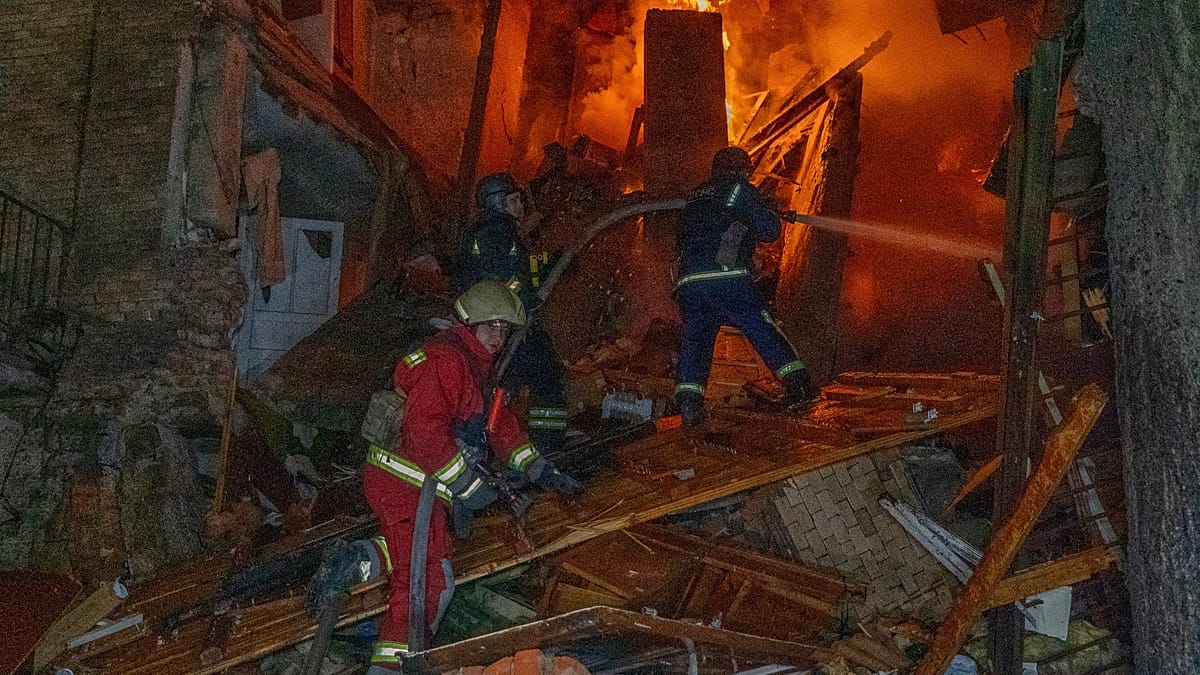
The catastrophic flash flood that tore through southwest Tibet and into central Nepal this week, killing hundreds, is a stark reminder that Europe's own high mountains are not immune to such disasters. While the immediate tragedy unfolded in the Himalayas, glaciologists are pointing to the Alps as a region where similar, albeit likely smaller, events are becoming increasingly probable.
Olaf Eisen, a glaciologist at the Alfred Wegener Institute and the University of Bremen, told Euronews that the Nepal event was likely triggered by a glacial lake outburst or a glacier collapse. He drew a direct parallel to the Alps, where warming temperatures are destabilising high-altitude terrain.
“Europe is among the continents warming the fastest, driven by human-made climate change. Rapidly retreating glaciers and thawing permafrost are destabilising high mountain regions,” Eisen said. He cited a May 2025 incident in the Swiss village of Blatten, where a rock and glacier collapse killed a 64-year-old man despite prior evacuations.
However, Eisen cautioned that the scale of the Nepal disaster is unlikely to be replicated in the Alps. “The disaster in Nepal was, in terms of the volume of the avalanche, around 10 to 20 times larger than Blatten, according to current estimates,” he explained.
Alpine hotspots at risk
The areas most vulnerable in Europe are those at elevations between 2,500 and 3,000 metres, spanning parts of France, Italy, Austria, and Switzerland. Eisen noted that “in combination with extreme weather events such as heatwaves or heavy rainfall, similar natural disasters are becoming more likely there too.”
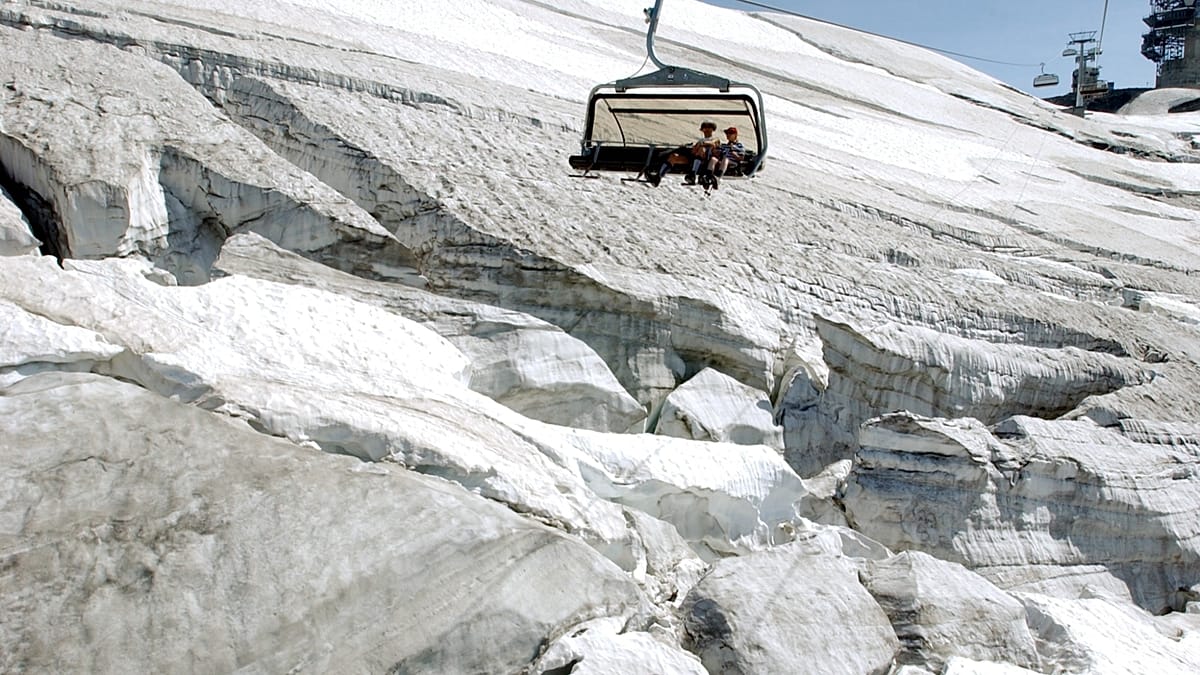
Switzerland has already lost around 1,000 glaciers since 1850, covering an area of roughly 1,000 square kilometres, according to public broadcaster SRF. One glacier under close watch is Weisshorn East, near the village of Randa, which experienced three small collapses earlier this week.
“This glacier has been monitored for years and there are repeated movements – sometimes more, sometimes less,” said Frederic Imboden, the mayor of Randa. While several hundred thousand cubic metres of ice could potentially break away, Imboden stressed that there is no immediate danger to residents, though hiking trails and cycling routes have been closed as a precaution.
Why glaciers collapse
Glacier collapses can be part of natural cycles, but human-induced climate change is increasingly the driving force, Eisen said. The critical factor is permafrost – ground that has remained frozen for at least two consecutive years. As temperatures rise, permafrost thaws and glaciers begin to melt at their base, losing their grip on the bedrock.
“In some cases, the formation of a pocket of water has been observed beneath a glacier that was still frozen at its snout,” Eisen explained. During heatwaves or heavy rainfall, this water pocket can build up pressure until the frozen front gives way, releasing the entire ice mass at once.
Such an event occurred in 2022 on Italy's Marmolada glacier in the Dolomites, when a massive block of ice broke away, killing 11 mountaineers. That tragedy, along with the recent Nepal flood, underscores the urgent need for monitoring and adaptation.
Eisen's message is clear: “Climate protection is glacier protection. Every tenth of a degree less counts. If average temperatures were to fall again, glaciers could adapt and grow.”
For European travellers heading to high-altitude regions, the risks are real but manageable. Authorities in Switzerland and Austria are already stepping up monitoring and early-warning systems, as seen in Randa. The extreme weather battering Europe is a reminder that climate change is not a distant threat.
As the scientific analysis of the Nepal flood continues, the lessons for the Alps are clear: prepare for the worst, even if the worst is less catastrophic than in the Himalayas.