A week after catastrophic flash floods tore through Nepal's Himalayan foothills, the death toll has surpassed 1,000, and families are grappling with the loss of loved ones whose bodies may never be recovered. The disaster, triggered by a glacial collapse near the China-Nepal border on 26 August, unleashed a torrent of freezing water, rocks, and debris that devastated villages and infrastructure along the Trishuli River and beyond.
Emergency teams have recovered 1,066 bodies so far—1,050 in Nepal and 16 in China—but nearly 4,500 people remain unaccounted for, including 3,916 Nepalis and 546 Chinese. In Kathmandu and other affected districts, relatives have begun holding symbolic funeral ceremonies, accepting that their missing family members are gone. Dolma Newar Tamang, whose husband was traveling to China when the wave struck, told reporters: "We had to do this to set his soul free, so that he is at peace and happy wherever he is." She had called him repeatedly after seeing the news, but he never answered.
Mass burials spark religious outrage
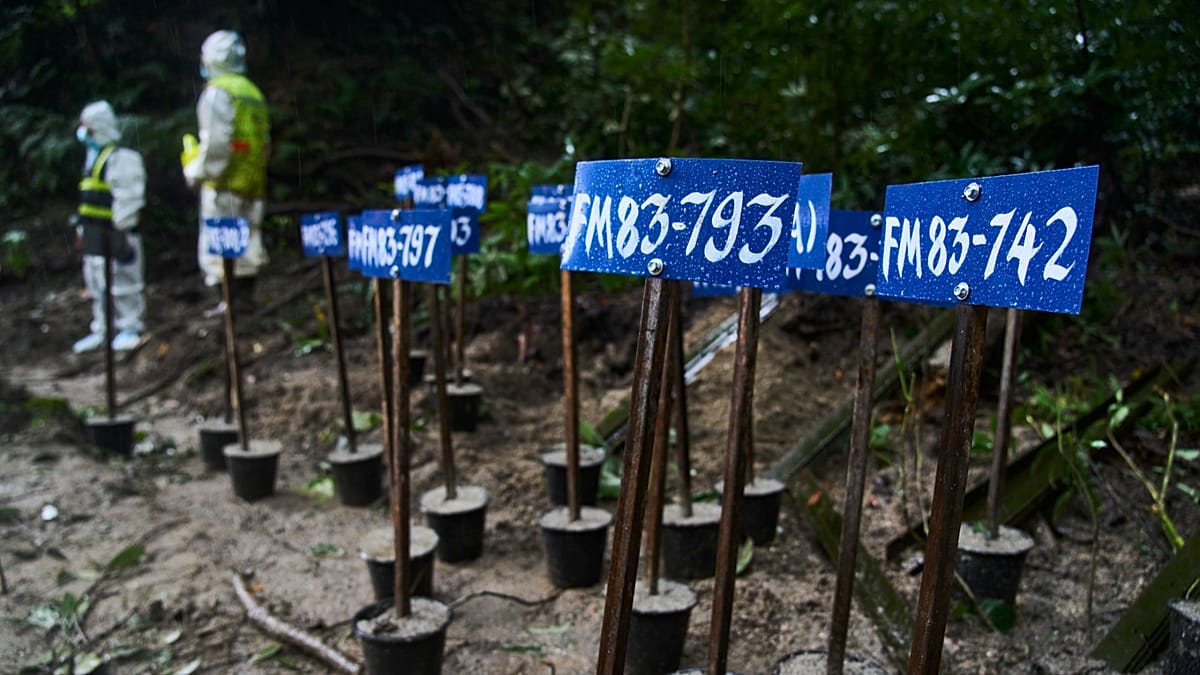
With mortuaries overflowing, authorities have resorted to burying unidentified bodies in mass graves after taking DNA samples. The decision has provoked widespread anger in Nepal's predominantly Hindu society, where cremation is the traditional rite. Many accuse the government of disregarding religious customs in its haste to manage the crisis. The controversy echoes a similar outrage over temporary burials reported earlier, as families demand dignity for the dead.
Nepal's Foreign Minister Shisir Khanal expressed cautious hope that some of the missing might still be alive, saying, "Miracles do happen. At this point, I do not want to completely give up hope." Rescuers are focusing on tunnels of hydropower plants, where survivors could potentially be trapped. So far, only bodies have been pulled from the sludge-filled passages, but teams continue to dig, drill, and blast through debris.
Prime Minister Balendra Shah linked the catastrophe to climate change, writing on Facebook: "Climate change is a global contribution, and disaster response is also a global responsibility." Scientists warn that the Himalayas are warming faster than the global average, accelerating glacier melt and increasing the risk of such glacial lake outburst floods. The region's glaciers provide water for roughly 240 million people in the mountains and another 1.65 billion in the river valleys of South and Southeast Asia.
Nepal, a largely rural nation of 30 million, has contributed minimally to global greenhouse gas emissions yet bears a disproportionate burden of climate impacts. The government estimates reconstruction costs could reach billions of dollars, straining an already fragile economy. As the search continues, the families of the missing are posting photos on hospital walls in Kathmandu, hoping for any news.
The disaster has also drawn attention to the broader vulnerability of mountainous regions. Similar tragedies, such as the Himalayan floods that killed over 1,000, underscore the urgent need for international cooperation on climate adaptation and disaster preparedness.