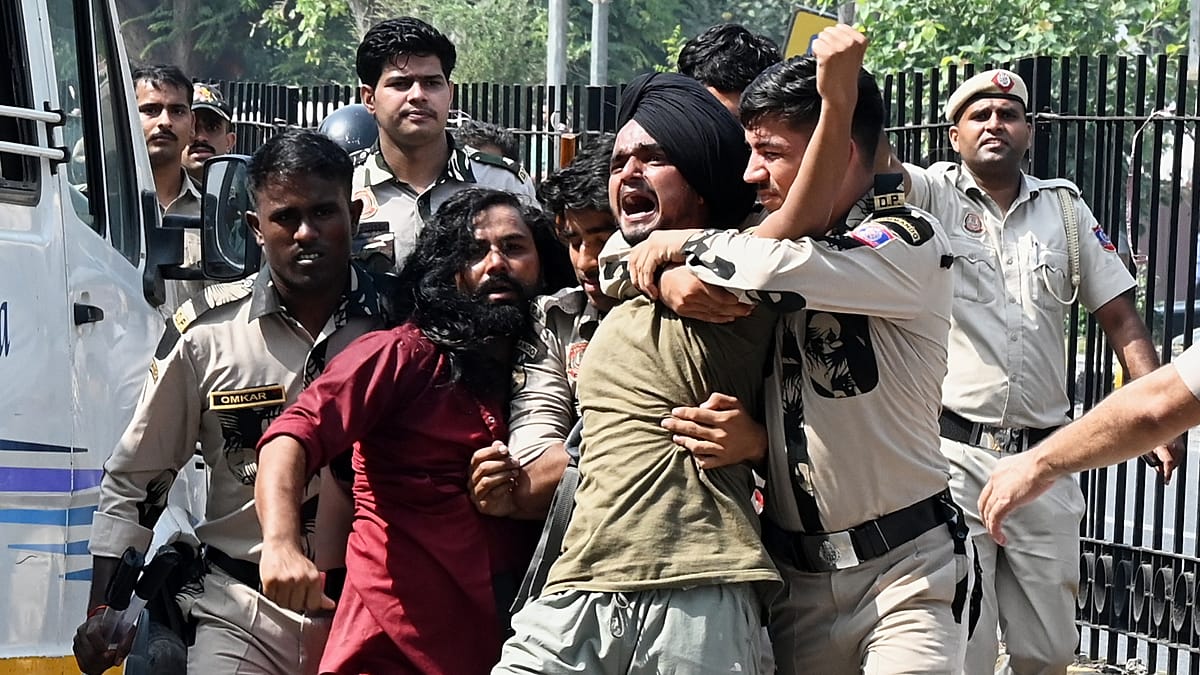
Indian authorities have detained the leader of the so-called 'cockroach movement' and two of his associates as protests against a nationwide voter-roll revision reached the capital on Saturday. The crackdown in New Delhi marks the culmination of weeks of opposition mobilisation against the Election Commission of India (ECI), which critics accuse of misconduct that could benefit the ruling party.
Abhijeet Dipke, founder of the Cockroach Janta Party (CJP), and two other leaders were taken into custody before they could disembark from a flight in New Delhi, according to a statement from the group. The statement said the three were moved to 'an undisclosed location' and were being denied access to lawyers and contact with the outside world.
What is the 'cockroach movement'?
The movement, which borrows its name from the insect's resilience, has become a rallying point for opposition parties and civil society groups. They argue that the ECI's voter-roll revision, which began earlier this year, is designed to remove names of voters who are likely to oppose Prime Minister Narendra Modi's Bharatiya Janata Party (BJP). The ECI has rejected these allegations, insisting that the exercise is meant to eliminate duplicate and ineligible entries.
Protesters, many of whom travelled from across India, attempted to march to the Jantar Mantar protest site in central Delhi on Saturday. Police, backed by tens of thousands of personnel, had sealed off large parts of the city since Friday. Dozens of metro stations were closed, several trains cancelled, and mobile internet services temporarily suspended around the protest area, according to local media reports.
Despite the heavy security presence, hundreds of demonstrators managed to gather, shouting anti-government slogans before being bundled into police vehicles, as witnessed by AFP reporters. The crackdown has drawn comparisons to other recent police actions across the world, including clashes in Brussels over austerity and dispersals in Kosovo, though the context here is distinctly Indian.
The detention of Dipke and his colleagues has raised concerns about freedom of assembly and expression in India, which is often described as the world's largest democracy. Opposition leaders have called for the election commissioner's resignation, arguing that the voter-roll revision could disenfranchise millions of voters, particularly from minority communities and opposition strongholds.
The ECI, for its part, has maintained that the revision is a routine exercise and that all procedures were followed. In a statement, the commission said it was committed to ensuring free and fair elections, and that the allegations of bias were unfounded.
As the standoff continues, the situation in New Delhi remains tense. The 'cockroach movement' shows no signs of backing down, with leaders vowing to continue their protests until their demands are met. The coming days will test India's democratic institutions and the government's tolerance for dissent.
For European observers, the events in New Delhi offer a reminder of the fragility of electoral integrity, a theme that resonates across the continent as well. The European Union has often highlighted the importance of independent election commissions, and the situation in India will be watched closely by those who advocate for transparent democratic processes worldwide.



