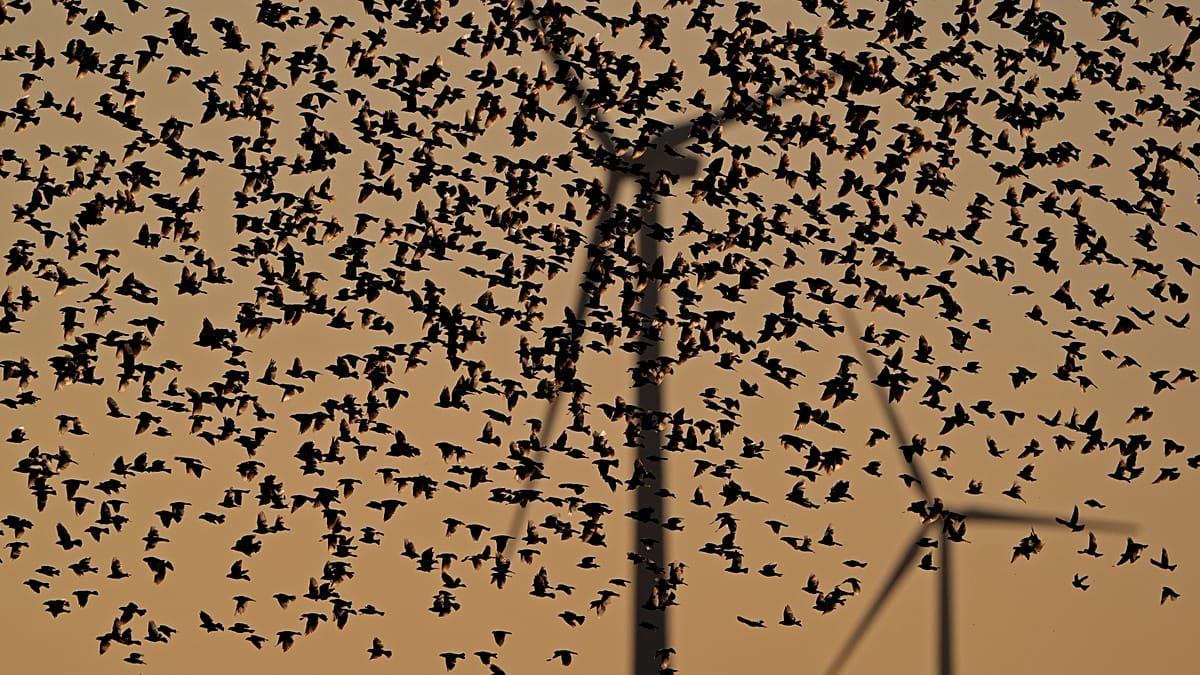
Two significant European studies employing advanced monitoring technology are challenging long-held criticisms that wind turbines pose a major threat to bird populations. The research, conducted in Scottish and German waters, suggests collision risks for many species, particularly offshore, are substantially lower than often claimed, injecting new data into the heated debate between renewable energy expansion and biodiversity protection.
Zero Collisions Recorded in Aberdeen Bay
At the European Offshore Wind Deployment Centre in Aberdeen Bay, a joint study by Swedish energy giant Vattenfall and Norwegian technology firm Spoor has yielded striking results. Over 19 months, from June 2023 to December 2024, AI-supported video systems analysed 2,007 distinct bird flight paths in the immediate vicinity of a monitored turbine. The study documented not a single collision.
"By combining AI-powered detection and detailed expert analysis, we can replace assumptions with concrete observations and measure actual behaviour in the immediate vicinity of wind turbines," said Ask Helseth, CEO and co-founder of Spoor. Dr. Eva Julius-Philipp, Director of Environment and Sustainability for Vattenfall's Wind business unit, concluded that "the results from Aberdeen Bay show that modern offshore wind farms can be operated with low risk to wildlife."
German Research Confirms High Avoidance Rates
Parallel research commissioned by the German Offshore Wind Energy Association (BWO) reinforces these findings for migratory birds. For eighteen months, scientists used a combination of specialised bird radar and AI-controlled stereo cameras to track more than four million bird movements around offshore installations. The analysis calculated an avoidance rate of over 99.8%.
"The new study shows that migratory birds avoid wind turbines. This confirms that the environmentally friendly expansion of offshore wind energy works in harmony with these birds and not against them," stated BWO Managing Director Stefan Thimm. Dr. Jorg Welcker, Head of Research and Development at BioConsult SH, explained the methodology: "AI-controlled stereo cameras determined the flight activity in the rotor area, while a specialised bird radar recorded the migration patterns. By comparing the two data sets, we were able to precisely calculate avoidance rates."
Conservationists Urge Continued Caution
Despite the encouraging data, major European conservation organisations are urging policymakers not to dismiss risks entirely. The German Wildlife Foundation, while supportive of renewable energy, warns that the picture is more complex, particularly for onshore turbines and specific sensitive species.
"The German Wildlife Foundation expressly welcomes the expansion of renewable energies, but it must not be at the expense of species conservation. The urgency of biodiversity protection is in no way inferior to that of climate protection," emphasised Dr. Andreas Kinser, the foundation's Head of Nature and Species Conservation. The group points to species like the lesser spotted eagle, for which expert recommendations in the so-called "Helgoland Paper" suggest a minimum distance of 6,000 metres between a nest and any turbine—a guideline often not reflected in current national regulations.
The foundation criticises a persistent gap between scientific recommendations for bird protection and the legal frameworks governing wind farm siting in Germany and elsewhere in the EU. This tension between green energy goals and habitat preservation is a recurring theme in European environmental policy, echoing broader debates where energy security intersects with ecological safeguards.
Implications for Europe's Energy Transition
The studies arrive at a critical juncture for the European Union's energy strategy. With ambitious targets to expand offshore wind capacity in the North Sea, the Baltic, and the Atlantic, understanding and mitigating environmental impacts is paramount for both regulatory approval and public acceptance. The new data may help streamline planning processes for offshore projects by providing stronger evidence on low collision risks for many seabird and migratory species.
However, experts caution against applying these offshore findings uniformly to onshore wind development. The landscape, flight patterns, and species involved differ significantly. The death of even a small number of protected birds of prey at an onshore site can have disproportionate legal and conservation consequences, as seen in permitting delays in countries like France and Poland.
The research underscores a European-led shift towards evidence-based environmental management, leveraging technology from firms like Norway's Spoor and German research institutes to move beyond theoretical models. This technical approach to ecological challenges mirrors Europe's role in other complex international arenas, from water resource diplomacy to security matters.
Ultimately, the two studies suggest a path forward where detailed, species-specific monitoring becomes integral to wind farm operation. They indicate that for broad categories of birds, particularly in offshore environments, the collision risk is minimal. Yet, as the German Wildlife Foundation insists, this does not eliminate the need for robust, science-led regulations to protect vulnerable species and sensitive habitats on land. The debate is no longer a simple for-or-against wind energy argument, but a more nuanced discussion on how to accelerate the energy transition while implementing precise, effective conservation measures—a balancing act at the heart of the European Green Deal.