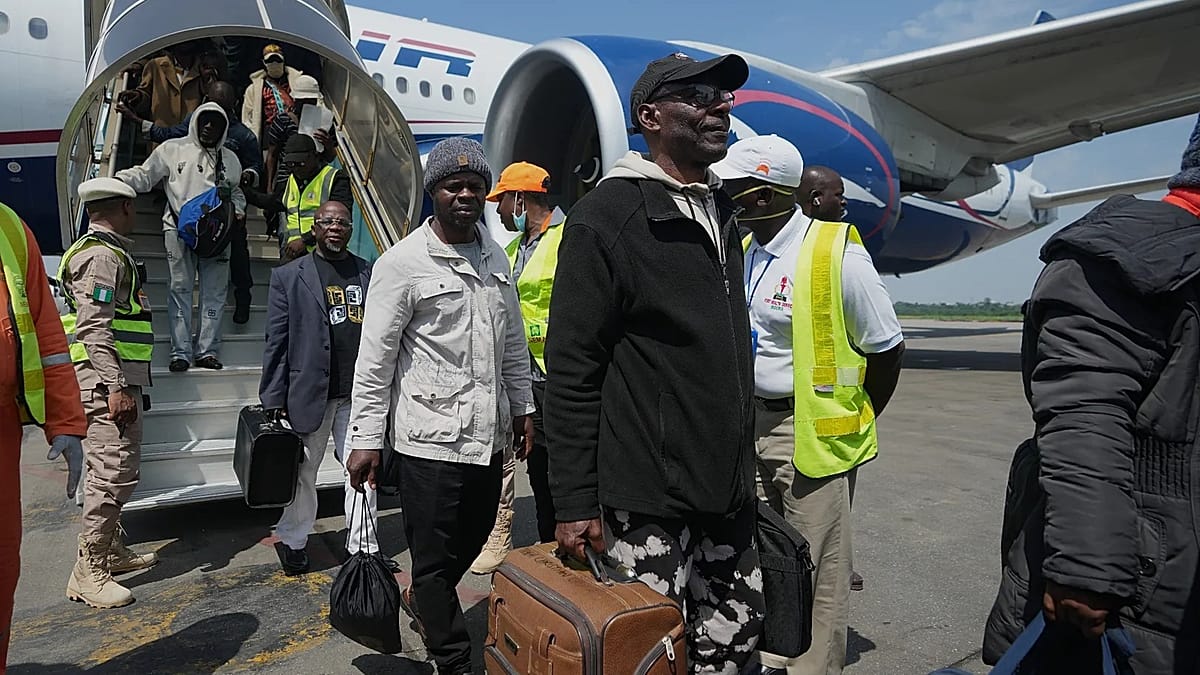
Nigeria has repatriated the first batch of its citizens from South Africa, with 262 passengers and three officials arriving in Lagos on Thursday. The operation, ordered by President Bola Tinubu, follows weeks of anti-immigration protests that have targeted foreign workers across South African cities, including Johannesburg and Pretoria.
Nigeria's Ministry of Foreign Affairs stated that over 1,000 nationals had registered for voluntary return, though only a fraction have been processed so far. The evacuation mirrors a similar move by Ghana, which recently brought home about 1,000 of its citizens from South Africa.
Divergent Narratives on the Ground
The repatriation has exposed a sharp disagreement between the two governments. South Africa's Home Affairs Department said the returnees were found to be undocumented and were processed for repatriation under immigration law. Minister Leon Schreiber confirmed that 586 Nigerians in total have been flagged for removal, with the next group scheduled to depart on Monday.
“Foreign nationals must ensure that their immigration status remains compliant with South African immigration laws at all times and to regularise their stay,” Schreiber said. He added that those repatriated were declared “undesirable persons” and barred from re-entering South Africa for five years.
Nigerian officials, however, have framed the departures as an evacuation from a hostile environment. Foreign Minister Bianca Odumegwu-Ojukwu said the president ordered the “evacuation of imperilled Nigerian citizens who consider their lives at risk by continued stay in South Africa.” In a message to returnees, she emphasised: “The price of your peace and the safety of your children is worth any sacrifices you have to make, or any assets you have to leave behind when fleeing a conflict zone or hate-infested environment.”
The protests, which began in April, have laid bare deep tensions over employment and migration. Local demonstrators accuse foreign workers of taking jobs, while South African officials have condemned the violence as xenophobic. The unrest has also drawn attention from other African nations; Liberia's President Joseph Boakai has said his government will facilitate similar returns if needed.
This episode is part of a broader pattern of anti-immigrant sentiment across the continent, echoing incidents in Europe such as the Belfast violence where anti-immigration protests left homes burned and families displaced. The European Union has also grappled with migration policy, as seen in the EU Migration Chief's talks with the Taliban over migrant returns.
The repatriation highlights the complex dynamics of intra-African migration, where legal status often becomes a flashpoint. While Nigeria insists its citizens were fleeing persecution, South Africa's enforcement of immigration laws underscores a stricter approach under President Cyril Ramaphosa's administration. The next group of returnees is expected to leave on Monday, with both governments continuing to negotiate the terms of departure.