A 17-year-old from North Carolina has been charged as an adult with aiding and abetting murder in connection with a shooting at a mosque in San Diego that left three people dead. The teenager, identified in court records as Sarah L. Santiago, is accused of recording a livestream of the attack and later publishing the gunmen's white-supremacist manifesto.
Forsyth County District Attorney Jim O'Neill announced the indictment at a news conference in Winston-Salem on Monday. A grand jury returned charges of three counts of murder and one count of conspiracy against Santiago, who was arrested last week. Under North Carolina law, aiding and abetting carries the same penalties as committing the crime itself, and Santiago is being held without bond.
According to the indictment, Santiago agreed before the attack to record the livestream as the gunmen filmed it, to distribute the recording, and to release a document written by the attackers. She is also accused of purchasing a patch bearing a white-supremacist symbol and sending it to one of the shooters to wear during the assault.
O'Neill said three people watched the initial livestream, though it remains unclear whether investigators have identified the others. The indictment did not specify which platforms were used for the livestream or its distribution. “The individual here, locally, was the person who was recording the livestream,” O'Neill said. “She disseminated that information and she published their manifesto.”
Santiago's attorney, Alan Doorasamy Sr., said in an email to the Associated Press that his client is innocent of all charges. He noted that he had not yet received evidence from law enforcement and declined to elaborate on any connection between Santiago and the attackers.
The attack and its aftermath
The shooting took place on 18 May at the Islamic Centre of San Diego. The gunmen, 17-year-old Cain Clark and 18-year-old Caleb Vazquez, stormed the building before being driven back by a security guard who exchanged gunfire with them while initiating a lockdown. That lockdown helped protect 140 children who were just steps away.
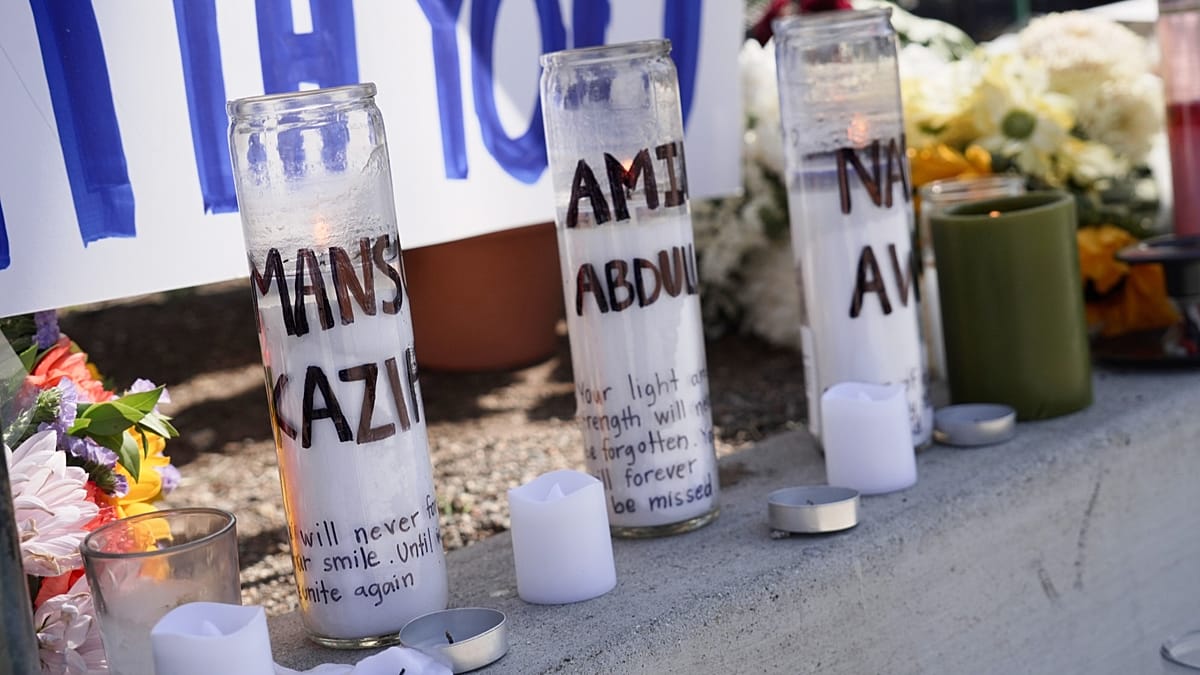
The guard, Amin Abdullah, was killed along with two other men before Clark and Vazquez took their own lives in a nearby vehicle. The attackers left behind rambling writings filled with hatred toward a wide range of groups, including Jewish people, Muslims, Black people, the LGBTQ+ community, women, and both ends of the political spectrum. They cited the 2019 Christchurch mosque shootings in New Zealand, which killed 51 people, as a model for their violence.
O'Neill said Clark and Vazquez had also planned attacks on two other targets: a Jewish temple and a predominantly Black high school. He credited the guard and other victims at the mosque with saving countless lives.
The case has drawn attention beyond the United States, given the global resonance of far-right extremism and the use of livestreaming to amplify violence. In Europe, similar tactics have been used by attackers in Christchurch-inspired incidents, and authorities across the continent have grappled with how to counter the online dissemination of such content. The role of social media platforms in hosting and spreading extremist material remains a pressing concern for regulators in Brussels and national capitals.
As the legal process unfolds in North Carolina, the case underscores the challenges of holding individuals accountable for facilitating violence from a distance. The indictment against Santiago marks a significant step in that effort, though her attorney has signaled a robust defense.