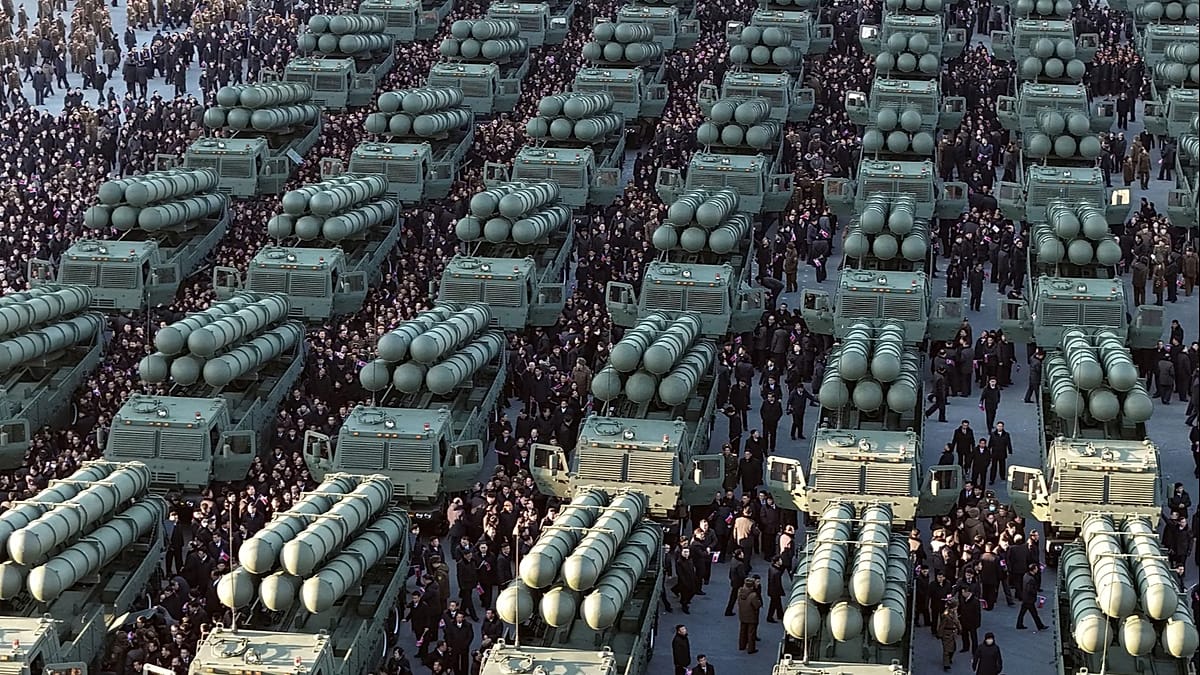
North Korea's top diplomat at the United Nations has stated unequivocally that the country considers itself no longer subject to the Nuclear Non-Proliferation Treaty (NPT), according to state media reports on Thursday. The declaration, made by Ambassador Kim Song, reinforces Pyongyang's long-standing position that external pressure will not alter its status as a nuclear-armed state.
Pyongyang first threatened to withdraw from the NPT in 1993 and formally exited the pact in 2003. Since then, it has conducted six nuclear tests, drawing a series of international sanctions. Intelligence assessments suggest North Korea now possesses dozens of nuclear warheads.
Diplomatic confrontation at the UN
Speaking during a review conference of the NPT at the United Nations, Ambassador Kim Song accused the United States and its allies of "groundlessly calling into question the current status and exercise of sovereign rights" of North Korea. In a statement carried by the official Korean Central News Agency (KCNA), he added: "The status of the Democratic People's Republic of Korea as a nuclear-armed state will not change based on external rhetorical claims or unilateral desires."
Kim Song further declared: "To make it clear once again, the Democratic People's Republic of Korea will not be bound by the Non-Proliferation Treaty under any circumstances whatsoever." He noted that the country's nuclear status has been "enshrined in the constitution, transparently declaring the principles of nuclear weapons use."
North Korea has consistently insisted it will not abandon its nuclear arsenal, describing its path as "irreversible" and vowing to strengthen its capabilities. This stance comes amid ongoing tensions on the Korean Peninsula and broader geopolitical shifts, including constitutional changes in Pyongyang that removed references to unification with South Korea.
The NPT under strain
The NPT, which entered into force in 1970, is signed by nearly every country in the world, with notable exceptions including North Korea, Israel, India, and Pakistan. Its objectives are to prevent the spread of nuclear weapons, promote complete disarmament, and encourage cooperation on civilian nuclear energy.
UN Secretary-General António Guterres warned in his opening remarks at the review session last week that the spirit of the treaty is "eroding." He stated: "Commitments remain unfulfilled. Trust and credibility are wearing thin. The drivers of proliferation are accelerating."
According to the Stockholm International Peace Research Institute (SIPRI), the nine nuclear-armed states—Russia, the United States, France, the United Kingdom, China, India, Pakistan, Israel, and North Korea—possessed 12,241 nuclear warheads as of January 2025. The United States and Russia together hold nearly 90% of the global nuclear arsenal and have both undertaken major modernization programs in recent years.
For European capitals, North Korea's defiance adds another layer of complexity to global non-proliferation efforts. The continent's own nuclear landscape is shifting, with countries like Belgium moving to nationalize nuclear reactors from Engie as part of a broader energy sovereignty push. Meanwhile, the US continues to pursue diplomatic avenues, including military strikes and nuclear deal negotiations with Iran, another state with contested nuclear ambitions.
North Korea's latest declaration underscores the growing challenges to the international non-proliferation regime, as the gap between treaty commitments and geopolitical realities widens.