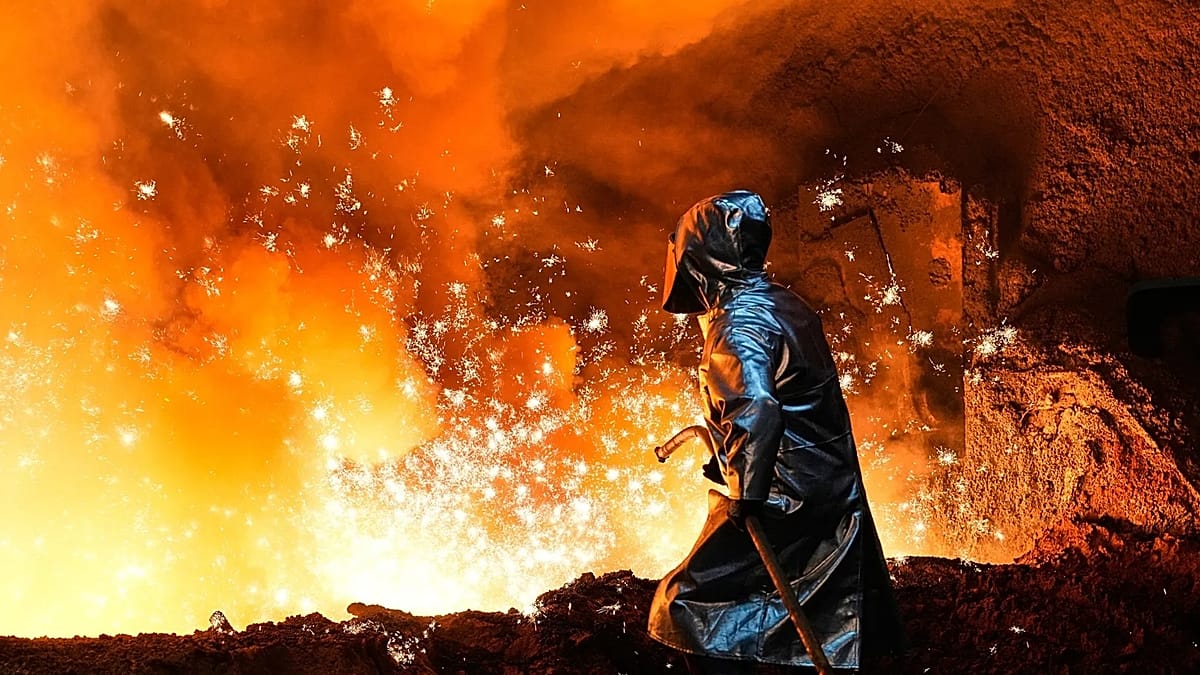
The global steel industry is heading toward a severe imbalance, with overcapacity expected to reach 745 million tonnes by 2028, up from 640 million tonnes in 2025, according to a new report from the OECD. The warning comes as state-backed production, particularly in China, continues to distort markets and pressure producers in Europe and other OECD economies.
Steel is a critical input for construction, manufacturing, electric vehicles, and data centres. Yet global demand is expected to grow by only 34 million tonnes between 2026 and 2028, while producers plan to add up to 139 million tonnes of new capacity over the same period. The OECD says this mismatch threatens to push prices lower and undermine the viability of domestic steel industries across the continent.
China is the primary driver of this expansion. The country plans to add up to 38.6 million tonnes of steelmaking capacity by 2028, the largest increase of any nation. In 2024, the median Chinese steel firm received subsidies equivalent to 15 times those received by producers elsewhere, relative to total assets, according to the OECD. Chinese steel exports hit a record 131 million tonnes in 2025, a 153% increase from 2020 and more than the European Union's total steel production that year.
Subsidies and Trade Circumvention
Speaking at the OECD Ministerial Council Meeting, Secretary-General Mathias Cormann said: "We need to tackle the root causes, including harmful subsidies and other non-market practices. That means stronger international co-operation and a level playing field for steel producers everywhere." The OECD also found evidence that some exporters may be circumventing trade barriers by shipping semi-finished steel to Southeast Asia for processing before re-exporting it to OECD markets. A 300% rise in Chinese semi-finished steel exports to the region points to a possible route for avoiding tariffs and anti-dumping measures.
If current projects go ahead, global excess capacity would exceed the annual steel production of all OECD countries by almost 320 million tonnes, underlining the scale of the imbalance. Policymakers fear that persistent overcapacity could increase dependence on imports of a material regarded as strategically important for defence, energy infrastructure, and manufacturing.
For European steelmakers, the challenges are compounded by higher labour and energy costs, as well as stricter environmental standards. Energy can account for up to 40% of steel production costs, making the sector particularly vulnerable to price spikes linked to the ongoing conflict in Iran. The report also highlights growing pressure on raw material supplies: 42 countries now restrict exports of steel scrap, a crucial input for electric arc furnace production. No steel-producing country is fully self-sufficient in the inputs required for steelmaking.
Europe's exposure is acute. Producers in cities like Duisburg, home to ThyssenKrupp's steel mill, and in regions such as the Ruhr Valley face a competitive disadvantage against rivals benefiting from lower costs or stronger government support. The OECD's findings echo concerns raised in other contexts, such as the OECD report on China's state subsidies, which noted record levels of state intervention distorting markets.
The crisis also intersects with broader energy and trade tensions. Rising energy costs linked to the Iran war add pressure, while the European Commission has been grappling with how to support domestic industries without violating state aid rules. In a related development, Brussels is set to rebuke Rome over untargeted fuel duty cuts, highlighting the delicate balance between national energy policies and EU competition law.
Without stronger international co-operation, the OECD warns that the steel industry could face a prolonged period of low prices and reduced profitability, with significant implications for employment and industrial capacity in Europe. The report calls for a level playing field and urges governments to address the root causes of overcapacity, including harmful subsidies and non-market practices.