The Organisation for Economic Co-operation and Development (OECD) has revised its global growth projections downward, citing the escalating conflict in the Middle East as a primary driver of economic uncertainty. In its latest quarterly update, the Paris-based body now expects the world economy to expand by 2.8% in 2026, a slight downgrade from its previous estimate of 2.9%. However, the organisation warns that if hostilities persist into 2027, global growth could slump to 2.1%—well below the pre-pandemic average of 3.4% recorded between 2013 and 2019.
“The longer the disruptions last, the greater the economic and social costs will be,” said Stefano Scarpetta, the OECD’s chief economist, in the report. He cautioned that many countries could face recession, while weaker investment spending—including in energy-intensive industries and artificial intelligence—would likely lead to higher unemployment.
Energy Prices Pose the Biggest Near-Term Risk
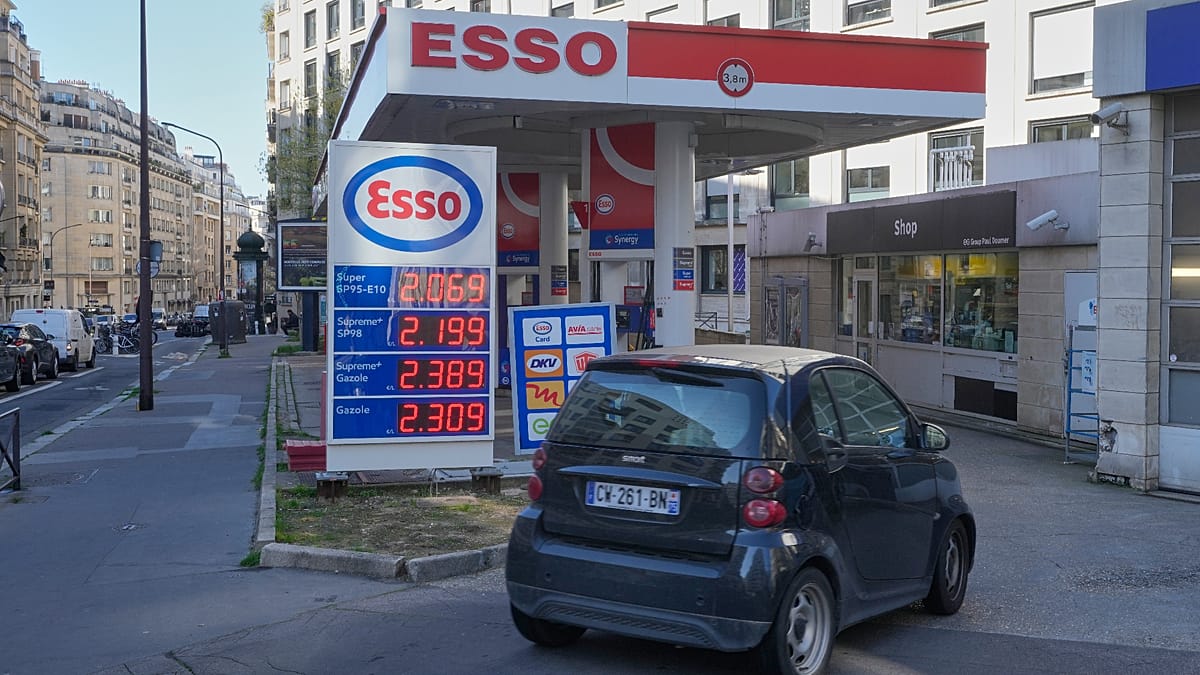
A central theme of the OECD’s analysis is the sharp rise in commodity prices triggered by tensions in the Middle East. The report highlights significant increases in several key commodities: Asian natural gas has surged by 80.8%, European natural gas by 43.2%, and oil, fertiliser-related products, and other commodities linked to hydrocarbon production in the Gulf have also seen substantial gains. These price rises threaten to weaken growth and fuel inflation across energy-importing economies, with the impact likely to be particularly severe in developing countries where households spend a larger share of their income on energy and food.
For Europe, the situation is especially precarious. The euro area is among the regions most exposed to natural gas price shocks and rising industrial energy costs. The OECD forecasts eurozone GDP growth of just 0.8% in 2026, down from 1.4% in 2025. If the conflict is resolved in the coming months, the bloc could see a gradual recovery, with growth expected to reach 1.2% in 2027. According to the OECD, the euro area is likely to benefit from a resilient labour market and increased defence spending, but these factors will be partly offset by tighter fiscal policy and the gradual winding down of spending under the NextGenerationEU recovery programme.
In the United Kingdom, growth is expected to slow from 1.4% in 2025 to 0.9% in 2026, before recovering to 1.1% in 2027 as global trade and financial conditions improve. The United States is forecast to see growth ease to 2.0% in 2026, compared with 2.1% in 2025.
Inflation Proves More Persistent
Even if the conflict ends in the coming weeks, the OECD expects global inflation to rise to 4.0% this year, up from 3.4% in 2025. Higher energy costs, rising industrial production costs, supply-chain disruptions, and increasing fertiliser prices feeding through to food costs are all expected to put upward pressure on prices. Major central banks face a difficult balancing act between supporting economic growth through lower interest rates and containing inflation through tighter monetary policy.
“Central banks are largely expected to keep monetary policy rates stable through 2026 as they balance the risk of inflation expectations becoming de-anchored with that of a sharper growth slowdown stemming from the conflict,” the OECD said. “In 2027, moderating energy prices are assumed to allow policy rate reductions in many countries, including the United Kingdom, Australia, Colombia, Hungary, Iceland, Türkiye, Brazil, Romania and South Africa.” The organisation cautioned against premature interest-rate cuts and stressed the importance of maintaining central-bank credibility.
AI Investment Remains a Rare Source of Economic Strength
One of the few bright spots in the OECD’s outlook is the continued strength of investment linked to artificial intelligence. The organisation said spending on AI infrastructure helped support investment, production, and trade before the conflict, helping to sustain momentum in the global economy despite mounting geopolitical and economic pressures. The OECD noted that its forecasts were made against a backdrop of “solid underlying momentum” in the global economy, supported by strong AI-related investment and favourable financial conditions.
Businesses have shown a notable ability to adapt to economic shocks in recent years, the report added. This, combined with “increasing visibility of the possible productivity gains from AI technologies could push growth higher, especially in 2027.” However, the OECD also warned that a prolonged disruption to energy supplies could threaten the economic productivity AI is expected to deliver. AI infrastructure, including data centres, depends heavily on reliable energy supplies, while key technologies such as semiconductors rely on specialised inputs sourced from Gulf economies.
The report also suggested AI could provide a bigger boost to growth than currently expected. While the United States has led the surge in AI-related capital spending so far, other major economies could increasingly benefit as adoption becomes more widespread and investment accelerates. For Europe, this presents both an opportunity and a challenge, as highlighted by the Athens Innovation Summit, which underscored the continent’s struggle to build global tech champions.
The OECD’s warnings come amid broader concerns about the economic fallout from the Iran conflict. The European Bank for Reconstruction and Development (EBRD) has also cut its growth forecast, citing the energy shock across Europe and beyond. Meanwhile, geopolitical tensions remain high, with the IRGC warning of undisclosed military options as US talks stall, and the UN calling for restraint as Israel pushes into Lebanon.