Oil prices slipped on Monday as signs of progress in US-Iran negotiations eased fears of sustained disruptions in the Strait of Hormuz, a critical chokepoint for global crude shipments. Brent crude fell 0.91% to $79.12 a barrel, while US West Texas Intermediate dropped 0.70% to $75.32.
The decline came after Qatari and Pakistani mediators confirmed that the first round of talks between Washington and Tehran had concluded with what they described as "encouraging progress." A memorandum of understanding signed last week commits both sides to reach a final agreement within 60 days, an end to hostilities on "all fronts" — including in Lebanon — and the reopening of the Strait of Hormuz, through which roughly a fifth of the world's oil passes.
The developments mark a potential shift in a region that has kept energy markets on edge for months. For European consumers and businesses already grappling with elevated energy costs, any easing of supply risks could provide some relief, though analysts caution that the path to a final deal remains fraught. The talks, which follow earlier discussions in Switzerland, are part of a broader diplomatic push that has also seen US and Iranian representatives meet in Lucerne to lay groundwork for a framework agreement.
Asian Markets Mixed as Tech Stocks Surge
Across Asia, stock markets delivered a mixed performance on Monday. Tokyo’s Nikkei 225 jumped 1.6% to 72,364.82, after touching a new all-time high of 72,831.73 during intraday trading. The rally was driven by technology stocks, fueled by sustained enthusiasm around artificial intelligence. Japan’s SoftBank Group rose 2.4%, while chip equipment maker Tokyo Electron gained 2.3%.
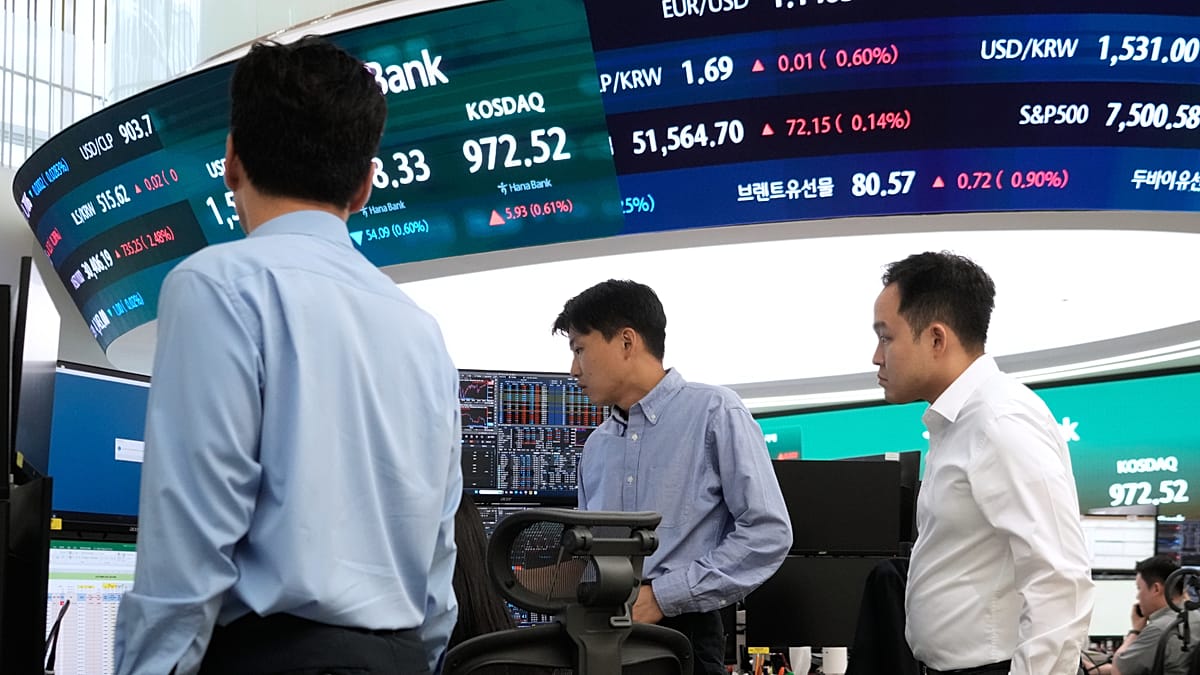
South Korea’s Kospi added 0.4% to 9,084.37, hovering near record levels, led by AI-related shares. Memory chip maker SK Hynix surged 4.7%. However, Neil Newman, managing director and head of strategy at Astris Advisory Japan, sounded a note of caution. "We’re seeing another strong market today," he said, but added that the Japanese market was "probably getting a little stretched" from an investor’s point of view, "especially with what’s going on in the Middle East."
In contrast, Hong Kong’s Hang Seng fell 1% to 23,690.86, while the Shanghai Composite Index edged 0.2% higher to 4,098.01. The divergence reflects ongoing uncertainty about China’s economic recovery and the potential impact of geopolitical tensions on global trade.
For European investors, the oil price decline offers a mixed picture. Lower crude costs could ease inflationary pressures in the eurozone, but the volatility in Asian markets — particularly the tech-heavy indices — may spill over into European trading sessions. The European Union has been closely monitoring the US-Iran talks, given the bloc’s reliance on stable energy supplies and its broader diplomatic engagement in the region. Brussels has also been pursuing its own strategic dialogues, including deepening ties with Kazakhstan, a key energy partner.
The coming weeks will be critical as negotiators work toward a final agreement. If successful, the reopening of the Strait of Hormuz could significantly reduce one of the major risk premiums currently baked into oil prices. For now, markets remain in a wait-and-see mode, balancing optimism over diplomatic progress with caution over the fragility of the talks.