European stock markets opened lower on Thursday as a sharp rebound in oil prices revived inflation fears, with investors digesting signals from the US Federal Reserve and awaiting the European Central Bank's latest policy minutes. Germany's DAX fell 0.76%, London's FTSE 100 dropped 0.75%, France's CAC 40 lost 0.64%, and the Euro Stoxx 50 slipped 1.06%.
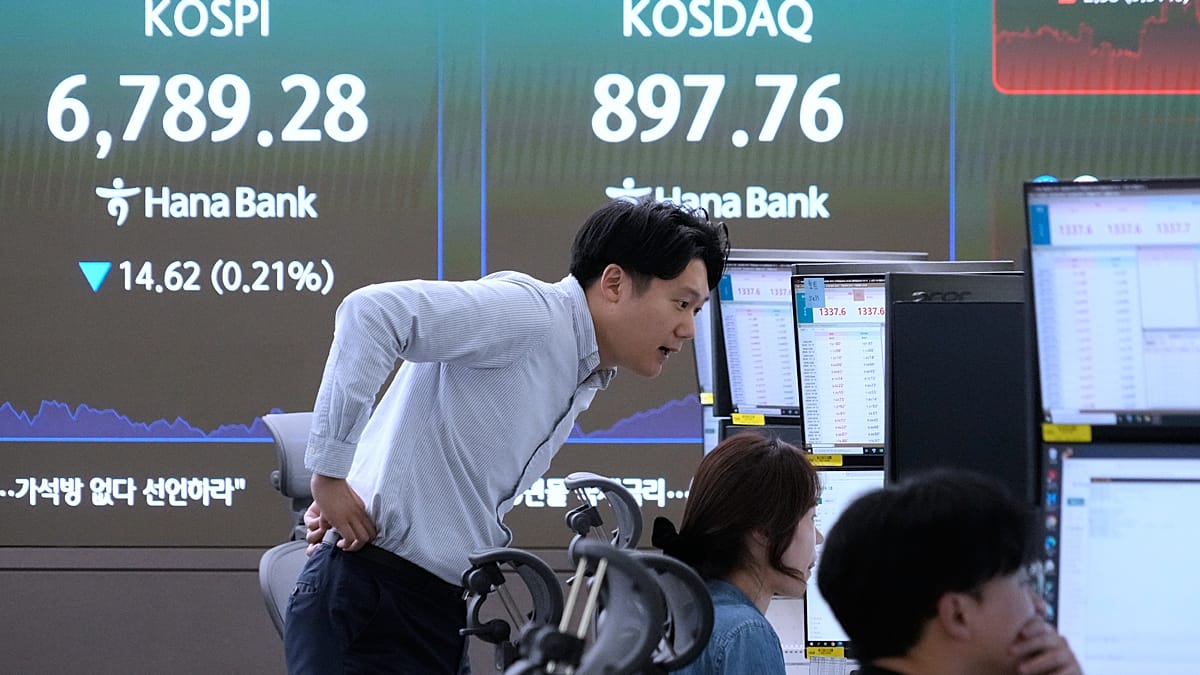
The sell-off extended across Asia, where benchmarks in Tokyo, Hong Kong, Sydney, Shanghai, Singapore, Seoul, Wellington, Taipei and Manila all declined. Wall Street's S&P 500 and Nasdaq had retreated from record highs on Wednesday, with the Dow Jones Industrial Average down 0.7%.
Oil climbs on Iran war risk
Brent crude, the international benchmark, rose 3.7% to $103.91 per barrel shortly after European markets opened, while US West Texas Intermediate gained more than 3.45% to above $91.41. The jump came after earlier declines, when signs emerged that Middle East exports were returning to pre-war levels and G7 nations agreed to tap their stockpiles.
But anxiety returned as data showed Tehran had intensified attacks on tankers in the Strait of Hormuz, the Houthis denied claims they had lost key territory, and senior oil officials warned that global reserves were running dangerously low. The loss of more than 500,000 barrels a day of Gulf of Mexico output, as producers shut down ahead of Hurricane Isaias, added further pressure.
According to a report in The Atlantic, the White House has asked the Pentagon to draw up options for strikes on Iranian targets ahead of next month's US midterm elections, with President Donald Trump's Republicans at risk of losing control of both chambers of Congress. The scale and targets of any potential operation were still under discussion, but a wider campaign could follow the 3 November vote.
Even supporters of the proposed strikes reportedly did not expect them to bring Iran to the negotiating table or restore safe passage through the Strait of Hormuz. However, they hoped military action would help Trump project strength before the election.
Inflation fears and bond yields
The rise in oil prices revived inflation concerns and pushed government bond yields higher. France's 10-year yield stood at 4.89%, while Germany's was 3.48%. The US 10-year Treasury yield remained near a multi-decade high at 5.32%.
Minutes from the Fed's September meeting, released on Wednesday, showed most officials considered another interest rate rise likely before the end of the year. Inflation in the US remains above the Fed's 2% target, and the central bank raised rates in September for the first time since July 2023, by a quarter of a percentage point to a range of 3.75% to 4%.
Rising bond yields have weighed on equities, as higher borrowing costs can squeeze corporate profits and make fixed-income assets more attractive. Tech shares pulled back from recent gains as investors braced for earnings season, with high valuations and heavy spending on artificial intelligence under scrutiny.
Samsung shares fell despite the company estimating a 782.5% rise in third-quarter operating profit to 107.4 trillion won (about €71.8 billion), supported by higher memory chip prices.
The International Energy Agency said on Wednesday that its members supported accelerating oil stock releases already pledged in March, prioritising diesel where possible. This comes as Europe's emergency diesel release faces questions about its effectiveness, with analysts warning that stockpiles cover only 10 days of global demand.
In currency markets, the euro traded at $1.12, the pound at $1.32, and the dollar at ¥158.13. Gold edged higher to $4,143.90 an ounce.
The broader European economic picture remains fragile, with France's debt spiral and political impasse shaking markets, and the euro sliding to a 17-month low amid these worries. Investors will now watch for the ECB's minutes and any further developments in the Iran conflict.