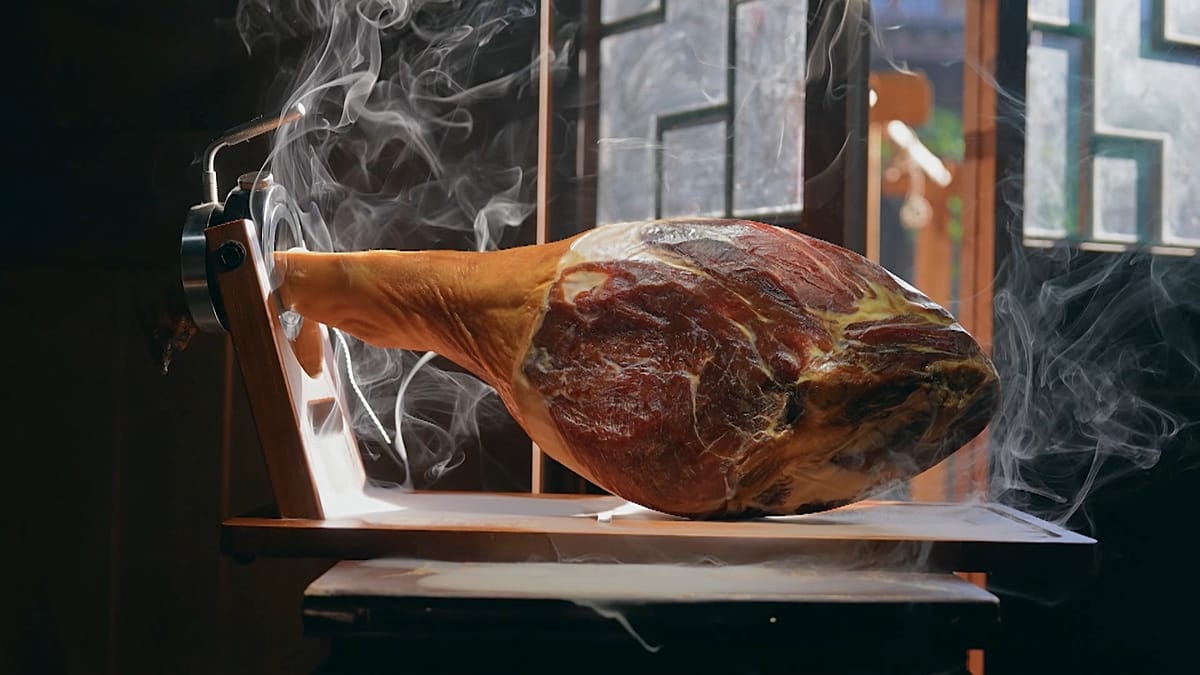
Across the vast expanse of Eurasia, two distinct culinary traditions—European olive oil and Chinese Jinhua ham—stand as monuments to centuries of human ingenuity, shaped by geography and preserved through ritual. Their stories, from the sun-drenched hills of Andalusia to the humid climate of China's Zhejiang province, reveal a shared global narrative: how food becomes heritage, and how that heritage is fiercely protected in the modern age.
Terroir and Tradition: The Roots of Flavour
In Europe, olive oil is more than a condiment; it is a cornerstone of culture, economy, and landscape. The specific microclimates of regions like Jaén in Spain, Crete in Greece, and Puglia in Italy impart unique characteristics to their oils, a concept encapsulated in the French term terroir. This deep connection between place and product is formalised through the European Union's Protected Designation of Origin (PDO) and Protected Geographical Indication (PGI) schemes. These labels legally safeguard names like 'Tuscan Extra Virgin Olive Oil' or 'Kalamata', ensuring they can only be used for products made according to strict traditional methods in their designated regions. This system, debated fiercely in Brussels, is a bulwark against commodification and a statement that some foods are irreplaceable cultural artefacts.
Similarly, Jinhua ham from China's eastern Zhejiang province is a product of its environment. For over a millennium, artisans have used a specific breed of pig, local salt, and the region's unique air temperature and humidity to cure hams through a meticulous, months-long process. The result is a complex, umami-rich flavour prized in Chinese cuisine. Like its European counterparts, Jinhua ham has received Geographical Indication protection from Chinese authorities, recognising that its essence cannot be replicated elsewhere. This parallel development of sui generis protection systems in Europe and China underscores a common understanding of food as intellectual and cultural property.
Regulation as Preservation
The journey from local specialty to globally recognised heritage item is fraught with challenges, primarily the tension between artisanal scale and industrial production. The EU's quality schemes, while sometimes criticised as bureaucratic, actively shape agricultural policy and consumer markets. They empower small producers in places like Portugal's Alentejo or Slovenia's Istria, allowing them to compete not on price, but on authenticity and quality. This framework has inspired similar protections worldwide and forms a key part of Europe's soft power, exporting a model of cultural conservation.
In China, the protection of Jinhua ham is equally serious, involving strict controls over raw materials, production zones, and techniques. This regulatory embrace aims to preserve a tangible link to the past while navigating a modern, mass-market economy. The story of Spain's acorn-fed Iberian ham, which has achieved global gourmet status, mirrors this path, showing how protected heritage can find an international audience. You can explore this parallel in our feature on Spain's acorn-fed Iberian ham.
These systems do more than protect recipes; they sustain rural economies, maintain biodiversity in olive groves and pig breeds, and preserve a way of life. They answer a growing consumer desire for traceability and narrative in an age of anonymous global supply chains.
A Broader Heritage Conversation
The dialogue between Europe and China on food heritage is part of a much wider, global conversation about preserving intangible culture. From the mask-makers of Venice to the embroiderers of China's Miao communities, artisans are finding that formal recognition can be a tool for survival. Similarly, new technologies are opening fresh avenues for preservation, as seen in projects that use digital archaeology from Amsterdam to Chongqing to safeguard historical knowledge.
Ultimately, the golden-green oil of the Mediterranean and the deep-red ham of Jinhua are more than sustenance. They are living archives, encoding climate, history, and community values in their very molecules. Their protected status in Europe and China represents a conscious choice to value depth over breadth, and tradition over transience, in our relationship with food. As these ancient products navigate the 21st-century marketplace, their survival tells a story of cultural resilience, one that resonates from the Bundestag to Beijing, ensuring that the flavours of history are not lost to the future.