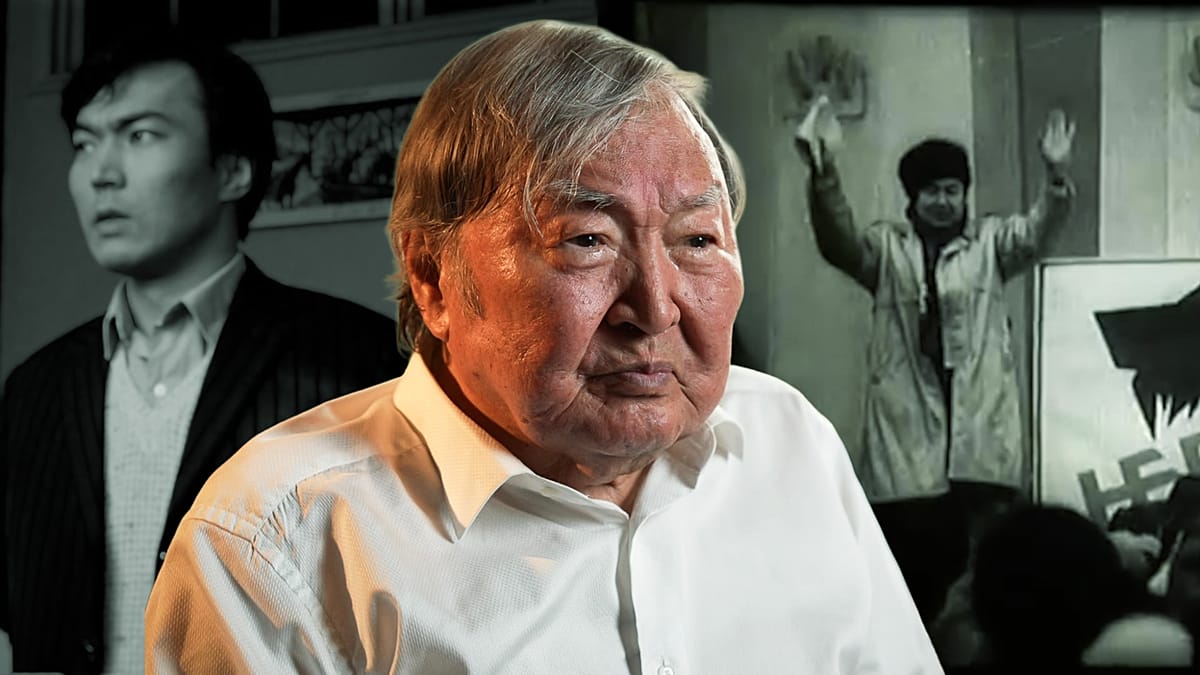
In the annals of 20th-century activism, where the power of the pen has often shaped political reality, the story of Olzhas Suleimenov stands apart. A poet from Almaty who became a global figure, Suleimenov's legacy is inextricably linked to the desolate steppe of northeastern Kazakhstan and the end of one of history's most destructive nuclear testing programmes.
The Steppe's Silent Scourge
For four decades, the Semipalatinsk Polygon, a sprawling 18,000-square-kilometre military zone near the city of Semey, was the Soviet Union's primary nuclear proving ground. Between 1949 and 1989, over 450 atmospheric, surface, and underground tests were conducted, often without warning to nearby villages. The human and environmental toll was catastrophic, with contaminated water and soaring rates of cancer and birth defects becoming a grim hallmark of life in the region by the late Soviet period.
This was the landscape into which Olzhas Suleimenov, born in 1936 and by the 1980s a respected literary and cultural authority, directed his moral outrage. In 1989, he channeled growing public anguish into a structured civic campaign, founding the Nevada-Semipalatinsk anti-nuclear movement. The name was a deliberate, symbolic link between the tragedy in the Kazakh steppe and the nuclear testing grounds in the US state of Nevada.
A Movement That Shook an Empire
The Nevada-Semipalatinsk movement rapidly became one of the most significant grassroots mobilisations of the perestroika era. It united a diverse coalition of writers, scientists, medical professionals, and residents from the affected areas. Key figures like Keshirim Boztaev, Mukhtar Shakhanov, and Sagadat Nurmagambetov lent their voices and credibility to the cause, creating a powerful counter-narrative to state secrecy.
Their efforts culminated in a historic victory. On August 29, 1991, the Semipalatinsk test site was officially closed, terminating one of the world's largest nuclear testing programmes. The date's significance was later cemented globally when the United Nations General Assembly declared it the International Day Against Nuclear Tests. Suleimenov's role was so pivotal that he was floated as a potential Nobel Peace Prize nominee, though he reportedly declined any formal nomination.
"'Az i Ya' is a name I devised. It is a book of discoveries. Many Slavic and Turkic scholars began to reread The Tale of Igor’s Campaign," Suleimenov said of his most famous work.
The Literary Legacy: 'AZ i Ya'
Parallel to his activism, Suleimenov cultivated a substantial and controversial literary career. His 1975 work, AZ i Ya, offered a radical reinterpretation of the foundational Slavic epic The Tale of Igor's Campaign through a Turkic linguistic lens. The book ignited fierce debates across Soviet academic, cultural, and political spheres, challenging established historical narratives and solidifying his reputation as an intellectual provocateur.
His poetry and prose, translated into English, French, German, Spanish, and Turkish, earned him international recognition. From 2001 to 2014, he served as Kazakhstan's Permanent Representative to UNESCO in Paris, engaging in cultural diplomacy that extended his influence beyond the anti-nuclear sphere. This role connected him directly with European cultural and political institutions, underscoring the continent's ongoing engagement with post-Soviet states on issues of heritage and security.
The story of Semipalatinsk remains a stark reminder of the environmental and security challenges inherited from the Soviet era, issues that continue to resonate in Europe's relationship with its Eastern neighbours and in global non-proliferation efforts. While Kazakhstan now focuses on economic ambitions, its history as a nuclear testing ground is a foundational part of its modern identity. Furthermore, the technological and ethical questions around nuclear power persist, as seen in debates from space exploration to energy security, where EU officials warn of energy market volatility.
Now 90 years old and living in Almaty, Olzhas Suleimenov represents a unique confluence of literary brilliance and civic courage. His life's work demonstrates how moral authority, rooted in cultural stature, can be harnessed to alter the course of history, turning a local environmental catastrophe into a catalyst for global disarmament progress.