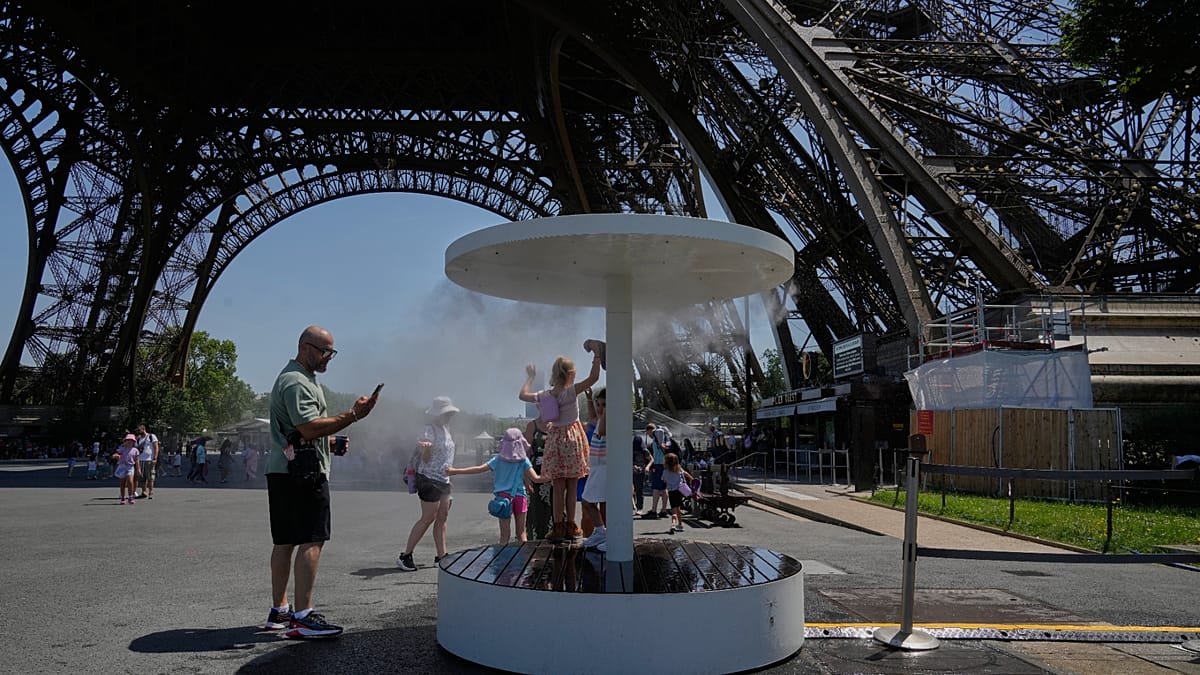
As a punishing heatwave settles over much of western Europe, Paris has become a furnace. With thermometers hitting 36°C in the capital on Wednesday and forecasters predicting no immediate respite, residents have turned to the city's waterways and public fountains for relief. The Canal Saint-Martin, a 4.5-kilometre waterway that cuts through the 10th and 11th arrondissements, has transformed into an impromptu cooling station.
Crowds lined the quays, dipping feet and even swimming in the canal's greenish waters, despite official warnings against bathing. The scene was a vivid illustration of how urban infrastructure can double as a climate refuge during extreme weather events. Similar scenes played out at the Trocadéro fountains near the Eiffel Tower and at the Bassin de la Villette, where the city's artificial beaches have been packed since the heatwave began.
Heatwave Alerts and Public Health Concerns
The French meteorological service, Météo-France, has placed 45 départements on orange alert, the second-highest level, warning of dangerous heat that can affect even healthy individuals. In Paris and the Île-de-France region, the alert level was raised to red for the first time since the deadly 2003 heatwave, which claimed an estimated 15,000 lives across the country. Authorities have opened cooling centres in public buildings, extended park hours, and deployed mobile water distribution points.
The health impact is already being felt. Earlier this week, two young children died in a car in the south of France after being left in the vehicle as temperatures soared. In the Bordeaux suburbs, three elderly people died in their homes, highlighting the particular vulnerability of older populations. Hospitals across the country have reported a surge in heat-related admissions, with emergency services stretched thin.
Urban Adaptation and the Future of Cooling
The Canal Saint-Martin's role as a cooling spot is not accidental. Built in the early 19th century to supply Paris with fresh water and goods, the canal has become a beloved public space. Its tree-lined banks and shaded footbridges offer a microclimate several degrees cooler than the surrounding streets. Urban planners across Europe are watching closely: as heatwaves become more frequent and intense due to climate change, cities from Berlin to Barcelona are rethinking how to integrate water features, green spaces, and reflective surfaces into their design.
In Berlin, the zoo has been deploying ice bombs and showers to keep animals cool, while in the Loire Valley, the troglodyte village of Trôo has seen a surge in visitors seeking its naturally cool caves. The French government has also banned alcohol sales at the Fête de la Musique in several cities to prevent dehydration and heatstroke.
For now, Parisians are making do with what they have. “It's the only place you can breathe,” said Marie Dupont, a 34-year-old teacher who had brought her two children to the canal. “We don't have air conditioning at home. The canal is our lifeline.” Her sentiment echoes across the city, where fewer than 5% of homes have air conditioning, compared to over 90% in the United States.
The heatwave is expected to peak on Thursday, with temperatures potentially reaching 40°C in parts of the capital. Authorities have urged people to stay indoors during the hottest hours, drink plenty of water, and check on elderly neighbours. The crisis has also reignited debate about long-term adaptation: should Paris mandate green roofs on all new buildings? Should the Canal Saint-Martin be officially opened for swimming during heatwaves? These questions are now urgent, as the city faces a future of ever-hotter summers.