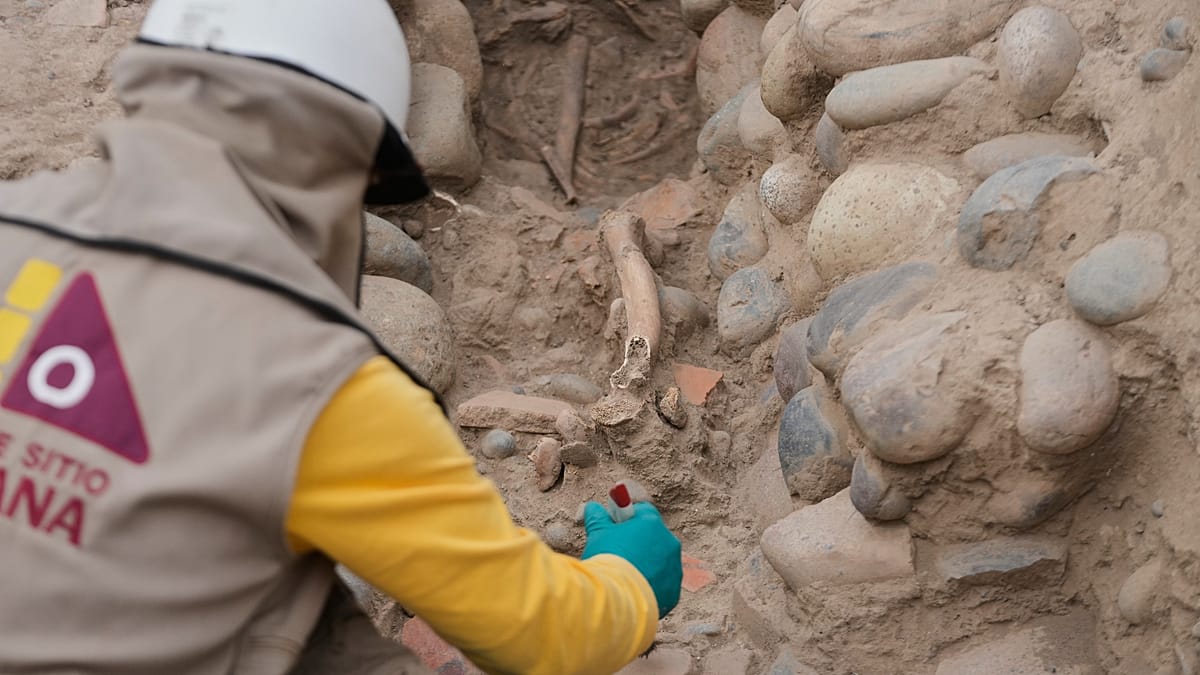
Archaeologists working at the ancient citadel of Chan Chan in northern Peru have uncovered a tomb containing the remains of 38 people, along with gold and copper objects. The find, announced this week, adds a new chapter to the understanding of the Chimú civilisation, which dominated the region centuries before the Inca empire rose to power.
A window into Chimú burial practices
The tomb was discovered within the sprawling complex of Chan Chan, near the modern city of Trujillo. The site, a UNESCO World Heritage listing, is considered the largest adobe city in the pre-Columbian Americas. The newly found burial pit appears to be a mass grave, with skeletons arranged in a manner that suggests they were interred at different times, possibly as offerings or as part of elite funerary rites.
According to the lead archaeologist, Jorge Meneses, the presence of gold and copper ornaments indicates that the individuals buried here held significant status. “We are looking at a high-status tomb, likely linked to the Chimú elite,” he said. “The mix of grave goods and the number of individuals is exceptional.”
The Chimú civilisation flourished between the 12th and 15th centuries, with Chan Chan as its capital. Known for their sophisticated irrigation systems and intricate metalwork, the Chimú were eventually conquered by the Incas. The new discovery could help researchers understand how the Chimú treated their dead and how they marked social hierarchies.
Excavations at Chan Chan have been ongoing for decades, but this is one of the largest single finds of human remains in recent years. The team plans to conduct DNA analysis and isotopic studies to determine the relationships between the individuals and their geographic origins. Such research could reveal whether the buried were local elites or came from other parts of the Chimú realm.
While the story is centred in Peru, it resonates with European audiences who follow archaeological breakthroughs across the globe. Similar efforts are underway in Europe, such as the recent discovery of a painted Egyptian tomb by a Spanish-led team, and the new museum inside Trajan's Baths in Rome that showcases ancient Roman art. These projects highlight the shared human curiosity about our past.
The Chan Chan site has faced threats from climate change, with heavy rains and erosion damaging the fragile adobe structures. The Peruvian government, with support from international organisations, has been working to preserve the site. The new tomb, however, offers a reminder of the cultural wealth that still lies beneath the surface.
As the excavation continues, the team hopes to uncover more details about the Chimú worldview. “Every skeleton tells a story,” Meneses added. “We are only beginning to listen.”