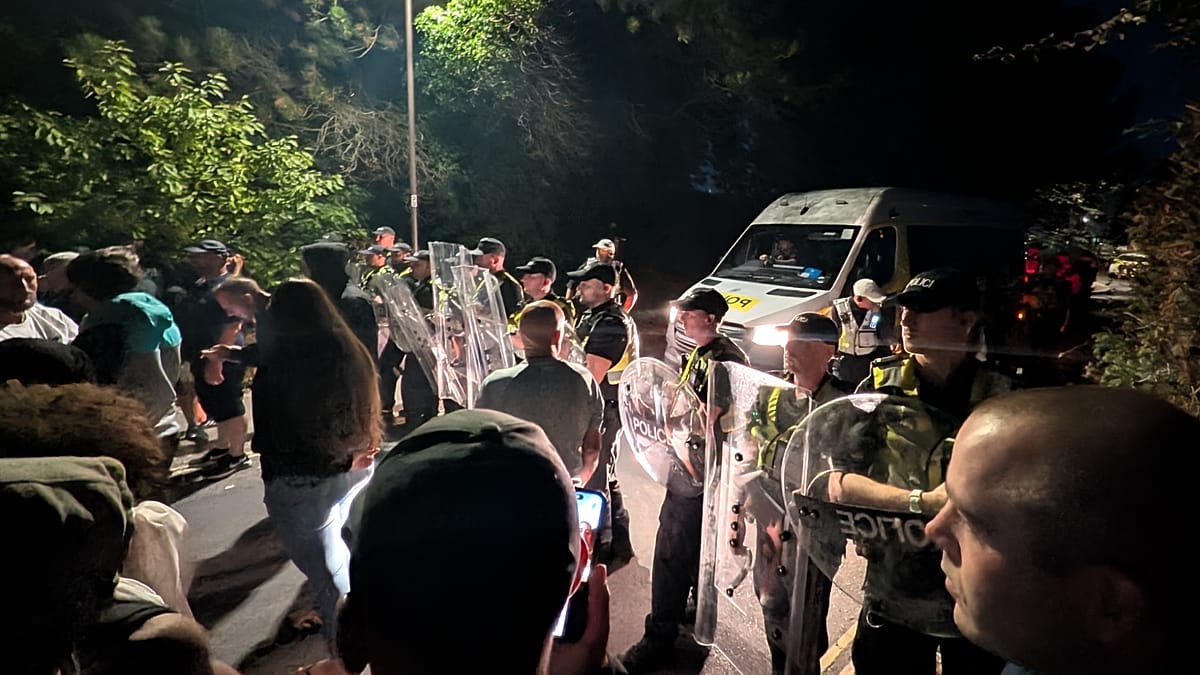
Weekend protests in the southern English ports of Portsmouth and Dover have laid bare the deep divisions over Britain's handling of Channel migration, even as official figures show a decline in small-boat arrivals. The unrest has prompted a senior police figure to describe the scenes as a "wake-up call" for the government in London.
On Sunday, hundreds of demonstrators, many wearing masks and dark clothing, blocked roads in Portsmouth in an attempt to prevent asylum seekers from being transferred from a processing centre. Police in riot gear formed a cordon around buses carrying the migrants, and officials said the operation was eventually completed without serious incident.
The UK Home Office condemned the action. "We condemn the intimidating and thuggish behaviour we saw in Portsmouth last night," a spokesperson said. "The right to peaceful protest is fundamental to our democracy but it must never cross a line into disorder."
Donna Jones, the Conservative police and crime commissioner for Hampshire, told the BBC that while most protesters acted lawfully, "there were crimes committed and they will now be investigated." She added that the events should serve as a "wake-up call to the government... that the British people are fed up with the lack of control of our borders."
The Portsmouth demonstration followed a similar protest on Saturday, when masked crowds blocked access to the Port of Dover, disrupting ferry services. The disruption at Dover was the second such incident in weeks, highlighting the growing militancy of anti-migrant groups.
New routes and larger vessels
Sunday's protest came after around 140 migrants arrived by boat on the Hampshire coast. French authorities said the vessel had departed from the Baie de Seine in Normandy, a longer and riskier crossing than the usual routes from near Calais. This unusual departure point has raised concerns that smugglers are testing new corridors to evade British border patrols.
Joe Robertson, the Conservative MP for the area, called the development "extremely concerning," suggesting that criminal networks may be opening new routes for larger vessels. Arrivals in Hampshire have been extremely rare, making the choice of landing site all the more striking.
The unrest comes despite recent data suggesting that crossings are slowing. The Home Office reported that Channel arrivals in August fell to their lowest level since records began in 2018, with the number of migrants at its lowest since 2020. However, the average number of passengers per boat has been rising in recent months, indicating a shift towards larger, potentially more dangerous crossings.
So far this year, 16,513 migrants have crossed the Channel by small boat. That figure remains a small fraction of overall arrivals in Britain, which exceed 800,000, most of whom come through legal routes on student or work visas.
The protests in England echo broader tensions across Europe, where migration remains a politically charged issue. In Germany, the far-right AfD has gained ground in eastern states, partly on an anti-migration platform, while in Italy, Prime Minister Giorgia Meloni has sought to project stability on the issue. The EU's plans for migrant return hubs outside the bloc reflect a continent-wide push for stricter border controls.
In Spain, the recent crisis in Ceuta exposed weaknesses in the government's response to a surge of migrants, and the Atlantic route to the Canary Islands continues to claim lives. These events underscore the persistent challenges facing European nations as they grapple with irregular migration.
For the UK, the weekend's protests suggest that the political temperature around migration is not cooling, despite the drop in numbers. The government's Rwanda plan, which aims to deter crossings by deporting asylum seekers to East Africa, remains mired in legal challenges and has yet to produce a single flight. Critics argue that the policy has done little to address the root causes of migration or to ease public anger.
As the Conservative Party prepares for its annual conference, the issue of border control is likely to dominate internal debates. The protests in Portsmouth and Dover have given voice to a segment of the population that feels the government has lost control, even as ministers point to falling numbers as evidence of progress.
The coming weeks will test whether the government can balance its tough rhetoric with effective policy, and whether the police can manage protests without escalating tensions. For now, the images of masked demonstrators clashing with riot police in an English port city serve as a stark reminder that the migration debate in Europe is far from settled.