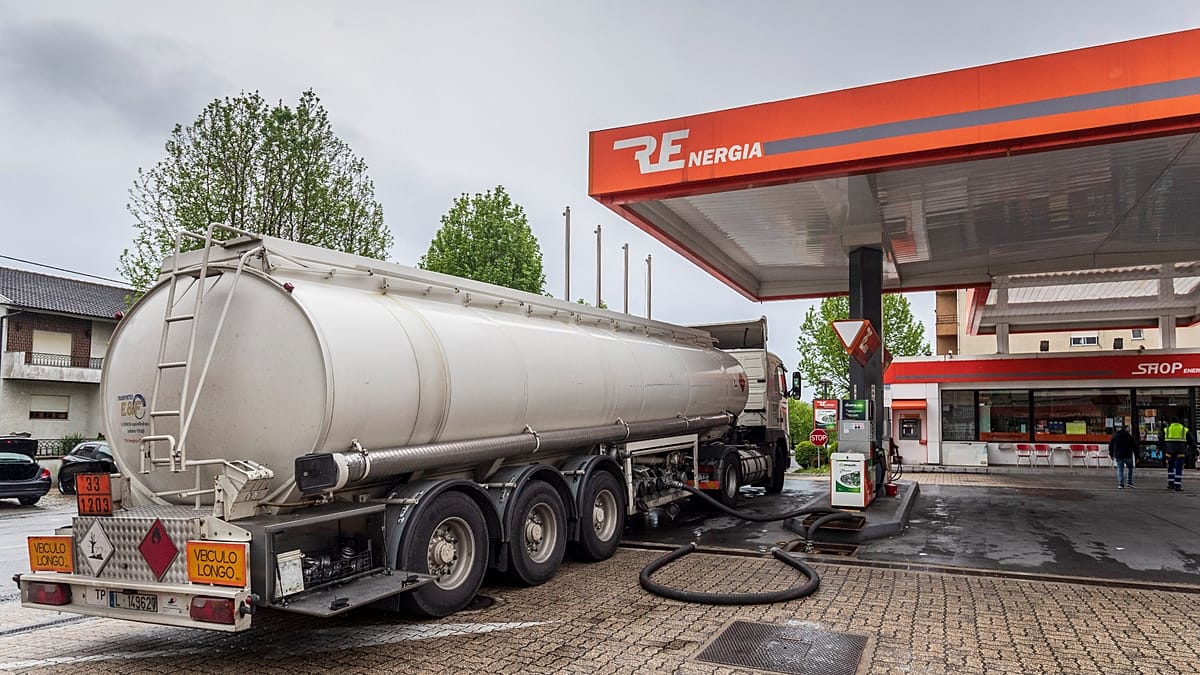
When the Middle East conflict erupted in late February, the average price of standard diesel in mainland Portugal stood at €1.596 per litre, with 95-octane petrol at €1.681. By late September, those figures had climbed to €2.219 and €2.113 respectively — increases of 62 and 43 cents per litre. The surge, driven by disruptions to oil infrastructure and shipping through the Strait of Hormuz, has pushed pump prices past the symbolic €2 mark and is now rippling through the Portuguese economy.
Nuno Figueiredo, spokesperson for the consumer-rights organisation DECO PROteste, warns that “any sector that includes road fuels in its value chain will face additional costs.” He points to data from Statistics Portugal (INE) showing that inflation accelerated to 3.3% in August, a rise “almost entirely” explained by higher diesel prices. Energy products were up 12.2% year-on-year in the same month. “It is possible to state with confidence that the impact will be felt across almost the whole economy,” Figueiredo told Euronews.
Fisheries and agriculture: first in line
Among the most exposed sectors, fisheries stand out. “The cost of each trip out to sea, with fuel more expensive, will be higher from the outset,” Figueiredo explains, meaning the increase “will be passed on more quickly to the price of the final product.” Agriculture faces a similar dynamic, with costs accumulating throughout the growing season and eventually reaching consumers’ wallets.
Both sectors illustrate a broader pattern: even when the impact is indirect, the consumer ends up paying. “All types of transport associated with industry and the movement of goods will also face higher costs,” Figueiredo notes. “So, inevitably, it will be the consumer, as the last link in the chain, who ends up spending more money to buy what they used to buy more cheaply.”
Industry groups have echoed this warning. The National Association of Public Road Hauliers of Goods (ANTRAM) and the Farmers’ Confederation of Portugal (CAP) told Dinheiro Vivo that higher fuel costs would ultimately be borne by consumers. Gonçalo Lobo Xavier, director-general of APED, the Portuguese Association of Distribution Companies, told Antena 1 radio in early September that the rise “will be reflected in the final price of goods” on supermarket shelves — though he added that retailers have absorbed part of the increase through “margin reductions.”
A contradictory food basket
Despite the fuel-driven pressure, DECO PROteste’s monitoring of a basket of 63 essential food items showed a price drop of €1.86 in the week between 16 and 23 September compared with the previous week. Figueiredo calls this a “contradiction” because it “ran counter to the upward trend in fuel prices” seen over the preceding three or four weeks.
He offers a possible explanation: “Some products became cheaper and did not have a direct link, or we did not identify a direct link, to fuel prices, otherwise they too would have increased.” The situation is so fluid that it is not possible “even to make a forecast” about “what will happen tomorrow,” he adds.
For consumers, Figueiredo advises a return to older habits: “Go back to what people used to do and do a big monthly shop,” choosing weeks when basket prices are trending downward. “The best advice is to try to take advantage of periods when prices have fallen, in the case of food in particular, and try to buy a larger quantity of what is needed.”
Passenger transport: electric vehicles feel it less
Passenger transport is also feeling the pinch, particularly services that rely “exclusively” on diesel or petrol, Figueiredo says. Electric vehicles, he notes, “will feel it less,” even though electricity prices are hardly at their best either.
The broader European context is one of patchwork responses to record fuel prices, with some governments stepping in to cushion the blow. Italy, for instance, has extended fuel tax cuts to May as pump prices climb. In Portugal, no such measures have been announced, leaving households and businesses to absorb the shock.
As Europe heads into winter with thin gas reserves and high prices, the pressure on energy costs is unlikely to ease soon. For Portuguese consumers, the immediate outlook is one of higher prices at the pump and on the shelves — a burden that, as Figueiredo puts it, falls on the last link in the chain.