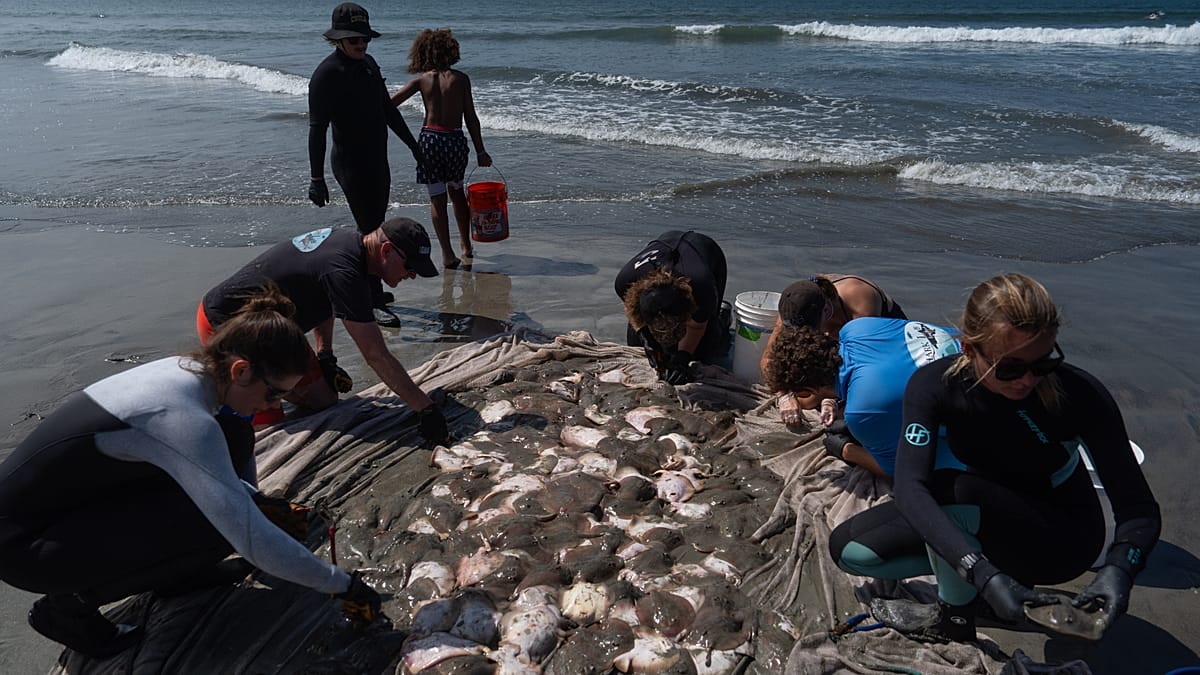
California's beaches are seeing an extraordinary spike in stingray-related injuries this summer, as unusually warm coastal waters and a developing El Niño push large numbers of round stingrays into the shallow surf where swimmers and waders congregate. Lifeguards and marine biologists report that the number of people treated for stingray stings has reached levels never recorded before, prompting urgent safety advisories along the state's most popular shorelines.
Round stingrays (Urolophus halleri), which are typically bottom-dwelling creatures, have been appearing in densities that experts describe as remarkable. "We're seeing densities we've never documented in decades of monitoring," said Dr. Emily Chen, a marine biologist at the Scripps Institution of Oceanography in La Jolla. "The combination of warm water and an approaching El Niño is creating ideal conditions for them to move closer to shore, where they bury themselves in the sand just a few feet from the waterline."
Why the surge?
The phenomenon is linked to a broader pattern of ocean warming that has been affecting the Pacific coast for several years. Sea surface temperatures off California have been running several degrees above the long-term average, and the National Oceanic and Atmospheric Administration (NOAA) has predicted a strong El Niño event for the coming months. El Niño typically brings warmer waters to the eastern Pacific, which can shift the distribution of marine life and draw species like round stingrays into nearshore habitats.
For beachgoers, the result has been a sharp rise in the number of painful, though rarely dangerous, stingray stings. The rays have a barbed spine on their tail that they use defensively when stepped on. The sting causes intense pain, swelling, and sometimes requires medical attention. In recent weeks, lifeguard stations from San Diego to Santa Cruz have reported treating dozens of people per day, with some beaches seeing more than a hundred incidents in a single weekend.
"We've had to set up dedicated first-aid stations just for stingray injuries," said Mark Thompson, a veteran lifeguard at Huntington Beach. "People come in limping, in tears, and we soak their feet in hot water to break down the venom. It's become a daily routine."
Safety measures and public advice
Local authorities are urging beachgoers to adopt the "stingray shuffle"—a technique where you slide your feet along the sand rather than taking steps, which alerts rays to your presence and gives them time to swim away. Signs have been posted at many beaches, and some lifeguard towers are now equipped with hot-water tanks specifically for treating stings.
Marine experts stress that the rays are not aggressive and that the injuries are accidental. "They're not attacking anyone," Dr. Chen explained. "They're just trying to avoid being stepped on. The best thing you can do is give them space and shuffle your feet."
The situation in California echoes similar patterns seen in other parts of the world where warming waters have altered marine life behavior. In Europe, rising sea temperatures have been linked to shifts in fish populations and the appearance of species like the European stingray in new areas, though the scale of the California phenomenon is unprecedented.
While the stingray surge is a local story, it highlights broader questions about how climate change is reshaping coastal ecosystems globally. As ocean temperatures continue to rise, such encounters may become more common, not just in California but along coastlines worldwide, including those of the Mediterranean and the Atlantic seaboard of Europe.
For now, California's beaches remain open, and officials are optimistic that the stingray population will return to normal levels once the warm-water anomaly subsides. But they caution that with El Niño expected to strengthen in the coming months, the record-breaking season may not be over yet.