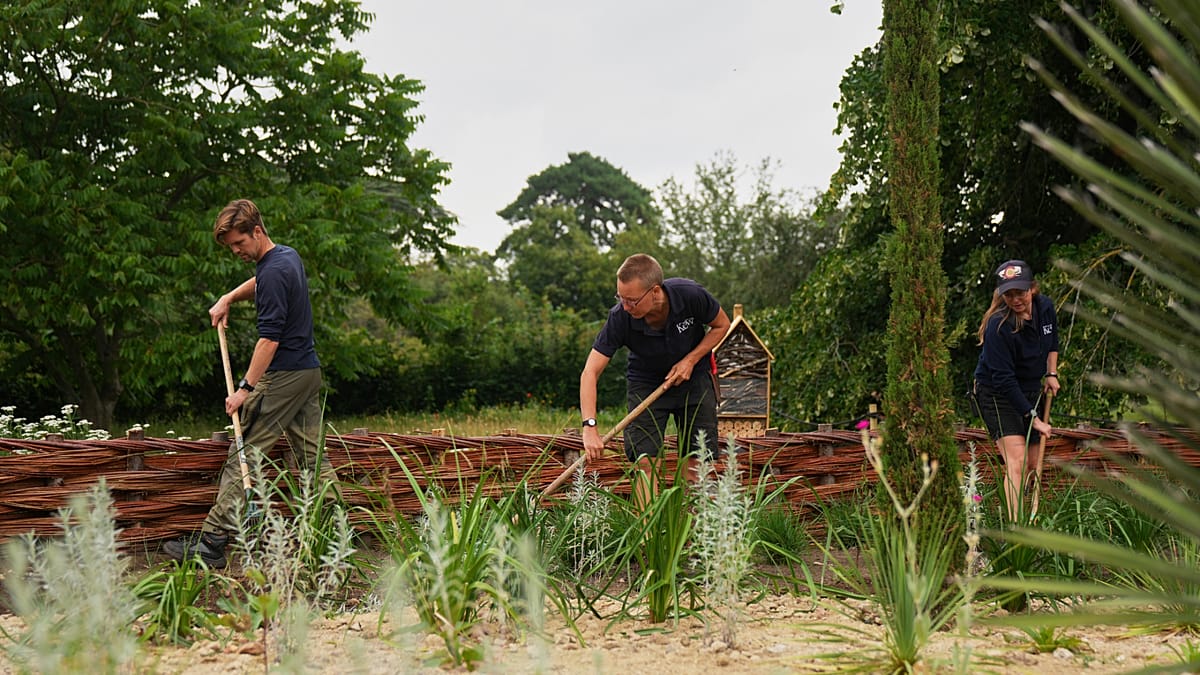
At the Royal Botanic Gardens, Kew, in southwest London, a stark installation has turned a dead English oak into a vivid warning about the consequences of rising temperatures. The tree, killed during the record-breaking heatwave of July 2022, has been painted a deep red and placed beside a healthy, resilient specimen dubbed the 'Tree of Hope.'
The contrast is deliberate and unsettling. The red oak, its branches bare and colour stark against the green landscape, serves as a memorial to the extreme weather events that are becoming more frequent across Europe. The 2022 heatwave saw temperatures in the UK surpass 40°C for the first time, causing widespread damage to infrastructure, agriculture, and ecosystems. Kew itself lost several trees that summer, a direct result of drought and heat stress.
Kew’s scientists have been studying the impact of climate change on plant life for years. The installation is part of a broader effort to communicate these findings to the public. 'This tree is not just a symbol; it is a scientific record,' said a Kew spokesperson. 'It shows what happens when temperatures exceed what species can tolerate.'
The 'Tree of Hope,' by contrast, is a younger oak that has survived the same conditions. It represents the possibility of adaptation and resilience, but also the need for urgent action. The pairing is designed to provoke reflection on what is at stake, not just in the UK but across the continent.
Europe’s Heatwaves in Context
The 2022 heatwave was not an isolated event. Across Europe, from Paris to Berlin to Madrid, summer temperatures have been climbing steadily. The European Union’s Copernicus Climate Change Service reported that 2023 was the hottest year on record globally, and Europe is warming faster than any other continent. The consequences are visible in dying forests, shrinking glaciers, and failing crops.
Kew’s red oak is a local manifestation of a continental crisis. As Europe's Heatwave Is Not El Niño's Fault: Climate Change Is the Driver explains, the primary cause is human-induced climate change, not natural variability. The installation at Kew underscores that message in a way that data alone cannot.
The choice of an oak is significant. English oaks are iconic in British culture and ecology, but they are increasingly vulnerable. Kew’s scientists warn that without drastic emissions reductions, many native species could face local extinction by the end of the century. The red paint is a visual shorthand for that threat.
Kew Gardens is not alone in using art to communicate climate science. Similar installations have appeared in other European cities, from a melting ice sculpture in Copenhagen to a flooded gallery in Venice. But the red oak has particular resonance because it is a real casualty, not a constructed metaphor.
The installation also ties into broader policy debates. As China, EU, and Canada Vow to Maintain Climate Cooperation Despite US Absence highlights, international cooperation remains critical. The EU has set ambitious targets to cut emissions by 55% by 2030, but implementation varies widely among member states. The UK, no longer in the EU, has its own net-zero goals, but recent policy shifts have raised concerns about commitment.
Kew’s red oak is a reminder that climate change does not respect borders. The heatwave that killed it was part of a pattern that affected the entire continent. From the vineyards of Bordeaux to the forests of Sweden, the evidence is mounting that Europe’s ecosystems are under severe stress.
The 'Tree of Hope' offers a counterpoint, but it is not a guarantee. Resilience requires active management, including reforestation, water conservation, and the protection of genetic diversity. Kew’s scientists are working on projects to identify and propagate heat-tolerant varieties of trees, but they caution that such efforts can only go so far without systemic change.
Visitors to Kew can see the installation until the end of the summer. It is a quiet but powerful statement, one that asks not just for attention but for action. As the world warms, the red oak stands as a warning that the cost of inaction is already being paid.