Rescuers in Indonesia are racing against time to reach 13 miners trapped in an illegal gold mine that flooded earlier this week, as rising water, darkness, and steep, slippery terrain hamper the operation. The incident occurred in Bogor regency, a mountainous area south of Jakarta, where informal mining is widespread despite the dangers.
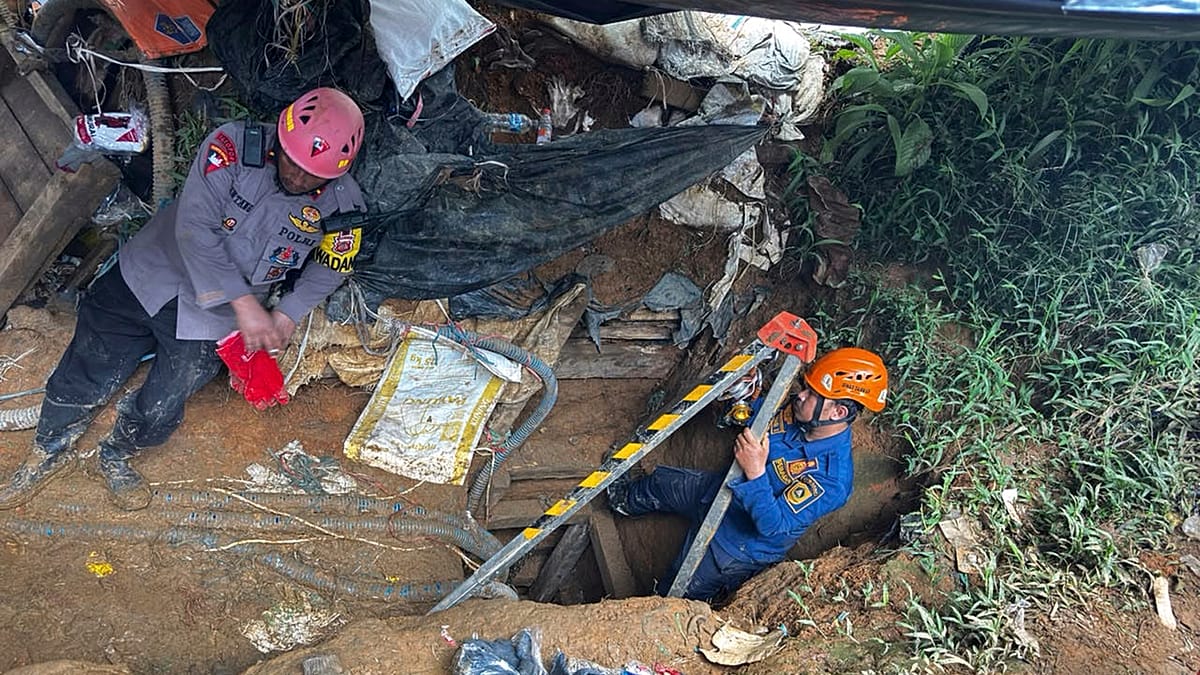
The disaster unfolded late Monday when heavy rain caused the Ciseureuh River to overflow, sending water pouring into a mine shaft estimated to be around 100 metres deep. Miners were digging for gold at the time; some managed to escape from one section of the excavation before the shaft filled with water.
Authorities say the illegal nature of the operation delayed the alert. Local miners and residents initially tried to pump out the water themselves, but the situation quickly spiralled out of control. Police only received the first reports of trapped miners some 16 hours after the flooding, and a formal report was passed to the Jakarta Search and Rescue Agency shortly after midnight on Wednesday, triggering a full-scale response.
Search focuses on two shafts
Teams have been using submersible pumps to drain the shaft and working to seal openings where groundwater is seeping in. On Thursday, 325 personnel concentrated on two adjacent shafts, using rope-access techniques to reach victims, said Desiana Kartika Bahari, head of the Jakarta Search and Rescue Agency.
The flooded shaft lies close to facilities operated by PT Antam's Pongkor gold mining unit, a state-owned company. PT Antam has stated that the incident had nothing to do with its operations.
Informal mining is a widespread practice in Indonesia, where thousands of people work in hazardous conditions for a chance at striking gold. Miners face risks from landslides, flooding, and tunnel collapses, while gold processing often exposes them to toxic mercury and cyanide with little or no protective equipment.
This tragedy echoes other recent incidents in Indonesia, including a factory fire that killed 26 workers and a deadly candy factory blaze, highlighting the broader issue of workplace safety in the country.
The European Union has been deepening ties with Indonesia, most recently finalising a free trade agreement after a decade of negotiations. While such agreements focus on economic cooperation, they also raise questions about labour standards and environmental protections in supply chains.
As the rescue effort continues, the focus remains on the 13 miners and their families. The operation is a stark reminder of the human cost of unregulated mining, a challenge that persists in many parts of the world, including Europe's own history of industrial accidents.
For now, the rescuers' priority is clear: reach the trapped miners before time runs out.