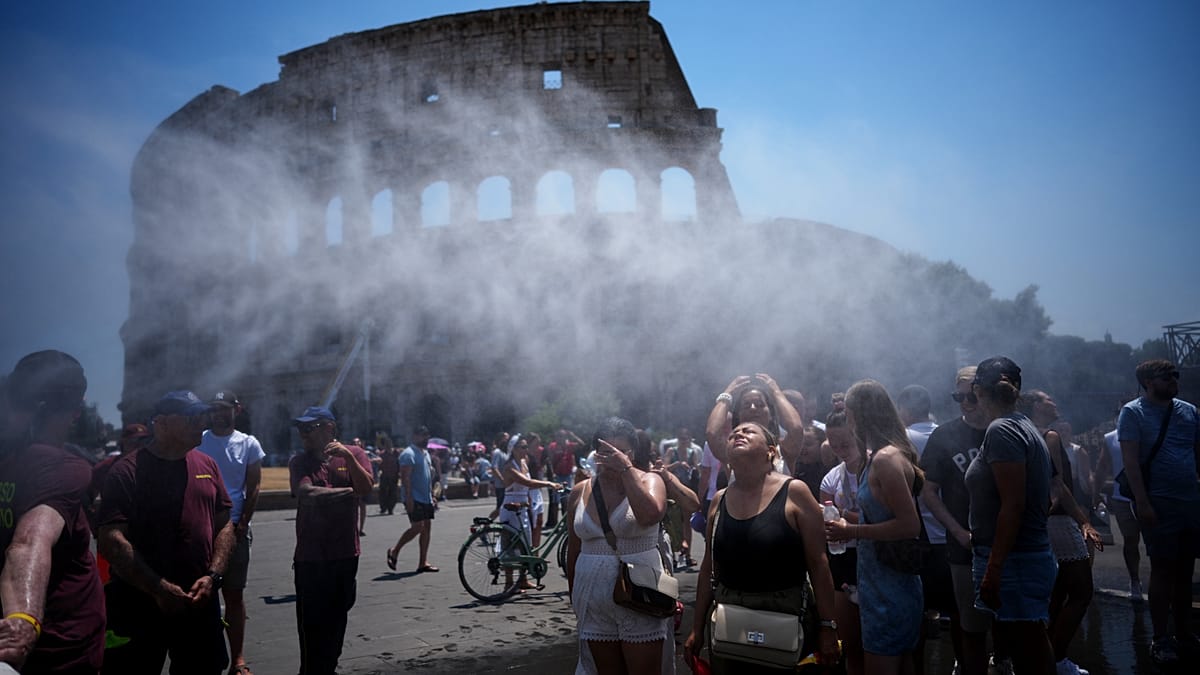
At the foot of the Colosseum in Rome, tourists are finding an unusual respite from the sweltering heat: water cannons. As temperatures in the Italian capital near 40°C, civil protection teams have deployed mobile spraying stations and distributed bottled water to help visitors cope with the extreme conditions. The iconic ancient amphitheatre, usually a symbol of imperial grandeur, has become a focal point for heatwave relief efforts.
The heatwave gripping southern Europe shows no signs of abating. Italy, like much of the Mediterranean, is experiencing a prolonged period of unusually high temperatures, with Rome recording its hottest June in decades. The situation at the Colosseum underscores the growing challenge for European cities that rely on tourism but must now contend with climate-driven extremes.
Heatwave Across the Continent
This is not an isolated event. Across Europe, countries are grappling with the consequences of rising temperatures. In Portugal, authorities have mobilised over 1,000 firefighters as heatwave fuels wildfires in rural areas. Spain is bracing for its second heatwave of the summer, with temperatures expected to reach 42°C in parts of Andalusia. France has reported a nearly 30% rise in deaths linked to the June heatwave, with the Paris region hit hardest.
The European Union is under pressure to accelerate its climate adaptation strategies. In Brussels, policymakers are debating a holistic cooling strategy as heatwaves test Europe's resilience. The Green Deal, the EU's flagship climate policy, has come under fire from some MEPs who argue that the bloc's response to extreme weather is insufficient. Yet, the need for action is becoming more urgent with each passing summer.
For tourists at the Colosseum, the immediate concern is staying safe. The Italian civil protection agency has set up shaded areas and hydration points, while local authorities urge visitors to avoid the midday sun. The water cannons, originally designed for crowd control or firefighting, have been repurposed as a cooling mechanism—a pragmatic if unusual solution.
The heatwave's toll extends beyond discomfort. In Belgium, officials have warned of an unprecedented rise in deaths, with the June heatwave linked to a 39% increase in mortality. The UK recorded its hottest June since 1884, intensifying climate concerns across the British Isles. These figures highlight the human cost of a warming planet, even in regions traditionally accustomed to milder summers.
Rome's response at the Colosseum is a microcosm of a broader trend: European cities are being forced to adapt on the fly. From Paris to Madrid, urban planners are rethinking public spaces to include more green areas, water features, and cooling infrastructure. The water cannons at the Colosseum may be a temporary measure, but they signal a shift in how authorities approach extreme heat—as a public health emergency rather than a mere inconvenience.
As the heatwave persists, the message from Rome is clear: Europe's cultural treasures must be protected not only from the ravages of time but also from the immediate threats of climate change. For now, a spray of water offers relief, but the continent needs long-term solutions to keep its citizens and visitors safe.