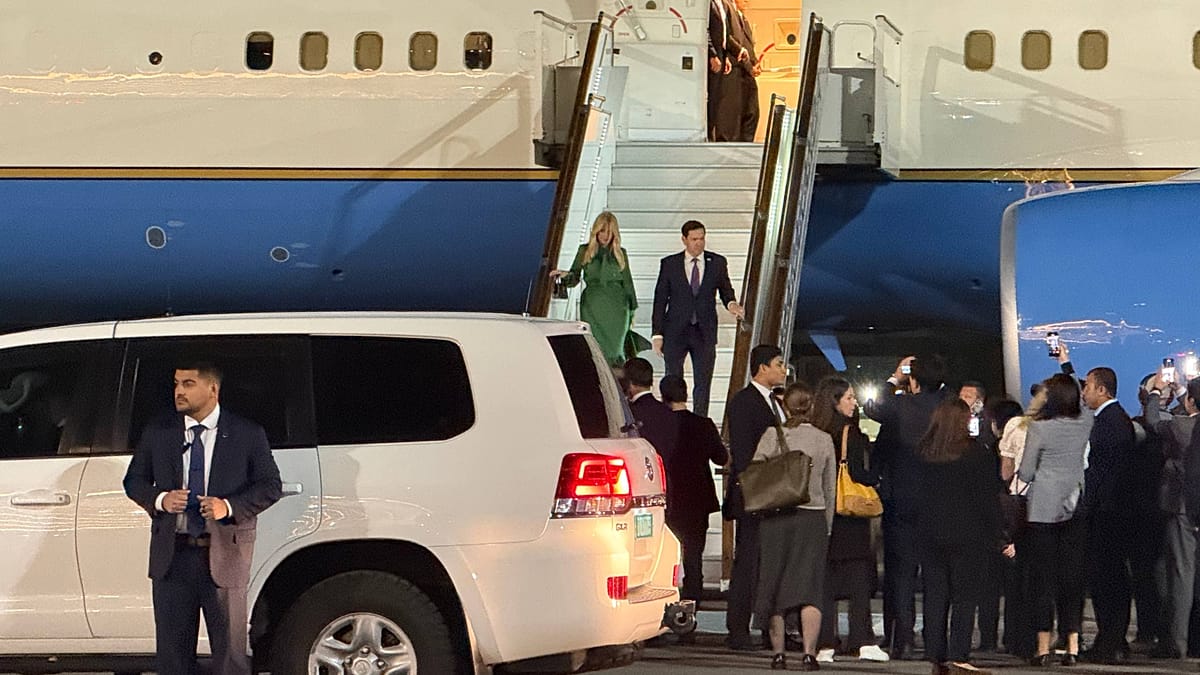
US Secretary of State Marco Rubio touched down in Samarkand, Uzbekistan, on Sunday evening, kicking off a diplomatic push to broaden Washington's engagement with Central Asia. The visit, which includes a ministerial meeting under the C5+1 format, brings together the United States and the five Central Asian republics: Uzbekistan, Kazakhstan, Kyrgyzstan, Tajikistan, and Turkmenistan.
The C5+1 framework, first convened in Samarkand in November 2015 by then-Secretary of State John Kerry, has since evolved into a platform for high-level dialogue. It reached presidential level with summits hosted by Joe Biden in 2023 and Donald Trump in November 2025. That most recent gathering in Washington placed a strong emphasis on trade, investment, and critical minerals, yielding more than $25 billion (approximately €22 billion) in commercial agreements and commitments, according to the US Department of Commerce. These cover aviation, agricultural equipment, railway infrastructure, and mineral development, though many are still in early stages.
Business takes centre stage
Rubio's delegation includes over 200 American business leaders, representing companies such as Boeing, Citibank, and Franklin Templeton. The commercial dimension is central to the trip, with discussions expected to focus on opportunities in trade, investment, and economic cooperation. US development finance and export credit institutions are also participating in business sessions.
Speaking to reporters before departing Washington, Rubio defended the choice to visit Uzbekistan amid multiple international crises. "This is an important relationship," he said, noting that the timing was set to bring together all five Central Asian foreign ministers. He acknowledged that diplomatic calendars often prioritise immediate emergencies, but added: "There's countries you'd like to get to because we want to build our relationships with them."
Kazakhstan and Uzbekistan are Washington's main economic partners in the region. US government figures show bilateral trade in goods and services reached $7.1 billion (€6.3 billion) with Kazakhstan and $1.7 billion (€1.5 billion) with Uzbekistan in 2025. American companies have also announced agreements covering aircraft, agricultural machinery, and mineral development.
Central Asia offers Washington a chance to diversify critical mineral supply chains and build partnerships in energy, transport infrastructure, and technology. The region holds substantial oil, natural gas, and uranium reserves, along with other minerals essential for advanced manufacturing and energy systems. For Central Asian governments, closer US ties provide additional investment, technology, and market access, complementing their existing economic relationships with Russia and China.
The European Union is also stepping up its engagement with Central Asia. At a summit in Samarkand in April 2025, Brussels announced a €12 billion Global Gateway investment package covering transport, critical raw materials, energy, and digital connectivity. This parallel European interest underscores the region's growing strategic importance, as highlighted by the European Investment Bank's focus on cross-border projects in the area.
Security cooperation is another item on the agenda, with US officials identifying counterterrorism as a key area for closer collaboration with some countries in the region. The talks also include the first round of an expanded strategic partnership dialogue between Rubio and Uzbekistan's Foreign Minister Bakhtiyor Saidov, covering political relations, trade, investment, and regional developments.
On 16 October, Uzbek President Shavkat Mirziyoyev met US Special Envoy for South and Central Asia Sergio Gor to review preparations for the visit and the second session of the Uzbekistan–US Business and Investment Council. Mirziyoyev is scheduled to attend the Council's meeting in Samarkand on Monday. The Council, co-chaired by Saida Mirziyoyeva, Head of Uzbekistan's Presidential Administration, and Gor, aims to promote bilateral investment and joint projects.
Security has been tightened in Samarkand, with Uzbekistan's Interior Ministry announcing temporary traffic restrictions on roads leading into the city and several central streets from 18 to 22 October. After his meetings in Uzbekistan, Rubio is scheduled to travel to India, visiting Mumbai and Jamnagar for talks with government officials and business leaders on trade and energy cooperation.
This visit comes at a time when Washington's global posture is under scrutiny, particularly regarding its support for Ukraine. As European allies seek to bolster security guarantees amid wavering US support, Rubio's focus on Central Asia signals a strategic rebalancing. The region's mineral wealth and geopolitical position make it a valuable partner for the United States, even as Brussels and Washington compete for influence.