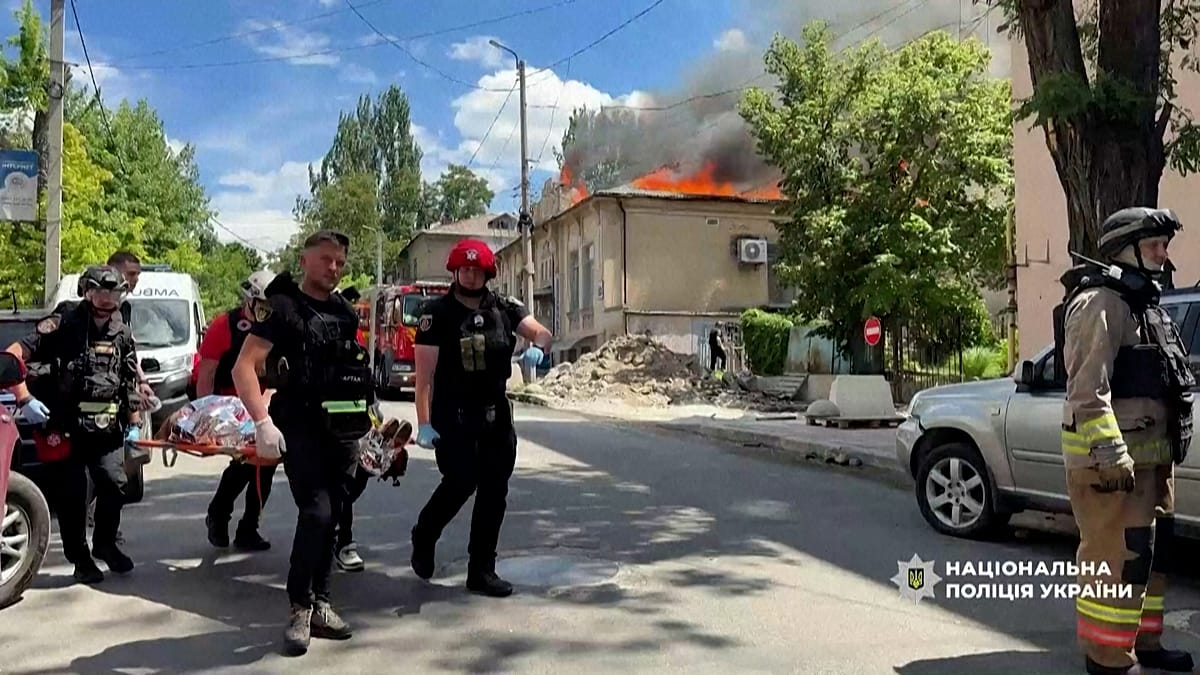
On the morning of 26 June, Russian forces launched a combined missile and drone attack on the city of Zaporizhzhia in southeastern Ukraine. The strikes struck a commercial district in the city centre, setting an office building ablaze and injuring at least nine people, according to local authorities.
Emergency crews were dispatched to the scene to contain the fire and evacuate civilians. The attack underscores the continued vulnerability of Ukrainian urban centres to Russian long-range strikes, even as Kyiv presses its allies for more advanced air defence systems.
Ongoing Assault on Civilian Infrastructure
Zaporizhzhia, a regional capital and key logistical hub, has been a frequent target of Russian bombardment since the full-scale invasion began in February 2022. The city lies near the front line and is also close to the Zaporizhzhia Nuclear Power Plant, Europe’s largest nuclear facility, which has been under Russian occupation since March 2022.
The latest attack comes amid a broader Russian campaign to degrade Ukraine’s energy grid and civilian infrastructure ahead of winter. In recent weeks, Moscow has intensified its use of drones and missiles, including Iranian-designed Shahed drones, to overwhelm Ukrainian air defences.
Ukraine’s air force reported intercepting several of the incoming drones and missiles, but some managed to penetrate the defences. The office building hit in the strike was partially destroyed, with debris scattered across nearby streets.
European Response and Support
The European Union has been a key backer of Ukraine’s defence efforts, providing financial aid, military equipment, and humanitarian assistance. In a recent development, the EU disbursed the first tranche of a €90 billion loan to Ukraine, aimed at stabilising the economy and funding reconstruction. However, the pace of military aid has sometimes been slowed by political debates among member states.
France and Italy have raised legal objections to a proposed EU ban on Russian combatants, highlighting the complexities of coordinating a unified European stance. Meanwhile, the UK has signalled continuity in its foreign policy under Prime Minister Keir Starmer, with Foreign Secretary David Lammy affirming that UK support for Ukraine and EU ties will remain steady.
In a separate incident, President Emmanuel Macron announced that the French navy had intercepted a Russian shadow fleet tanker off Sicily, part of efforts to enforce sanctions and prevent revenue from flowing to Moscow’s war machine.
Human Cost and International Law
The attack on Zaporizhzhia is a stark reminder of the human toll of the war. Ukrainian officials have repeatedly called for stronger international action to hold Russia accountable for strikes on civilian targets. The United Nations has documented numerous violations of international humanitarian law by Russian forces, including deliberate attacks on residential buildings, hospitals, and schools.
Local residents described scenes of panic as the air raid sirens sounded and explosions followed. “We heard a loud blast, then saw smoke rising from the centre,” one eyewitness told Ukrainian media. “People were running, trying to get to safety.”
As the war enters its third year, Ukraine continues to rely on Western support to sustain its defence. The Ukrainian government has launched a 40-day diplomatic campaign to pressure Russia into negotiations, but Moscow has shown little willingness to compromise on its territorial demands.
The situation in Zaporizhzhia remains tense, with emergency crews still working to secure the area and assess the full extent of the damage. The injured have been taken to local hospitals, where they are receiving treatment for injuries ranging from burns to shrapnel wounds.