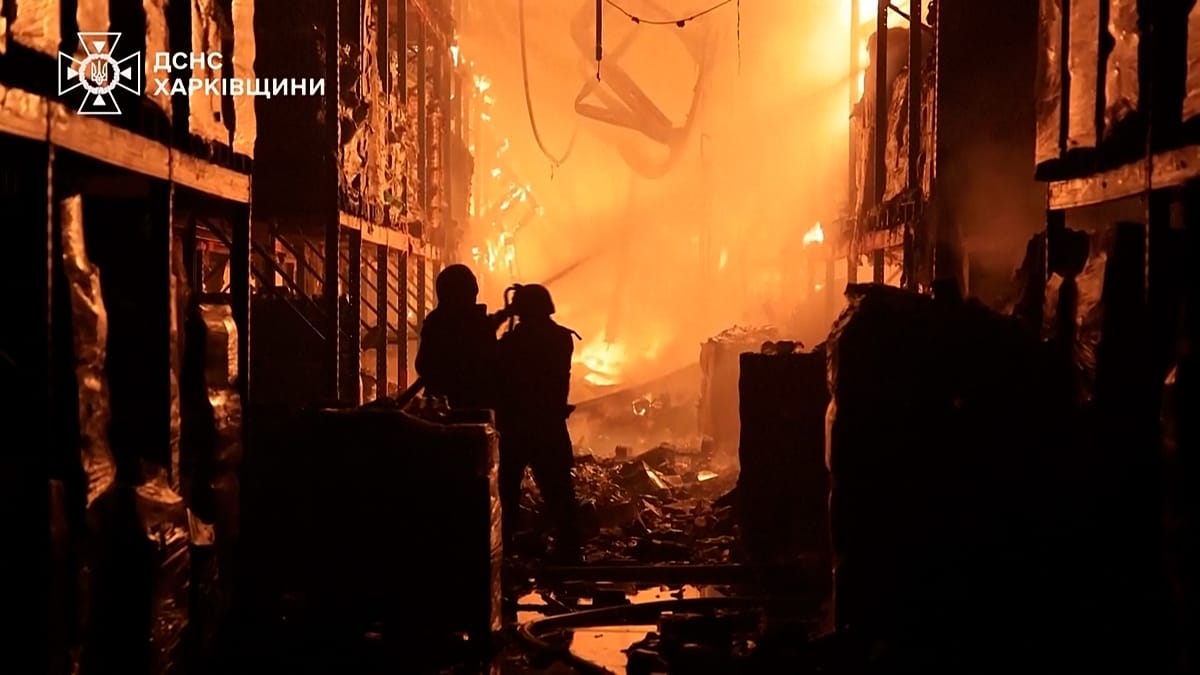
Russian forces launched a fresh wave of missile and drone attacks on Ukraine's Kharkiv and Odesa regions overnight on 19 June, killing at least one civilian and wounding several others, including children. The strikes hit residential areas and fuel storage facilities, causing fires and significant damage.
Kharkiv Under Fire
In Kharkiv, Ukraine's second-largest city, explosions were reported in several districts. Regional governor Oleh Syniehubov confirmed that a 60-year-old man was killed when a missile struck a private home in the village of Tsyrkuny, just north of the city. Two children, aged 9 and 14, were among the injured, along with three adults. Emergency services extinguished fires that broke out in at least four residential buildings.
The attack follows a pattern of intensified Russian aerial assaults on Kharkiv, which has faced near-daily bombardments in recent weeks. Previous drone barrages have already devastated residential neighborhoods, forcing thousands to flee or shelter in metro stations.
Odesa Region Hit
In the southern Odesa region, Russian drones targeted fuel storage facilities near the port city of Odesa. Local authorities reported that a warehouse caught fire, and falling debris damaged several vehicles. No casualties were immediately reported there, but the attack disrupted logistics in a key hub for Ukrainian grain exports.
The strikes come as Ukraine continues to press for more Western air defense systems. President Volodymyr Zelenskyy has repeatedly urged allies to deliver additional Patriot batteries and other advanced interceptors to protect cities and critical infrastructure. Ukraine's own long-range drone operations have targeted Russian oil refineries in recent weeks, but the country remains vulnerable to Russian missiles and drones.
Children Among Victims
The injury of children in Kharkiv has drawn particular condemnation. UNICEF Europe and Central Asia regional director Regina De Dominicis called the attacks "another brutal reminder that children in Ukraine continue to pay the highest price in this war." She reiterated the UN's call for the protection of civilians and civilian infrastructure under international humanitarian law.
Since Russia's full-scale invasion began in February 2022, over 1,500 children have been killed or injured in Ukraine, according to official estimates. The actual number is likely higher, as many cases in occupied territories remain unverified.
European Union foreign policy chief Josep Borrell condemned the overnight strikes, stating that "Russia's deliberate targeting of residential areas and children is a war crime." The EU has imposed 14 rounds of sanctions on Moscow, though enforcement remains uneven. Recent divisions among member states have complicated efforts to tighten restrictions further.
Broader Context
The attacks on Kharkiv and Odesa are part of a broader Russian campaign to degrade Ukraine's energy grid and terrorize its population. In recent weeks, Moscow has launched massive drone salvos and missile strikes across the country, from Kyiv to Zaporizhzhia. A strike on a residential home in Zaporizhzhia earlier this month killed one person and injured seven.
Ukraine's air force reported shooting down 12 of 16 drones launched overnight, but several missiles evaded interception. The country's energy ministry warned that repairs to damaged power facilities could take weeks, raising fears of rolling blackouts during the summer.
As the war enters its third year, European capitals continue to debate the pace and scale of military aid. While the United States recently approved a $61 billion package, European deliveries of artillery shells and air defense systems have been slower than promised. The overnight strikes on Kharkiv and Odesa underscore the urgent need for more robust protection of civilian lives.