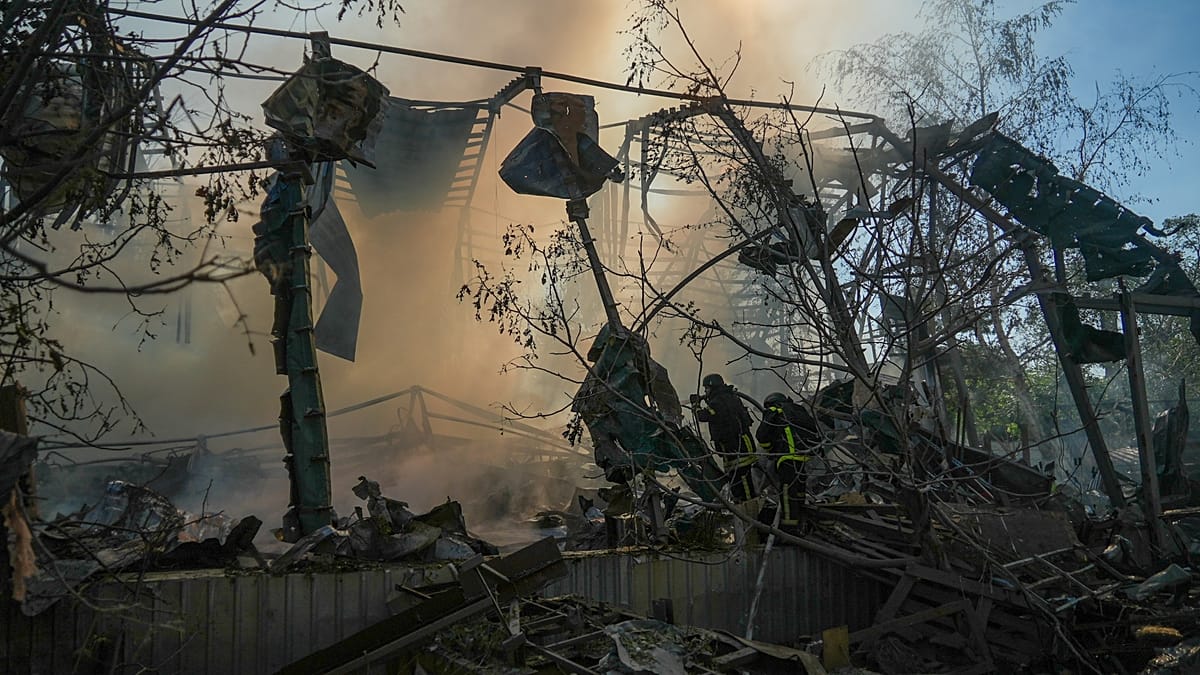
A Russian rocket attack on the village of Pechenigy in Ukraine's northeastern Kharkiv region killed at least 10 people and wounded eight others on Tuesday, according to the regional governor, Oleg Synegubov. The village lies roughly 40 kilometres from the Russian border, and the strike damaged private homes and shops, he said on social media.
The attack underscores a grim trend: after more than four and a half years of full-scale war, civilian casualties are climbing again. The United Nations reported last week that 437 Ukrainian civilians were killed in July alone—a 70% increase compared with the same month in 2025—as Russian barrages intensify.
Long-range warfare intensifies
With front lines largely static and peace talks frozen, both Moscow and Kyiv have escalated their long-distance strikes. Ukraine has been hitting targets deep inside Russia, including energy infrastructure and military sites, while Russian forces continue to pound Ukrainian cities and energy facilities.
On the same day as the Pechenigy attack, Russian officials reported that 620 drones were launched toward the Moscow region overnight. Moscow region Governor Andrey Vorobyov said air defence and electronic warfare units repelled the attack, but several people were wounded and buildings were hit. The most serious damage occurred in the Pavlovsky Posad district, where a house burned down.
Ukraine's domestic drone production has grown significantly, allowing it to fire more than 800 long-range drones at Russia on Sunday alone. Kyiv has also successfully targeted warehouses belonging to Wildberries, Russia's largest online retailer, some as far as 2,000 kilometres from the border—a campaign that has disabled seven of its ten largest warehouses.
Energy infrastructure under fire
The Kharkiv strike came a day after Ukraine's state energy company Naftogaz Group said its facilities had been attacked 13 times over the past week, bringing the total number of strikes on its infrastructure to nearly 300 since the start of the year. The company reported serious damage to equipment and production capacity, though no employees were injured.
DTEK Group, Ukraine's largest private energy investor, also said a Russian attack started a fire at one of its mines, killing a 52-year-old man. Russia has repeatedly targeted Ukraine's power grid, aiming to deny civilians light, heating, and running water during the bitter winter months. Ukrainian officials accuse Moscow of “weaponising winter” and fear the campaign will continue through the coming season.
Ukraine has responded by striking Russian energy sites with drones and missiles, hoping to cut off a vital source of revenue for the Russian military. The attacks have contributed to fresh fuel shortages in Russia, as refineries struggle to keep up with demand.
Moscow adjusts to drone threat
The constant threat of Ukrainian drones has forced changes in Moscow's public life. Organisers of the Spasskaya Tower International Military Music Festival, scheduled to take place on Red Square from Friday, announced on Monday that the event would be postponed until next year “due to reasons beyond our control.” In May, authorities significantly scaled back Russia's annual Victory Day parade for the first time in nearly two decades, with no military hardware on display because of fears of long-range attacks.
Ukraine's ability to strike deep into Russia has been aided by its growing arsenal of domestically produced drones, but it still relies heavily on foreign air defence systems. The country faces a severe shortage of US-made Patriot interceptors, which are the only effective counter to Russian ballistic missiles. That shortage has allowed Russian missiles to hit urban areas with increasing impunity, killing close to 17,000 civilians since the invasion began, according to UN estimates.
As the war enters its fifth winter, both sides show little appetite for negotiations. The recent overnight drone and missile attacks that killed 12 people across Russia and Ukraine are a stark reminder that the conflict shows no signs of de-escalation.