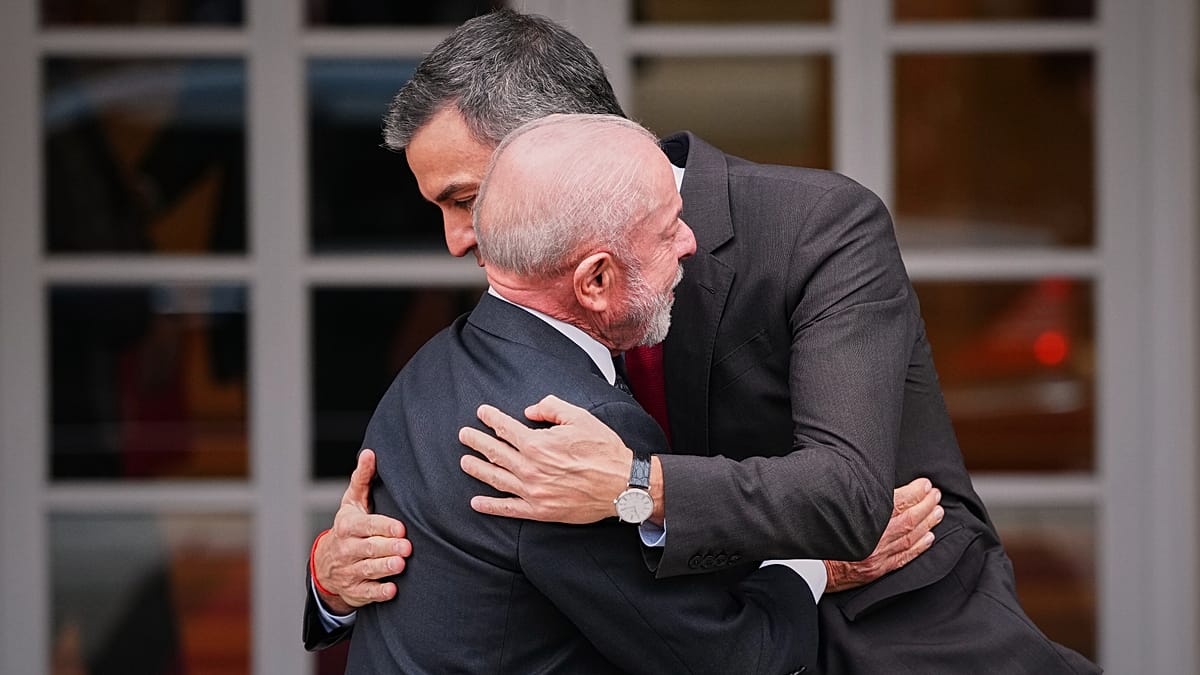
Spanish Prime Minister Pedro Sánchez welcomed Brazilian President Luiz Inácio Lula da Silva to the Moncloa Palace on Monday for talks that centered on defending international law and multilateralism. The Spanish government framed the meeting as a response to what it called the “threat of the far right” to global democratic institutions.
According to an official statement, Sánchez highlighted the importance of upholding international law and multilateralism, and the two leaders discussed the future of the United Nations, as well as the need to protect democratic institutions and social cohesion. They also reviewed their bilateral agenda and reaffirmed a commitment to deepening cooperation between Spain and Brazil.
Following the formal session, the two held a second conversation focused on the state of the Western left and their shared progressive vision. They emphasized a model that prioritizes better working conditions and fair taxation as pathways to prosperity.
Shared concerns over disinformation and UN reform
In a post on X, Lula described the meeting as “productive” and stressed the importance of combating hate speech and disinformation from the far right. He also reiterated their joint stance in favor of multilateralism and the urgent need to reform the UN Security Council, noting that the body’s ineffectiveness has become more evident amid the escalating armed conflicts in Ukraine and the Middle East.
Lula’s visit to Madrid came after he skipped the 30th Ibero-American summit, held in early November. His absence, along with that of Mexican President Claudia Sheinbaum, left Sánchez as the most prominent left-wing leader at the summit, exposing ideological divisions across the region.
One of the summit’s most notable moments was the frosty encounter between Sánchez and Argentine President Javier Milei. The two exchanged a cold greeting at the Royal Collections Gallery, their first meeting since Milei called Sánchez a “disgraceful dictator” in October.
Lula has also clashed with Milei, particularly during Brazil’s recent election campaign, when Lula unexpectedly defeated Flávio Bolsonaro, a close regional ally of the Argentine president. These tensions underscore the broader ideological rift between left- and right-wing governments in Latin America and Europe.
The meeting in Madrid reflects a broader effort by European and Latin American leaders to forge alliances against populist and far-right movements. As Europe confronts hybrid threats, the Sánchez-Lula dialogue signals a shared commitment to democratic resilience and international cooperation.
Observers note that the timing is significant, with European leaders increasingly focused on safeguarding democratic institutions. The discussions in Madrid echo themes raised at recent EU summits, such as the Dublin summit on Ukraine peace talks, where leaders sought a unified stance on global security.
While the meeting produced no concrete policy announcements, it reinforced the personal and political alignment between Sánchez and Lula. Both leaders have positioned themselves as champions of social inclusion and multilateralism, and their partnership could shape future cooperation on trade, climate, and digital governance.
As the far right gains ground in several European countries, including Italy and France, the Sánchez-Lula axis offers a counterpoint. Whether it translates into tangible outcomes remains to be seen, but the symbolism of two major left-wing leaders meeting in Madrid is not lost on observers.