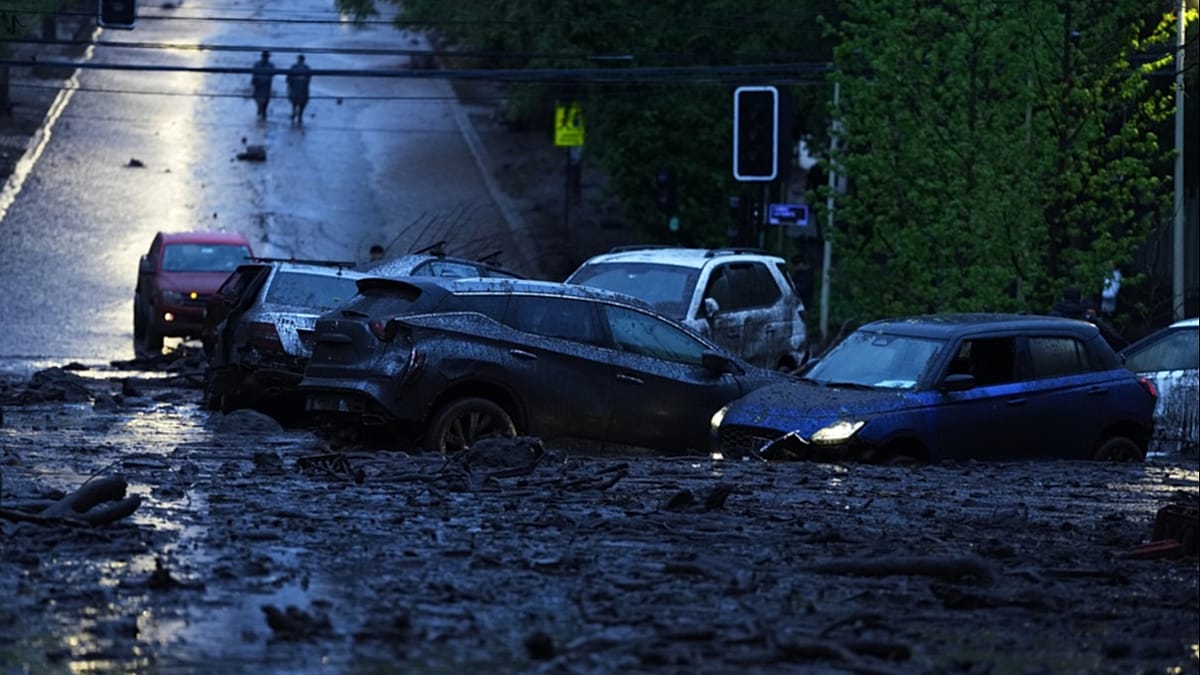
Heavy rains pounded Chile's capital Santiago and surrounding areas on Thursday, unleashing mudslides that carried vehicles through streets, inundated homes, and forced thousands to flee. At least six people were injured, including a one-year-old child who suffered broken bones, according to authorities.
President José Antonio Kast declared a state of emergency in Las Condes, an affluent district east of Santiago, granting government agencies expanded powers to respond as torrential downpours turned major roads into impassable rivers. The district's mayor, Catalina San Martín, reported that 14.4 centimetres of rain had fallen in recent days—roughly nine times the average for October—leaving the area "totally drenched."
Rivers overflow and evacuations ordered
The Mapocho River, which runs through the heart of Santiago, burst its banks, triggering evacuation orders for residents in vulnerable zones. Chile's disaster-response agency placed ten other districts on high alert for further landslides and ordered schools to close on Friday.
Earlier in the week, storms had already damaged dozens of homes across central Chile and left nearly 12,000 customers in Santiago without power, officials said. The downpours were expected to ease by Friday, but the immediate aftermath has left neighbourhoods buried under mud and debris.
Firefighters reported rescuing or evacuating more than 1,000 people, with dramatic images showing rescue workers pulling residents to safety from flooded streets and damaged shops. No deaths were recorded on Thursday, but the scale of the disruption underscores the region's vulnerability to extreme weather.
El Niño amplifies the threat
The floods come as a powerful El Niño gains strength. This naturally recurring warming of tropical Pacific waters disrupts rainfall patterns worldwide and often brings wetter springs to the Southern Hemisphere. The World Meteorological Organization said on Thursday that this year's El Niño is expected to peak in December and could rank among the most intense since at least 1950.
For Chile, a country accustomed to drought, the sudden deluge highlights the challenges of adapting to a more volatile climate. As European cities and regions increasingly face similar extremes—from flash floods in Catalonia to storms battering Crete—the need for resilient infrastructure and coordinated disaster response has never been more urgent.
While the immediate focus in Santiago is on recovery, the event serves as a stark reminder that climate change is intensifying weather extremes across the globe. European policymakers, already grappling with EU reform and enlargement, must also prioritise climate adaptation, as the costs of inaction are measured in lives and livelihoods.