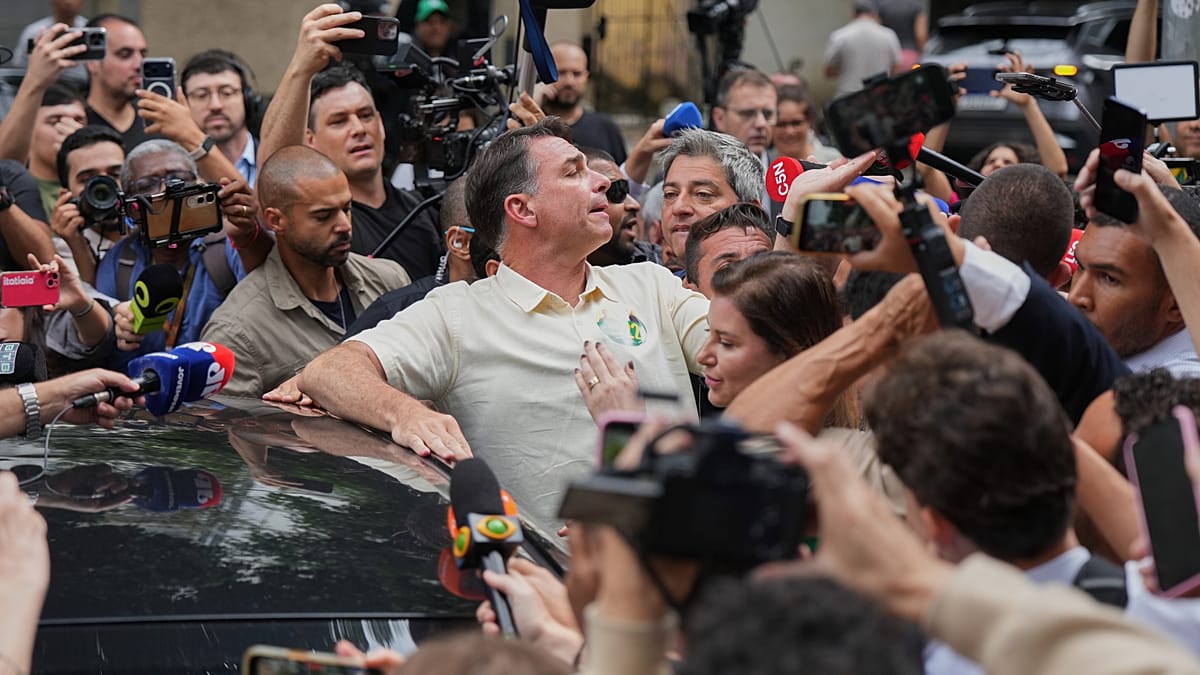
Brazil's financial markets opened the week on a high note after Sunday's first-round presidential vote put far-right candidate Flávio Bolsonaro in a stronger-than-expected position. The Ibovespa, the benchmark index of São Paulo's B3 stock exchange, surged 8% on Monday, building on Friday's 2.46% gain to close at a new record. The Brazilian real also firmed, trading at 4.98 per dollar, up from 5.22 at the end of last week.
The rally reflects investor optimism that Bolsonaro, the son of former president Jair Bolsonaro, could win the 25 October runoff and implement a more market-friendly economic agenda. His platform includes scrapping certain taxes, curbing public debt, and privatizing dozens of state-owned companies. Analysts at BTG Pactual, Latin America's largest investment bank, estimate that a Bolsonaro victory could push B3 shares up by as much as 45%.
Bolsonaro, of the Liberal Party, secured 47.03% of the vote—more than 56 million ballots—while left-wing incumbent Luiz Inácio Lula da Silva trailed with 45.16%, or nearly 53.9 million votes. The result sets up a tense second round, with both candidates now courting the remaining undecided voters and the backing of smaller parties.
Markets bet on a fiscal shift
For investors, the appeal of a Bolsonaro presidency lies in his promise to reduce the state's role in the economy. His proposals to sell off state-owned enterprises and simplify the tax code are seen as potential catalysts for growth, especially after years of sluggish expansion and high public spending under Lula's third term.
"The market is pricing in a credible chance of a more disciplined fiscal policy," said a São Paulo-based economist who asked not to be named. "Bolsonaro's lead, though narrow, has shifted the odds."
However, the economic backdrop remains challenging. While inflation has been brought under control and unemployment has fallen to historic lows, many Brazilians complain of eroding purchasing power. The central bank has kept interest rates high to tame price pressures, which has weighed on consumer demand.
The election outcome also has implications beyond Brazil's borders. A Bolsonaro victory could strain EU-Brazil relations, particularly over environmental policy and trade agreements. The EU has been watching the campaign closely, mindful of the previous Bolsonaro administration's stance on Amazon deforestation and its skepticism of multilateral accords.
European investors, who hold significant stakes in Brazilian assets, are also paying attention. The euro's recent slide amid French debt worries and Spain's snap election has already rattled global markets, and any further volatility in Latin America's largest economy could add to the uncertainty.
For now, the immediate focus is on the runoff campaign. Both candidates are expected to intensify their efforts to win over the 8% of voters who backed other candidates in the first round. Polls suggest a tight race, with Bolsonaro holding a slight edge.
"The next two weeks will be crucial," said political analyst Marina Silva (no relation to the former environment minister) from the University of Brasília. "Bolsonaro has momentum, but Lula's machine is formidable. The outcome is far from decided."
As Brazil heads into the final stretch, the world—and particularly Europe—will be watching. The result will shape not only Brazil's economic trajectory but also its role on the global stage, from climate policy to trade relations with the EU.