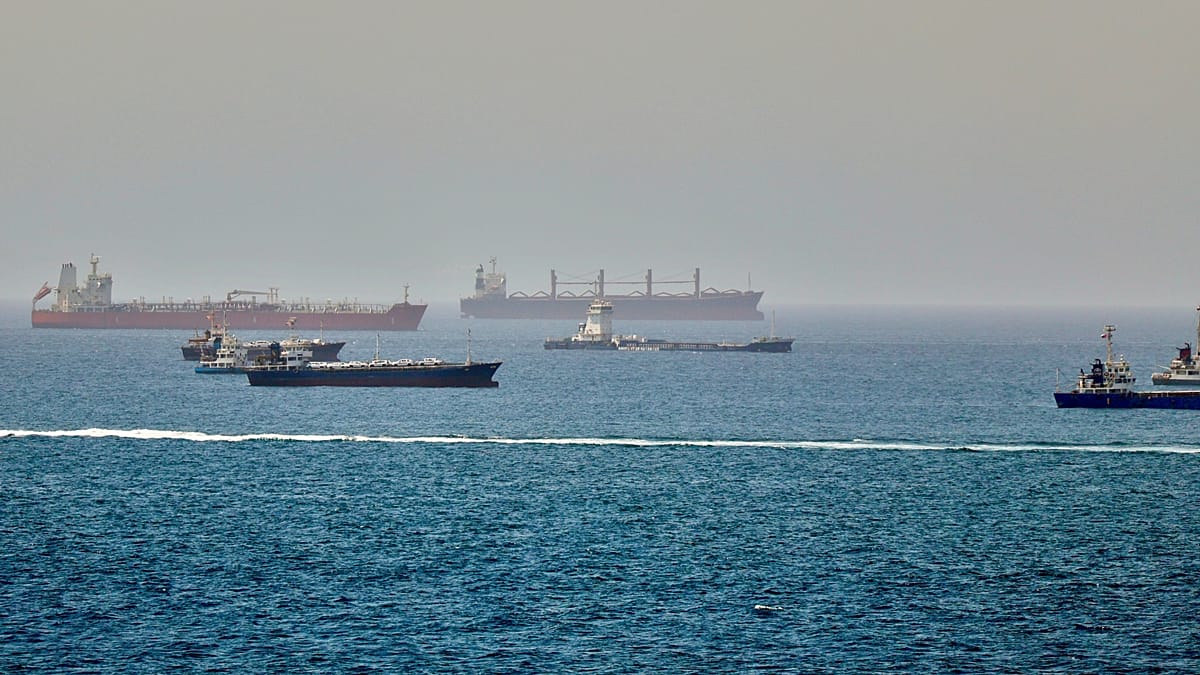
For the second time in under a month, a liquefied natural gas tanker loaded in Qatar has been struck in the Strait of Hormuz, deepening the disruption to one of the world's most critical energy arteries. The incident has prompted QatarEnergy to widen its force majeure declarations, affecting more shipments to European buyers and pushing insurance costs higher.
The UK Maritime Trade Operations reported that an unidentified vessel was hit by a projectile off the coast of Oman. Security consultancies Vanguard Tech and Marisks identified the ship as the GasLog Shanghai, a Monaco-based LNG carrier that manages vessels for QatarEnergy and other major producers. GasLog confirmed the attack occurred last Friday as the tanker was leaving the strait, adding that all crew members were safe and the vessel remained stable.
The GasLog Shanghai had loaded its cargo in Qatar around last Monday and stopped transmitting its position near the strait's western entrance on Friday. It remains unclear who owned the LNG on board; QatarEnergy did not respond to questions about the cargo or whether the incident had affected shipments.
Strategic chokepoint under pressure
The Strait of Hormuz is Qatar's only maritime route to international LNG markets. Qatar, the world's second-largest LNG exporter after Australia, ships approximately 77 million tonnes per year, nearly all of it through this narrow waterway. The Al Rekayyat, a Qatari-owned tanker, was struck near the strait on 7 July, prompting a three-week pause in Qatari LNG shipments.
Jean-Christian Heintz, managing director of Switzerland-based LNG consultancy Wideangle LNG, called the second incident a significant setback. "This is a blow to Qatar's perseverance in mitigating the effects of the crisis," he told Euronews. He noted that QatarEnergy faces the same risk whether it uses its own fleet or third-party carriers: "Even though QatarEnergy has the choice between using ships from its own fleet or from third parties, the risk assessment might not differ."
The attack on the GasLog Shanghai came days after a drone struck the Energos Winter at Egypt's Damietta port, causing a fire that spread to another GasLog-managed vessel, the GasLog Salem. No party has claimed responsibility for the Damietta attack.
Force majeure extends to 24 cargoes
QatarEnergy has been operating under force majeure on some contracts since March, when Iranian attacks on the Ras Laffan industrial complex and the subsequent closure of the Strait of Hormuz disrupted production and shipping. Ras Laffan, which QatarEnergy describes as the world's largest LNG production facility, accounts for the bulk of Qatar's export capacity; two of its production trains were damaged in the March strikes.
Italian utility Edison said QatarEnergy had informed it that a further three LNG cargoes would not be delivered, extending force majeure on supplies through the end of September. In total, 24 cargoes scheduled for delivery to Edison between April and September—representing approximately 3 billion cubic metres of natural gas—are now subject to force majeure. Edison said it had replaced 17 of the affected cargoes and remained able to meet its commitments to customers. The utility has a 25-year supply agreement with QatarEnergy, signed in 2009, covering 6.4 billion cubic metres per year.
Heintz saw little reason for QatarEnergy to lift force majeure while the security situation remained unresolved. Each new incident, he said, pushes shipowners, cargo traders and insurers to reassess the cost of transiting the Strait of Hormuz. "Insurance premiums, both for ships and the cargoes they carry, can only rise from this point," he explained.
Global gas markets had already adjusted significantly to the disruption, but the latest incidents combined with strong European demand to refill storage ahead of winter were "certainly bullish for prices," Heintz concluded. For European utilities and households, the ripple effects of Hormuz are becoming harder to ignore, as oil majors post record profits while fuel prices climb. The broader geopolitical backdrop remains tense, with diplomatic efforts to reopen the strait still fragile. Meanwhile, European navies are stepping up patrols, as seen in the Italian navy's recent boarding of a Russian shadow fleet tanker near Pantelleria.