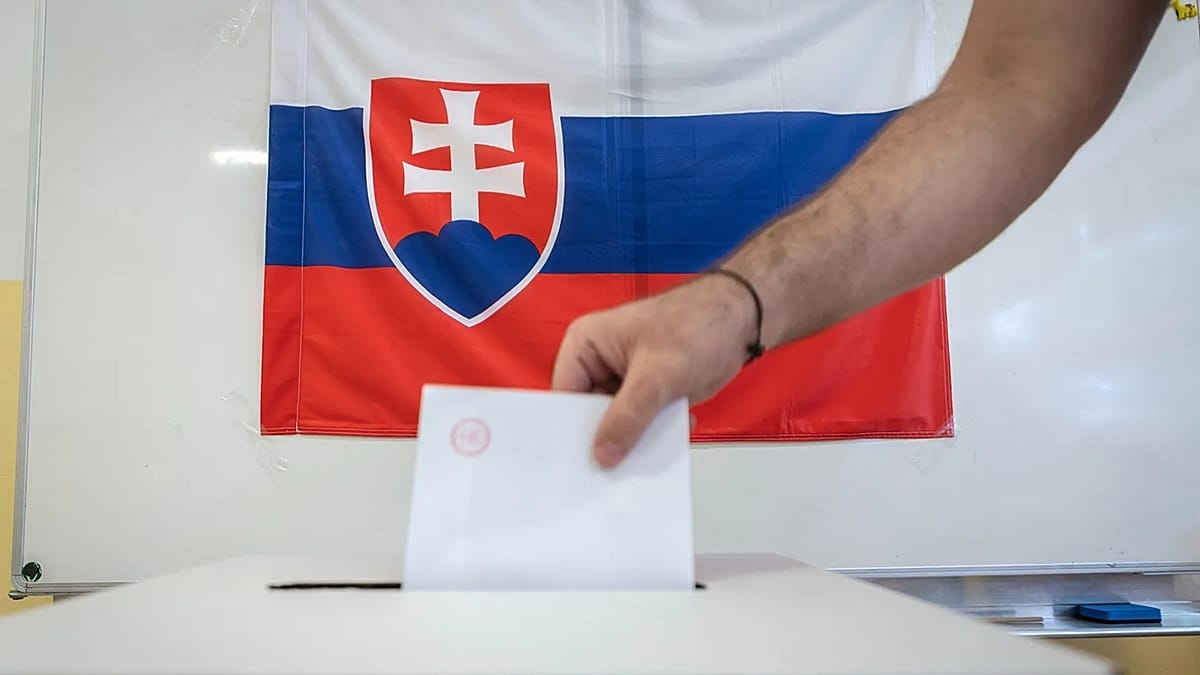
Slovakia is set for a summer referendum that could reshape the financial privileges of its top political figures. President Peter Pellegrini announced on Monday that the vote will take place on 4 July, giving citizens a direct say on two contentious issues: scrapping lifelong payments for former prime ministers and parliament speakers, and reopening the special prosecutor’s office that handled major crime and corruption.
The referendum follows a petition organised by the Democrats, a pro-Western opposition party not represented in parliament. The petition gathered more than 350,000 signatures, surpassing the legal threshold required to trigger a national vote. Pellegrini confirmed that the ballot will not include a question on early parliamentary elections, citing a 2021 ruling by the Constitutional Court that deemed such a query unconstitutional.
Lifelong Payments Under Scrutiny
Under current rules, Slovak prime ministers and parliament speakers who have served at least two terms receive a lifelong monthly payment equal to the salary of a sitting lawmaker. These benefits were introduced after the assassination attempt on Prime Minister Robert Fico in 2024, when he was shot and gravely wounded at a pre-election event. Before that, only former presidents were entitled to such payments.
Critics argue that the payments are excessive and entrench a political elite disconnected from ordinary citizens. The referendum offers a chance to abolish them, though the outcome is uncertain given Slovakia’s history with direct democracy.
Special Prosecutor’s Office: A Flashpoint
The second question on the ballot concerns the special prosecutor’s office, which was abolished in 2024 by Fico’s coalition government. That office had been responsible for prosecuting serious crimes, including corruption, organised crime, and extremism. Its dissolution sparked widespread protests in Bratislava and other cities, with thousands taking to the streets to oppose the move. Critics at home and abroad accused the government of weakening anti-corruption efforts, especially as several individuals linked to Fico’s party faced prosecution in corruption scandals.
The referendum will ask voters whether they want to reinstate the office, a move that would directly challenge the government’s earlier decision. The issue remains deeply polarising, reflecting broader tensions over the rule of law in Slovakia.
Low Turnout Threatens Success
Only one referendum in Slovakia’s history has been successful: the 2003 vote on joining the European Union. All others have failed due to low turnout, which must exceed 50% for the result to be binding. With the July date falling in the middle of summer, mobilising voters could prove challenging. Political analysts note that the outcome will depend heavily on whether opposition parties can energise their base and whether the government actively campaigns against the proposals.
Fico, who returned to power in 2023, remains a divisive figure. His perceived pro-Russia stance has fuelled repeated protests, and his government’s policies have drawn scrutiny from Brussels. The referendum adds another layer of uncertainty to Slovakia’s political landscape, as the country grapples with questions of accountability and institutional integrity.
For more on regional developments, see our coverage of HiPP Baby Food Recalled in Austria, Slovakia, and Czechia Over Suspected Criminal Tampering and Slovenia Joins Boycott of Eurovision Over Israel's Participation.



