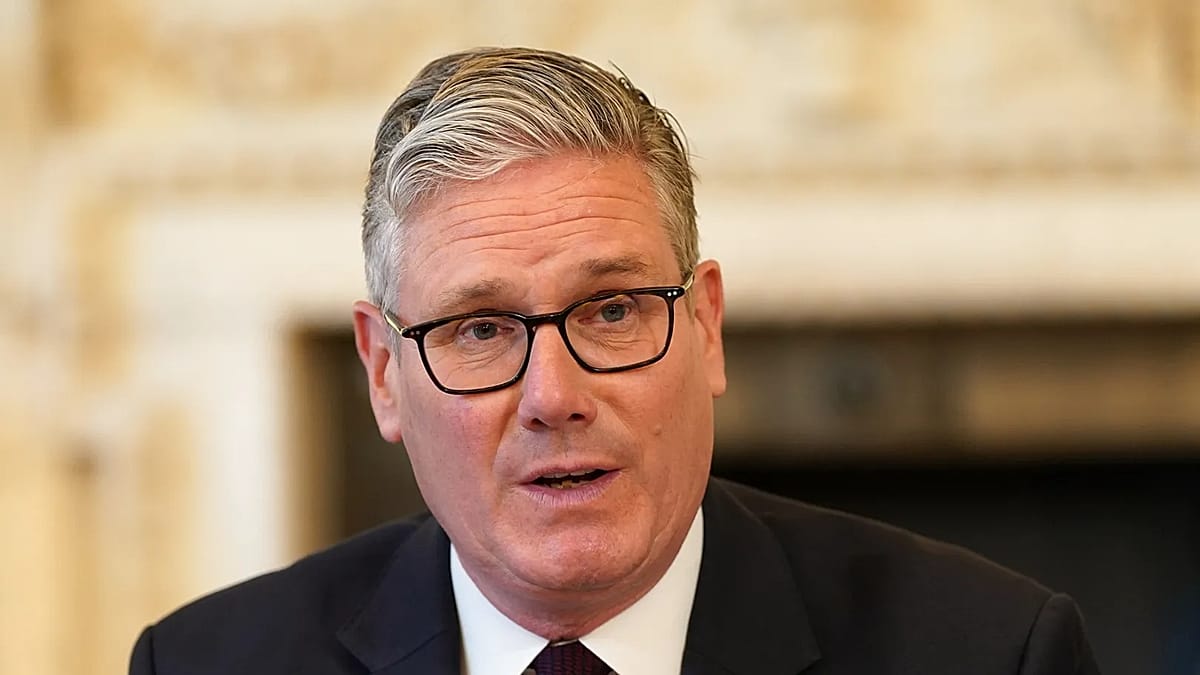
Outgoing British Prime Minister Keir Starmer has described his decision to step down from office as an “intensely personal” choice, offering a rare glimpse into the private deliberations that led to his resignation last month. In his first interview since leaving Downing Street, Starmer told the BBC that the process was “tough” and that he had “grappled with what was the best thing to do for me, for the country, for the government.”
Starmer, who will remain in office until the Labour Party selects a successor, also issued a pointed warning to the frontrunner to replace him: Andy Burnham, the former mayor of Greater Manchester and newly elected MP for Makerfield. Burnham returned to Westminster after winning a by-election in June and is now widely expected to become the next Labour leader and prime minister.
Foreign Policy as a Domestic Imperative
In his interview, Starmer stressed that the next occupant of Number 10 cannot afford to reduce the time spent on diplomacy and international affairs. He argued that global conflicts have a direct and powerful impact on household finances across the United Kingdom.
“The biggest impact on the cost of living, therefore on the household income and living standards of everybody in the country… the biggest impact in the last few years has been on one hand the Ukraine conflict, on the other the Iran conflict,” Starmer said. He added: “If you’re prime minister and you care what bills are going to be like in any household around the country, you have to care about finding a lasting solution to the situation in Ukraine. You have to care about what happens in the strait of Hormuz.”
This emphasis on foreign policy is notable given that Starmer himself faced criticism during his tenure for spending considerable time abroad meeting world leaders. Some detractors dubbed him “never here Keir,” a label that contrasted sharply with Burnham’s focus on domestic issues. Burnham has built his political brand around pledges to end trickle-down economics and neoliberalism, positioning himself as a champion of working-class communities.
Starmer acknowledged that he and Burnham have “always got on,” but the outgoing PM’s remarks suggest a divergence in priorities. While Burnham has homed in on internal reforms, Starmer’s warning implies that ignoring global crises could undermine any domestic agenda. The wars in Ukraine and Iran have already driven up energy prices and inflation across Europe, and the UK is no exception.
The transition comes at a critical moment for European security. Starmer’s government had pursued a robust stance on Ukraine, including an £80 billion defence plan with a focus on drones and artificial intelligence. His foreign secretary, David Lammy, has signalled that the UK will maintain its course on Ukraine and EU ties after Starmer leaves office, as reported in Lammy’s recent statements.
Burnham, who previously served as the MP for Leigh from 2001 to 2017 before becoming mayor of Greater Manchester, now faces the challenge of balancing domestic promises with the realities of global leadership. The Labour Party is expected to appoint a new leader within weeks, and the next prime minister will inherit a complex geopolitical landscape.
Starmer’s resignation adds to a series of leadership changes across Europe. In Moldova, Prime Minister Alexandru Munteanu resigned after just eight months, as noted in our coverage. Meanwhile, Serbia’s President Aleksandar Vučić has announced his resignation and called for snap elections, as reported in Serbia’s Vučić Announces Resignation. These shifts underscore a period of political flux on the continent.
For the UK, the immediate question is whether Burnham will heed Starmer’s advice or chart a more insular course. The answer will have implications not only for British households but also for the UK’s role in European and global affairs.