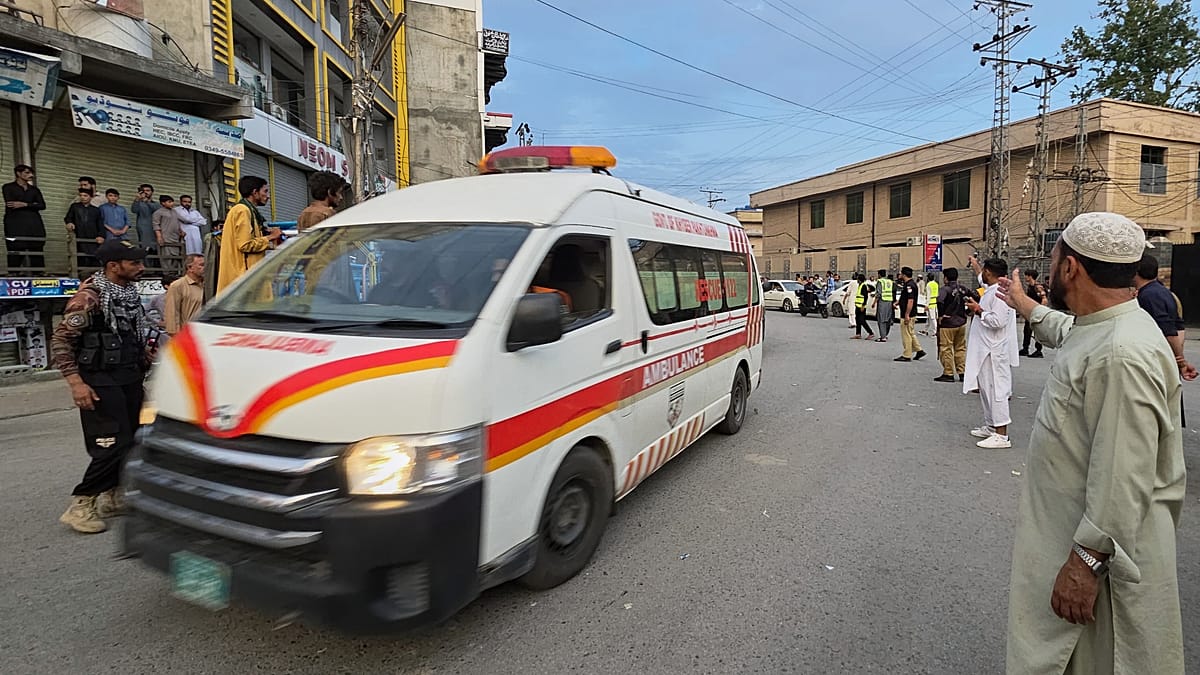
At least 11 people were killed and around 30 others injured on Saturday when a suicide bomber detonated an explosives-laden vehicle at a roadside police checkpoint in northwestern Pakistan, according to police and rescue officials.
The attack occurred in the district of Dera Ismail Khan, in Khyber Pakhtunkhwa province, a region that has long been a flashpoint for militant activity. Bilal Faizi, a spokesperson for the provincial emergency service, confirmed the location and the casualty figures.
The Tehreek-e-Taliban Pakistan (TTP), commonly known as the Pakistani Taliban, has claimed responsibility for the bombing. The group, founded in late 2007, operates as a loose coalition of around 40 tribal and non-tribal militant factions, according to the Counter Extremism Project (CEP). Its primary goal is to overthrow the Pakistani state and impose its own interpretation of Islamic law.
Pakistan has witnessed a marked increase in militant attacks over the past few years, with the TTP claiming many of them. The group has carried out assaults on security forces, civilians, and political figures across both Pakistan and Afghanistan, according to the CEP.
Regional instability and the Afghan connection
The TTP is closely allied with the Afghan Taliban, which returned to power in Kabul in 2021 after the withdrawal of US-led forces. That alliance has raised concerns in Islamabad and among Western security analysts about the potential for cross-border militancy to destabilize the region.
While the immediate focus remains on the victims and the investigation, the attack serves as a stark reminder of the security challenges facing Pakistan's border regions. The country has struggled to contain insurgent groups that operate with relative impunity in the rugged terrain along the Afghan frontier.
European observers have watched these developments with concern, as instability in South Asia can have ripple effects on global security, including the threat of terrorism reaching European soil. The European Union has repeatedly called for a coordinated international response to militant networks in the region.
In recent months, European security agencies have also been on alert following a series of incidents, including a Polish teenager held over an alleged plot to attack a school and a mosque, and a gunman wounding five outside a school in western Turkey. These events underscore the persistent nature of extremist threats, even as the focus shifts between regions.
The Pakistani government has yet to issue an official statement on Saturday's bombing, but local authorities have launched an investigation. No group other than the TTP has claimed responsibility so far.
As the death toll could rise, given the number of critically injured, the attack is likely to reignite debates in Pakistan about the effectiveness of counter-terrorism operations and the need for a comprehensive strategy to address the root causes of militancy.
For Europe, the incident is a reminder that the fight against terrorism is far from over, and that international cooperation remains essential to prevent such violence from spilling across borders.