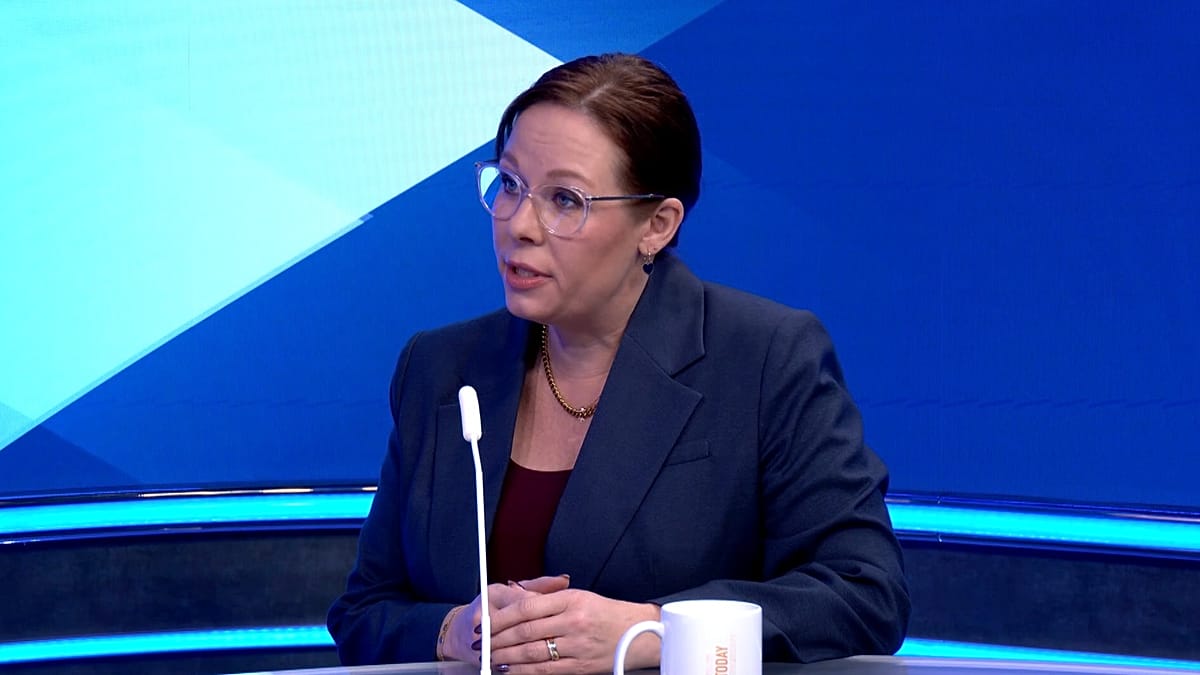
Stockholm is pressing Brussels to come up with a fresh mechanism that would channel frozen Russian assets into Ukraine's war effort, arguing that the financial burden should be shared across the EU. In an interview with Euronews, Swedish Foreign Minister Maria Malmer Stenergard said she hoped the European Commission was already working on a plan to move those assets out of their current holding in Belgium and distribute the associated risks among member states.
Stenergard acknowledged that the €90 billion loan package agreed by the EU was a significant step, but she warned that bilateral contributions from European capitals have since tapered off. "We need more bilateral support. We need more loans, but we also need to use the frozen Russian assets," she said.
Military aid and the peace process
The Swedish minister also called for a sustained increase in European military assistance to Kyiv. She argued that Moscow has shown no genuine interest in ending the war, and that the EU should therefore focus on ramping up support for Ukraine while tightening pressure on the Kremlin.
Stenergard, who recently travelled to Abu Dhabi during diplomatic efforts to broker a ceasefire, said she had seen little to suggest a breakthrough is imminent. She insisted that Europe must have a seat at any negotiating table, pointing out that a settlement would have profound consequences for the continent's security architecture, including Ukraine's potential membership of the EU and NATO.
"We are not mediators," she said. "We should be at the table, but we should be on Ukraine's side."
Her comments come as European leaders debate how to shape their role in peace talks, a discussion that has at times been marked by disagreements over who should represent the bloc. The EU has also been expanding its diplomatic team, though not without friction, as seen in the recent snub of the EU's top diplomat.
Hybrid threats and civil defence
Stenergard also warned that Russia is becoming bolder in its use of hybrid attacks against European countries, particularly in the Baltic region. She noted that Sweden has increased spending on civil defence to bolster public preparedness and resilience, and called for greater unity among EU member states in countering Russian efforts to sow division.
The push to unlock frozen Russian assets is part of a broader European effort to sustain Ukraine's finances and military capacity. While the EU has already agreed on a major loan, the Swedish proposal would go further by directly leveraging the estimated hundreds of billions of euros in Russian central bank assets that remain immobilised in European jurisdictions.
Stenergard's remarks also come amid growing concern over Russia's aggressive tactics beyond the battlefield, including interceptions of suspected shadow fleet vessels and restrictions on critical infrastructure that affect Ukraine's defence.
For now, the Swedish government is urging its EU partners to move quickly. "We need to be creative and we need to be bold," Stenergard said. "The cost of inaction is far greater than the cost of sharing the risk."