Switzerland's glaciers have reached a critical tipping point far earlier than usual, with all snow and ice accumulated over the past winter expected to vanish by Monday, according to Glacier Monitoring in Switzerland (GLAMOS). The early melt is driven by a severe heatwave sweeping across Europe, pushing temperatures above 40°C in several regions and placing unprecedented stress on the continent's ice fields.
GLAMOS chief Matthias Huss described the situation as alarming. "We're just seeing enormous ablation, ice melt rates and snow melt rates all over the Alps," he said on Friday. "We are three months too early compared to a healthy state." The so-called "glacier loss day"—the point at which all winter accumulation has melted—has arrived in late June, compared to the average mid-August date observed over the past century. Only once before, on June 26, 2022, has this tipping point come earlier.
Accelerating Feedback Loop
Once the reflective white snow cover disappears, the darker grey glacier ice beneath is exposed. This ice absorbs solar radiation more efficiently, creating a feedback loop that accelerates melting. Huss noted that Swiss glaciers received roughly 25% less fresh snowfall than the 2010–2020 average this winter, and warmer-than-normal temperatures in May and June—including the current heatwave—caused the snow to vanish prematurely.
The consequences extend beyond Switzerland. The extreme heat currently scorching Europe has caused widespread disruption, straining hospitals and emergency services, and leading to several deaths. Scientists warn that such temperatures would have been nearly impossible just a few decades ago, underscoring the rapid pace of climate change. A recent study found that Europe now experiences 40 extra days of extreme heat stress annually, a trend that directly threatens alpine glaciers.
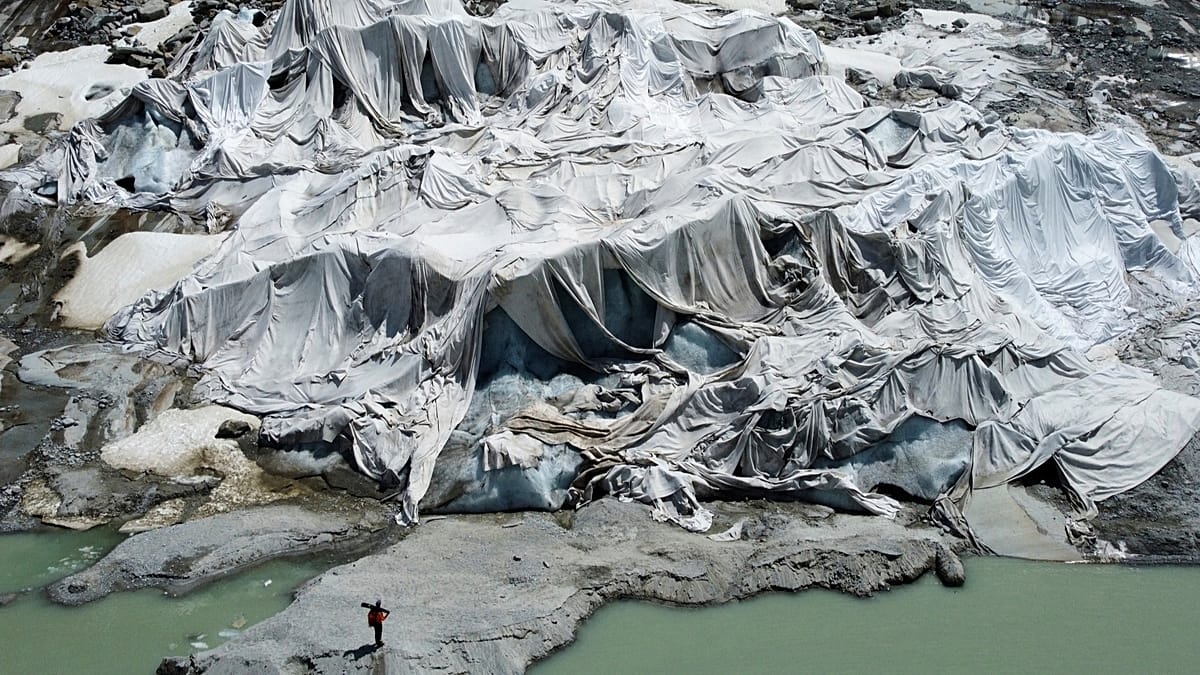
While glaciers in the Swiss Alps have been retreating since the mid-19th century, the rate of loss has accelerated sharply in recent decades. Huss warned that if warming continues at its current pace, "by 2100 we will only be left with some little remnants of ice." The Rhone Glacier near Goms, photographed on June 10, 2025, shows water streaming from its melting face—a stark visual of the continent's vanishing ice.
The heatwave has also triggered power cuts in Finistère and wildfire alerts across central France, while other parts of Europe face similar challenges. The early glacier melt is not an isolated phenomenon; it is part of a broader pattern of climate disruption that demands urgent adaptation. As Huss emphasized, every additional day of melting between now and October will shrink the glaciers further, with no recovery possible until winter snowfall returns.
For Europe's alpine regions, the loss of glaciers threatens water supplies, tourism, and ecosystems. The continent must confront the reality that its iconic ice fields are disappearing at a pace that outstrips even the most pessimistic forecasts from a decade ago.