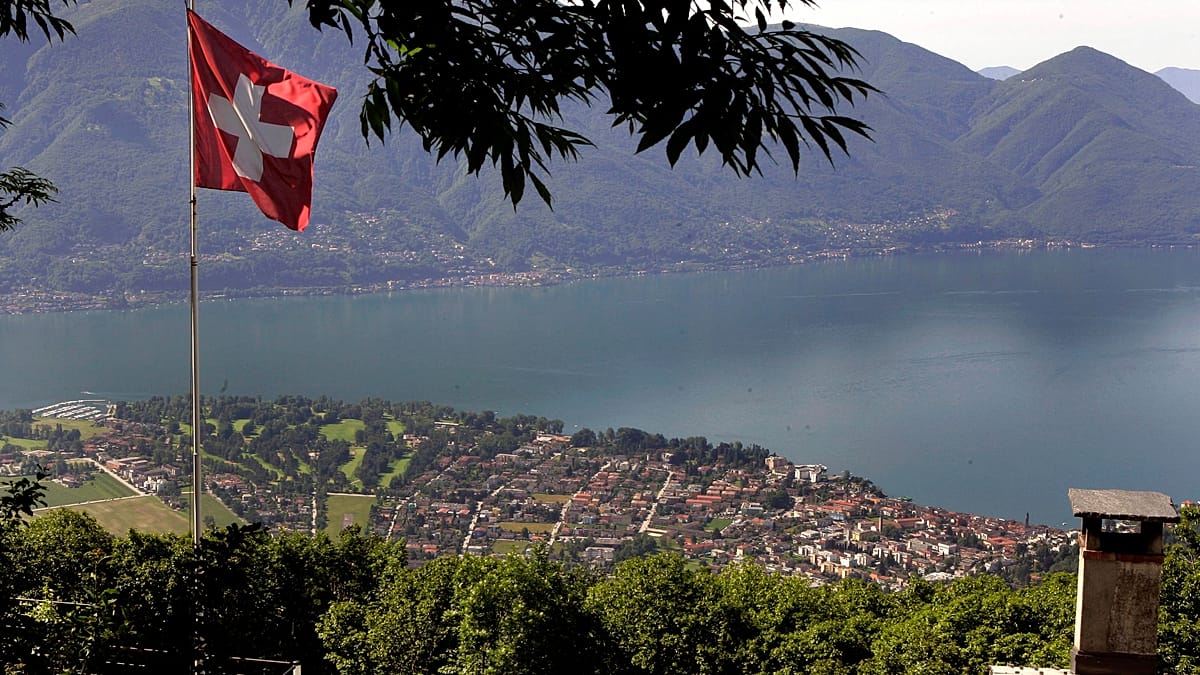
As drought tightens its grip on northern Italy, Switzerland has stepped in with an emergency measure: increasing water releases from Lake Lugano to help prop up the shrinking Lake Maggiore. The move, announced after urgent talks between Italian and Swiss authorities, underscores how precarious the region's water balance has become.
Starting immediately, the discharge from Lake Lugano towards Ponte Tresa will rise from 3 to 8 cubic metres per second. The two lakes are connected via the River Tresa, and a significant share of the extra water is expected to reach Lake Maggiore, which has been hovering near its minimum operating level for weeks.
The decision was taken within the Italian-Swiss Bilateral Consultation Body, convened urgently by Italy's Ministry of the Environment based on data from the Po River Basin Authority. The Italian delegation, including representatives from Lombardy and Piedmont, accepted the Swiss proposal, which will be reassessed in the coming days.
A 'short blanket' problem
The intervention is temporary, but its significance goes far beyond a single technical adjustment. It highlights a fundamental dilemma: available water is no longer sufficient to meet all demands simultaneously. On one side are the rice paddies of Piedmont and Lombardy, which require vast volumes of water at this stage of the growing season. On the other are drinking water networks, rivers, lakes, and ecosystems, all competing for ever-scarcer flows.
This is the classic 'short blanket' situation: if you increase supply to one sector, you must check what remains for others. And when the overall resource shrinks, even a seemingly routine decision about lake regulation becomes a strategic issue.
Lake Maggiore is a transboundary basin shared between Italy and Switzerland, but its regulation is not jointly managed in the strict sense. The lake's level is controlled by the Miorina dam at Sesto Calende on Italian territory, with day-to-day management entrusted to the Ticino Consortium. Nevertheless, coordination with Switzerland is essential, as changes in the lake's level have consequences on both sides of the border.
Piedmont under pressure
In Piedmont, the situation is especially acute. By mid-July, regional authorities reported that around 100 municipalities had adopted ordinances to curb water use, mainly in mountainous areas and isolated hamlets. In about 50 municipalities, home to a combined population of 25,000, water tankers were already being deployed to top up reservoirs serving local supply networks.
Data from Arpa Piemonte painted a stark picture: surface water resources were 37 per cent below the seasonal average, with many gauging stations showing deficits exceeding 40 per cent in the first ten days of July. At Isola Sant'Antonio, the Po's average flow was just 62 cubic metres per second, 75 per cent below its historical reference value.
The heat has compounded the problem. June 2026 in Piedmont saw temperatures far above average, with a regional anomaly of about +3.5 °C. Higher temperatures increased evapotranspiration, causing soil and vegetation to lose water more rapidly.
Crisis spreads across the Po basin
Piedmont is not alone. The crisis extends across the entire Po River basin. At the end of July, the permanent observatory on water use in the Po River District raised its assessment from 'medium' to 'high' water stress. Flows in the Po had fallen to values below typical low-water conditions, with the drought index indicating severe conditions across most monitored sections and an 'extreme' situation recorded at Cremona.
As early as 21 July, the Basin Authority reported problems not only for agriculture but also for household water supplies. In Lombardy, 50 municipalities were struggling, 17 of them supplied by tankers; in the Marche region, 32 municipalities faced similar difficulties. Critical situations were also reported in Veneto and Piedmont.
The Po Delta is also at risk: reduced river flows increase the likelihood of saltwater intrusion from the sea, which can push inland and threaten ecosystems, farming, and water supply installations.
Who gets the water first?
The emergency is not just about how much water is available, but how to distribute it when there isn't enough. Agriculture needs irrigation precisely during the hottest months, and the rice fields of Piedmont and Lombardy are among the most exposed sectors. Piedmont has flagged the risk of significant crop losses linked to water shortages.
But the same water is needed for drinking supplies, to maintain minimum river flows, and to sustain ecosystems. The EU's water resilience plan aims to address such challenges across the continent, but local measures remain urgent.
As the 'short blanket' dilemma plays out, the Swiss intervention offers temporary relief, but it also highlights the need for longer-term strategies. The situation in northern Italy is a stark reminder that water scarcity is no longer a distant threat but a present reality, requiring coordinated action across borders.