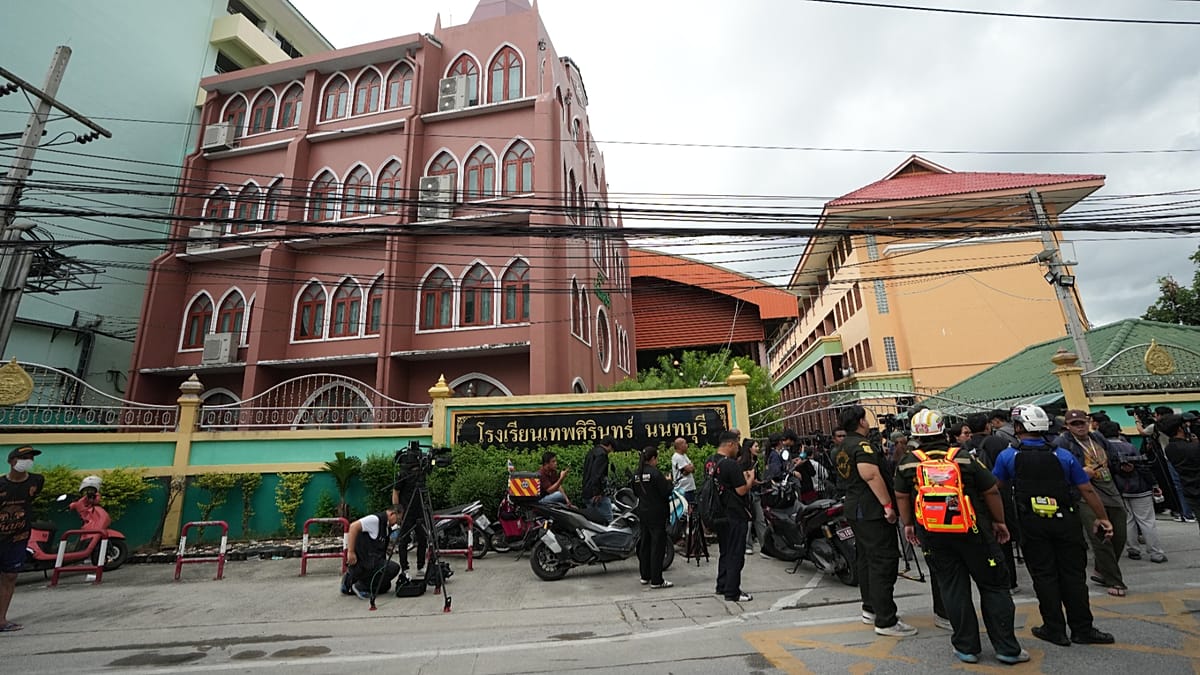
A shooting at a school in Nonthaburi province, just north of Bangkok, left at least two people dead and 15 others wounded on Friday, according to a provincial official who spoke to AFP. The attacker, identified as a teenager, was also reported dead, though the circumstances of his death remained unclear.
Local media, citing police sources, said the suspect was a student at the school. Some reports indicated that responding officers shot and killed him, while others suggested he died by suicide. Authorities have not yet issued a definitive statement on the sequence of events.
The incident unfolded during school hours, sending students and staff fleeing as emergency services rushed to the scene. Witnesses described chaotic scenes, with police cordoning off the area and ambulances ferrying the wounded to nearby hospitals. The provincial official, who asked not to be named, confirmed the death toll and said the injured were receiving treatment.
School shootings are relatively rare in Thailand, but the country has experienced sporadic gun violence, including a 2022 attack on a daycare centre in Nong Bua Lamphu province that killed 36 people, most of them children. That tragedy prompted renewed calls for stricter gun control, though little has changed in practice.
Thailand has one of the highest rates of gun ownership in Southeast Asia, with an estimated 10 million firearms in civilian hands, many of them unregistered. Legal gun ownership requires a licence, but a thriving black market makes weapons accessible to those who cannot pass background checks.
The shooting in Nonthaburi comes as European readers increasingly follow security incidents across Asia, partly because of the region's popularity as a travel destination and its growing economic ties with the EU. For Europeans planning trips to Thailand, the incident is a reminder that while violent crime remains uncommon, it can occur even in seemingly safe settings.
Thai Prime Minister, who has not yet commented publicly on the shooting, is expected to address the nation later today. The Ministry of Education has announced it will review security protocols at schools nationwide, though similar pledges after previous incidents have yielded limited results.
Local authorities have opened an investigation into the shooting, focusing on how the teenager obtained the weapon and whether any warning signs were missed. The school has been closed for the day, and counselling services have been offered to students and staff.
This tragedy echoes other recent gun violence in the region, such as the shooting in Sevastopol that left four dead, highlighting a broader pattern of sporadic attacks that challenge public safety across different continents.
As Thailand mourns, the focus now shifts to supporting the victims and their families. The wounded are being treated at several hospitals in Nonthaburi and Bangkok, with doctors reporting that some are in critical condition.
For the international community, including European tourists and expatriates living in Thailand, the incident serves as a stark reminder of the importance of situational awareness and the need for robust emergency response systems. The EU has offered condolences and expressed readiness to assist if needed.
While the immediate investigation will seek to establish the facts, the broader questions about gun control and school safety are likely to dominate public discourse in Thailand in the coming days. Whether this tragedy will lead to meaningful policy change remains to be seen.