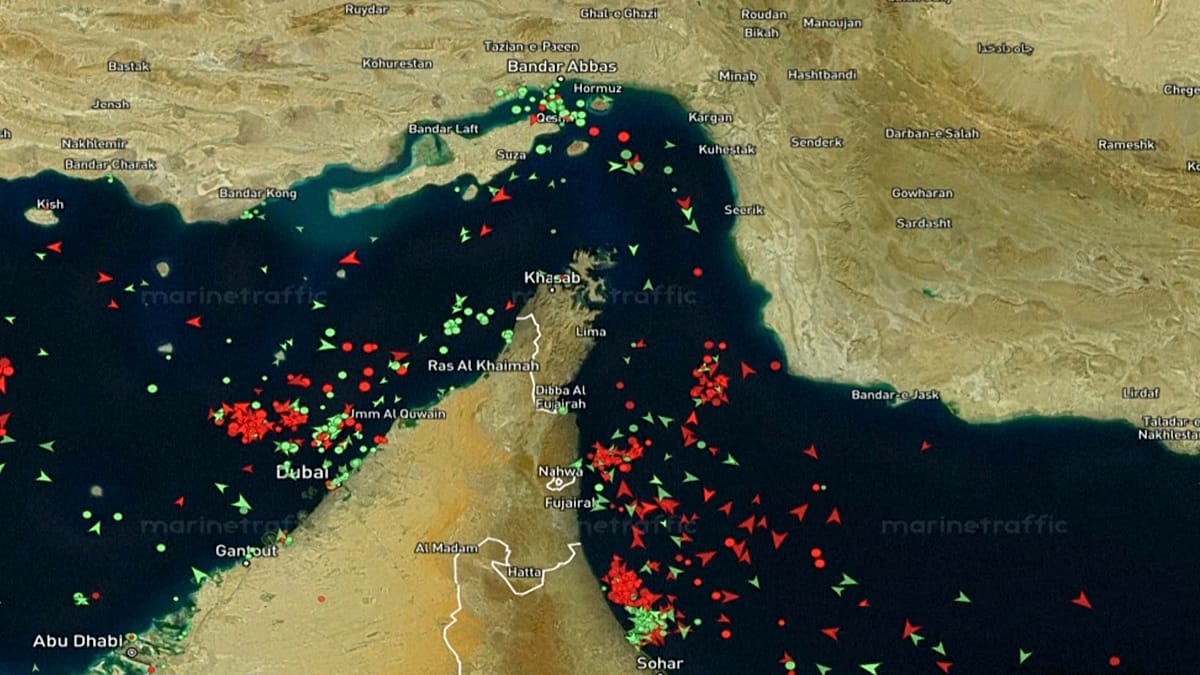
A newly released timelapse video offers a striking visual record of maritime traffic resuming through the Strait of Hormuz, days after the United States and Iran signed an interim agreement that ended their military confrontation and reopened one of the world's most strategically important shipping lanes.
The footage, compiled from satellite imagery and maritime tracking data, shows a steady stream of tankers and cargo vessels moving through the narrow waterway, which connects the Persian Gulf to the Gulf of Oman and the open Indian Ocean. The strait handles roughly one-fifth of the world's oil consumption, making its uninterrupted operation a matter of global economic stability.
European Energy Security at Stake
For European capitals, the reopening brings measurable relief. During the weeks of closure, EU energy ministers considered releasing jet fuel reserves as the crisis disrupted supply chains and pushed up prices at the pump. Several member states, including France, Italy, and Spain, rely on crude oil and liquefied natural gas transiting the strait. The resumption of normal traffic is expected to ease pressure on European refineries and help stabilise fuel costs for consumers and industries alike.
The agreement, signed in Muscat after months of back-channel negotiations, was hailed by the Trump administration as a diplomatic breakthrough. However, European policymakers remain cautious. Governance questions loom over the long-term framework, particularly regarding the enforcement of maritime security and the role of international actors in guaranteeing freedom of navigation.
Naval Missions and Legal Frameworks
Germany, which had been drafting a mandate for a Strait of Hormuz naval mission, now faces a changed strategic calculus. The legal questions that surrounded a potential European-led military deployment—such as rules of engagement, command structures, and parliamentary approval—remain unresolved, but the immediate need for such a mission has diminished. Still, Berlin and other EU capitals are likely to press for a more permanent international framework to prevent future blockages.
The reopening has also had an immediate impact on financial markets. Spain's Ibex 35 index broke the 19,000 barrier on the day of the announcement, driven by gains in energy and transport stocks. Analysts attribute the rally to renewed confidence in global trade flows and lower risk premiums on oil-dependent sectors.
Broader Implications for European Security
The crisis has underscored Europe's vulnerability to disruptions in distant chokepoints. While the EU has diversified its energy imports in recent years—increasing pipeline gas from Norway and LNG from Qatar and the United States—the Strait of Hormuz remains a critical artery for global energy markets that directly affects European price levels.
Beyond energy, the reopening carries implications for European security policy. The US-Iran deal, negotiated without direct European participation, has revived debates in Brussels and national capitals about the need for a more autonomous European foreign and defence posture. The episode also highlights the fragility of the global trading system and the risks posed by regional conflicts to European economic interests.
For now, the timelapse video serves as a visual testament to the return of normalcy—but also as a reminder of how quickly that normalcy can be interrupted. As vessels once again navigate the narrow corridor between the Arabian Peninsula and Iran, European governments are likely to keep a watchful eye on the strait's long-term governance and security arrangements.