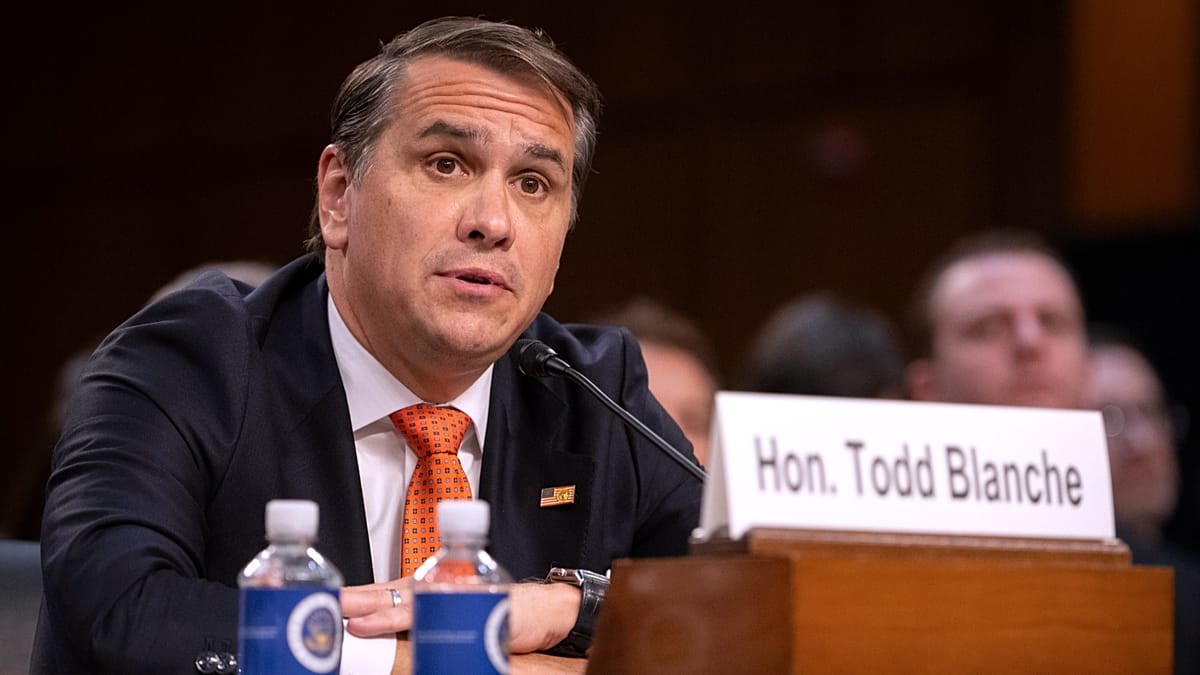
Todd Blanche, the former personal attorney to Donald Trump, was sworn in as attorney general of the United States on Monday, taking charge of a Justice Department that the president has repeatedly sought to use against his political adversaries. The ceremony took place in the Oval Office, with Trump in attendance, and was shared on social media by White House press secretary Karoline Leavitt, who called Blanche "a great lawyer and an even better man."
The 52-year-old's confirmation by the Senate last week came after a bruising battle, with Republicans largely dismissing Democratic concerns about the politicisation of the department. Blanche had been serving in an acting capacity since Trump fired Pam Bondi in April, partly because she failed to secure convictions against several of the president's opponents, including former FBI director James Comey and New York Attorney General Letitia James.
Since taking over, Blanche has been closely associated with what Democrats describe as a campaign of retribution against Trump's enemies. Notably, he secured a new indictment against Comey, alleging that an Instagram post threatened the president's life. This move has intensified fears that the Justice Department is being used as a tool for political score-settling.
A narrow path to confirmation
Blanche's confirmation was secured by a razor-thin margin of 50 votes to 49, after the White House managed to persuade a handful of Republican holdouts to back him. The main sticking points were two controversial measures: a proposed $1.8 billion (€1.5 billion) fund for what Trump calls victims of political prosecutions—which could have included those who stormed the Capitol on 6 January 2021—and an extraordinary agreement granting Trump immunity from tax audits.
To defuse internal party opposition, Blanche issued a written order scrapping the so-called "anti-weaponisation fund" and clarified that the audit immunity deal with Trump, his two eldest sons, and the Trump Organisation would apply only retroactively to past tax years, not future filings. These concessions were enough to secure the support of the remaining Republican senators.
Criticism has also come from victims of Jeffrey Epstein over the handling of investigative files related to the convicted sex offender, a one-time close friend of Trump. The release of approximately 3.5 million pages of public records has been controversial, with some victims' advocates arguing that the process has been opaque and potentially compromised.
Before joining the Justice Department, Blanche represented Trump in the New York trial concerning hush-money payments to adult film actress Stormy Daniels. He was also part of the legal defence team in two federal cases brought by special counsel Jack Smith, involving alleged mishandling of classified documents and attempts to overturn the 2020 presidential election results.
The appointment of Blanche has raised alarms across Europe about the independence of the US justice system, which has long been a cornerstone of transatlantic trust. As the EU and its member states navigate a complex relationship with Washington, the politicisation of the Justice Department could have far-reaching implications for legal cooperation and shared democratic values. For more on the broader concerns, see this analysis of the confirmation's impact.
Blanche's tenure is likely to be marked by continued scrutiny, both domestically and internationally, as he balances the president's demands with the department's traditional role as an impartial arbiter of the law. The coming months will reveal whether he can maintain any semblance of that independence or whether the Justice Department becomes fully subsumed into the political machinery of the White House.