For European travellers planning a first trip to East Asia, the choice between Tokyo and Seoul can feel as daunting as it is exciting. Both capitals have seen visitor numbers climb steadily, and neither shows signs of cooling off. The honest answer to the question of which to visit is simple: if you can, go to both. But if time or budget forces a decision, understanding what each city does best will help you pick the right fit.
Tokyo: a metropolis of contrasts
Tokyo’s scale is almost impossible to grasp until you’re standing in the middle of Shinjuku station, the world’s busiest transport hub, with more than 200 exits and over 2.7 million passengers passing through daily. It’s a place where you can easily lose your bearings, but once you surface, the city unfolds in layers: neon-lit skyscrapers, narrow alleyways packed with tiny bars, and quiet temple grounds hidden just a few blocks away.
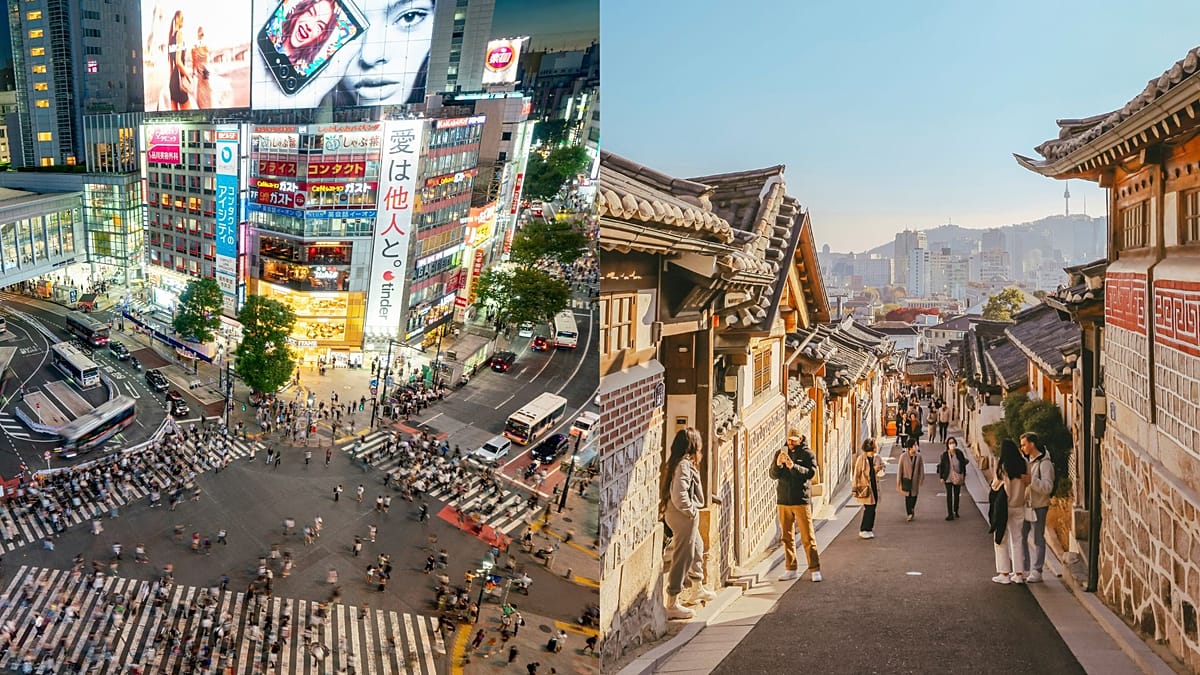
The city’s districts each have their own personality. Shibuya is the beating heart of modern Tokyo, famous for its scramble crossing and endless shopping. Harajuku, a short walk away, is where youth culture and street fashion collide. Akihabara is the go-to for electronics, anime, and manga, while Roppongi offers nightlife and the Tokyo City View observation deck. Ginza, meanwhile, caters to those seeking luxury boutiques and high-end dining.
Yet Tokyo’s appeal isn’t only about the futuristic. In Asakusa, Sensō-ji, the city’s oldest Buddhist temple, draws crowds to its historic grounds, and the Meiji Jingu Shrine, tucked beside Yoyogi Park, offers a serene escape. The path to the shrine is lined with decorative sake barrels, a favourite photo spot for visitors.
Food is another reason Tokyo stands apart. It holds more Michelin stars than any other city, including 11 three-star restaurants, but some of the most memorable meals are found at street stalls and casual eateries. From sushi to ramen, the city’s culinary scene is as diverse as its neighbourhoods.
If you have a couple of extra days, Mount Fuji and the Fuji Five Lakes region are within easy reach. Staying near Lake Kawaguchi, you can enjoy lakeside walks, hot springs, and panoramic views of Japan’s iconic peak.
Seoul: K-culture’s global stage
Seoul has been riding a wave of popularity driven by K-pop, K-dramas, Korean cuisine, and beauty trends. The city jumped 33 places to rank ninth in Time Out’s 2026 list of the world’s best cities, and its Jongno 3-ga neighbourhood was named the coolest on Earth. The area is a maze of alleys, late-night food stalls, and rivers of makgeolli, a traditional rice wine.
The numbers back up the hype: Seoul welcomed a record 8.23 million overseas visitors in the first half of 2026, up 21.3% year on year, according to the Seoul Metropolitan Government. It was also voted the favourite city among Gen Z and Millennial travellers for the fifth consecutive year in the Trazees awards.
Like Tokyo, Seoul’s charm lies in its blend of ancient and modern. Start at Gyeongbokgung Palace, the largest of the five grand palaces, and time your visit for the colourful changing of the guard ceremony. From there, walk to Bukchon Hanok Village, where narrow streets are lined with traditional hanok houses. It’s a glimpse of old Korea that feels a world away from the skyscrapers of Gangnam.
For a taste of Seoul’s contemporary side, head to the Dongdaemun Design Plaza, a futuristic landmark designed by Zaha Hadid, or explore the trendy cafes and boutiques of Hongdae. The city’s food scene is equally vibrant, from sizzling Korean barbecue to comforting bowls of bibimbap.
Both cities offer an overwhelming array of experiences, and a week in either would barely scratch the surface. But if you’re drawn to the sheer scale and tradition of Japan, Tokyo is your pick. If K-culture and a more compact, walkable city appeal to you, Seoul won’t disappoint. And if you’re still undecided, consider a trip that includes both—they’re only a short flight apart.
For more European travel inspiration, see our comparison of Ljubljana and Zagreb, or explore Albania’s tourism boom.