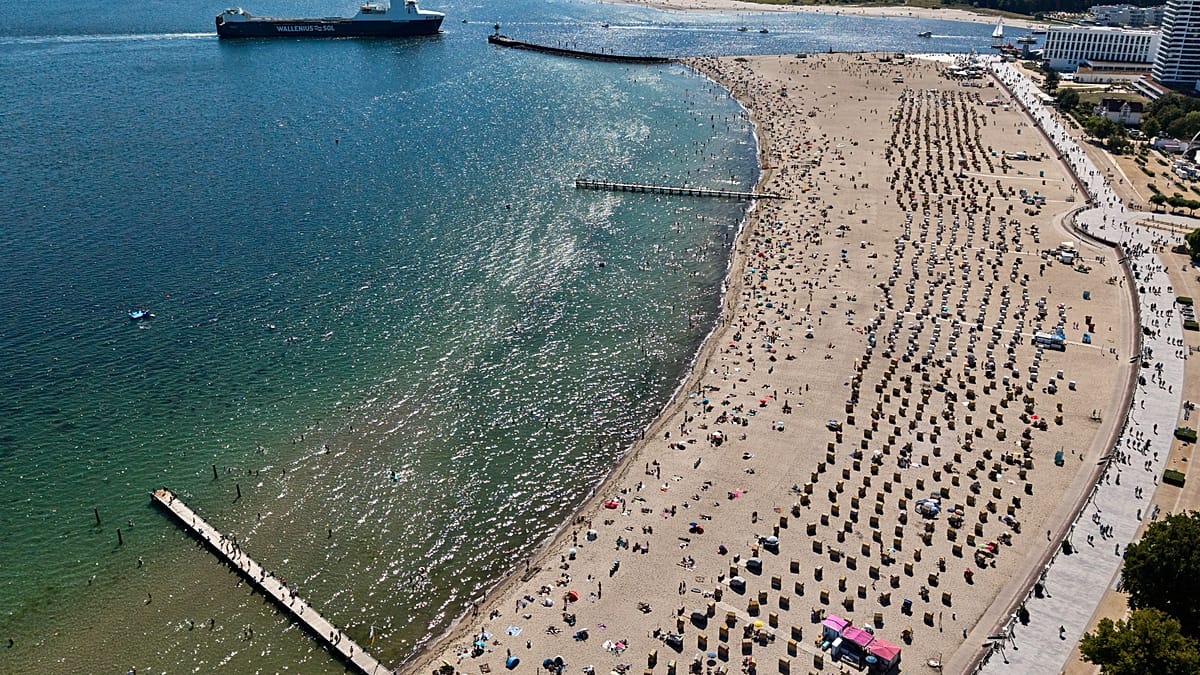
Prolonged summer heat across the Baltic region has created ideal conditions for algal blooms, and now health officials in the German city of Rostock have confirmed the presence of toxin-producing cyanobacteria, commonly known as blue-green algae, in the sea off Warnemünde.
The city's Office for Fire Protection, Rescue Services and Disaster Management first reported a suspicious algal mat on Saturday. By Tuesday, laboratory tests had confirmed the presence of cyanobacteria, prompting the local health authority to advise against swimming in the affected waters.
Affected beaches and health risks
The warning applies to beach sections 30 to 36 along the coast west of Warnemünde. No formal bathing ban has been issued, but officials stress that the algae's spread is unpredictable, as wind and currents can shift the mats quickly. Potentially, larger stretches of the coast could be affected.
Skin contact with the algae can cause swelling, irritation, or allergic reactions. In more severe cases, swallowing contaminated water may lead to vomiting and gastrointestinal illness. The health authority has urged particular caution for children and dogs, which should not drink the water.
Blue-green algae are actually tiny bacteria, not plants. They thrive in warm, nutrient-rich water and form slimy, bluish-green films on the surface. According to the Leibniz Institute for Baltic Sea Research in Warnemünde, not all cyanobacteria produce toxins, but within dense mats, toxin concentrations can reach levels hazardous to health. The institute notes that animals drinking contaminated water have occasionally died, including cattle, dogs, and ducks.
This is not an isolated incident. Last year, after extended hot spells, cyanobacteria were responsible for closures at nearly half of all bathing lakes in Germany, according to the German Environment Agency. While German bathing waters have generally been safe for over two decades, state agencies regularly test for bacteria every two weeks to once a month, publishing results on bathing-water maps.
The current warning comes amid broader concerns about the Baltic Sea's health. Earlier this year, a Baltic oil discovery near the Polish-German border stirred environmental clashes, and the region remains vulnerable to the effects of climate change.
Beyond algae, exceptionally high water temperatures are also encouraging the growth of Vibrio bacteria. According to the Robert Koch Institute (RKI), 17 cases of Vibrio infection have been recorded in Germany this year, including two deaths, both involving very elderly individuals. Severe illness typically affects older people and those with weakened immune systems or pre-existing conditions such as diabetes, liver disease, or serious heart conditions.
For now, swimmers in the Warnemünde area should heed the official advice and avoid the affected sections. As the Leibniz Institute points out, the situation can change rapidly with wind and weather, so staying informed through local health authority updates is essential.