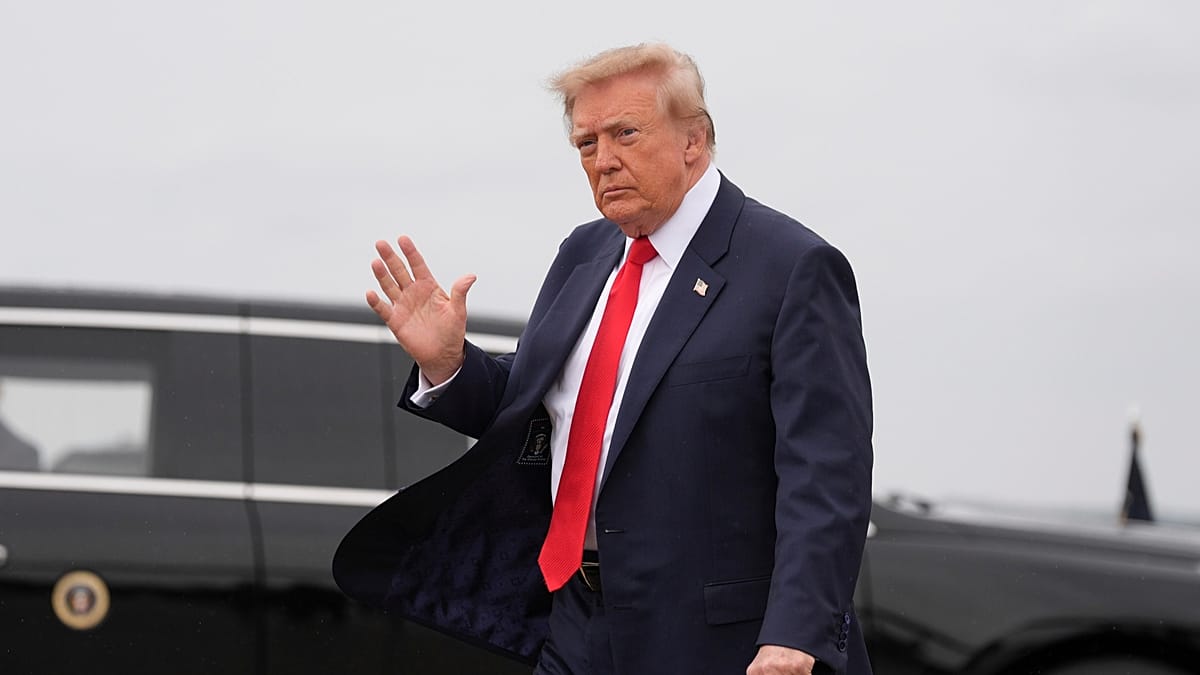
US President Donald Trump has called for a change of leadership in Kyiv, arguing that Volodymyr Zelenskyy has failed to negotiate an end to Russia's full-scale invasion. Speaking to reporters at the White House before a trip to Tennessee on Saturday, Trump said Ukraine should "get a new leader who can make a deal," adding that Zelenskyy "could have made many deals and for some reason he never does."
The intervention drew immediate praise from Moscow. Kirill Dmitriev, the Kremlin's special envoy for economic cooperation, described Trump's words as "iconic and historic" in a post on X, claiming the US president had joined those who believe Ukraine needs "leadership actually focused on peace, not Zelensky's warmongering."
A diesel deal that unsettled allies
Trump's remarks followed Zelenskyy's condemnation of a US arrangement to purchase Russian diesel, which Washington says is intended to ease fuel prices ahead of the US midterm elections. Under the terms described by Trump, Russia would immediately supply more than 300,000 tonnes of diesel to the American and global market, with a further 500,000 tonnes due in November.
Zelenskyy called the move a "gift to Putin" that would "not bring peace or any benefit to the civilised world." He argued that allowing Russia to sell petroleum products amounts to "an investment in a war that must be ended, not prolonged," and called for "real de-escalation with Russia on a reciprocal basis."
European officials echoed that concern, warning that the purchases would channel money into Russia's war machine. The unease in Brussels and other European capitals reflects a broader anxiety about Washington's shifting posture on Ukraine, as the EU confronts the limits of its Ukraine support amid relentless Russian assaults.
The diesel deal itself has been closely watched since the Trump administration announced Russian diesel imports as a tool to bring down prices at the pump. For European governments that have spent nearly four years trying to sever energy ties with Moscow, the arrangement is a difficult signal.
Blame directed at Kyiv
Diesel prices in the United States have climbed sharply since the US and Israel launched a joint attack on Iran on 28 February. Both the Iran conflict and Russia's war in Ukraine have contributed to a global energy crunch, yet Trump has placed the blame for American diesel costs squarely on Zelenskyy.
He has repeatedly urged the Ukrainian leader to halt strikes on Russian oil refineries and other critical infrastructure, arguing that such attacks are causing the global shortage. "He wants to make problems for the world. He wants to make problems for our farmers, our ranchers, with diesel fuel," Trump said on Saturday. "And we told him, 'do whatever you want, but don't hit the diesel fuel, because there's a big problem.' And what does he do? He goes and hits the diesel fuel."
Ukraine has defended its deep-strike campaign as a legitimate means of degrading Russia's ability to fund and sustain its invasion. In recent months, Ukrainian forces have targeted refineries and energy infrastructure across Russia, even as Moscow has continued to pound Ukrainian cities. The strikes are part of a wider effort that has included operations such as Ukraine's Operation Vivaldi in the Donbas, while Russian attacks have killed civilians in places like Donetsk and other frontline regions.
Trump's approval rating has fallen significantly during his second term, according to an Associated Press-NORC Centre for Public Affairs Research poll, and the White House is under pressure to show progress on pocketbook issues before voters head to the polls.
Europe watches with concern
For European leaders, the episode sharpens a dilemma that has been building for months: how to sustain support for Kyiv when Washington's priorities appear to be shifting. The Kremlin's public delight at Trump's comments will only reinforce the view in Paris, Berlin and Warsaw that Moscow is reading the moment as an opportunity.
Zelenskyy has consistently rejected the idea that he is the obstacle to peace, pointing to Russia's refusal to accept a genuine ceasefire and its continued occupation of Ukrainian territory. His argument that any easing of sanctions or energy restrictions without reciprocity rewards aggression is likely to find a sympathetic hearing in European capitals, even as they brace for further pressure on transatlantic unity.
What remains unclear is whether Trump's call for new leadership in Kyiv represents a passing remark or a deeper policy shift. Either way, it lands at a delicate moment for Ukraine, for Europe's security architecture, and for a US administration that appears increasingly willing to test the patience of its allies.



